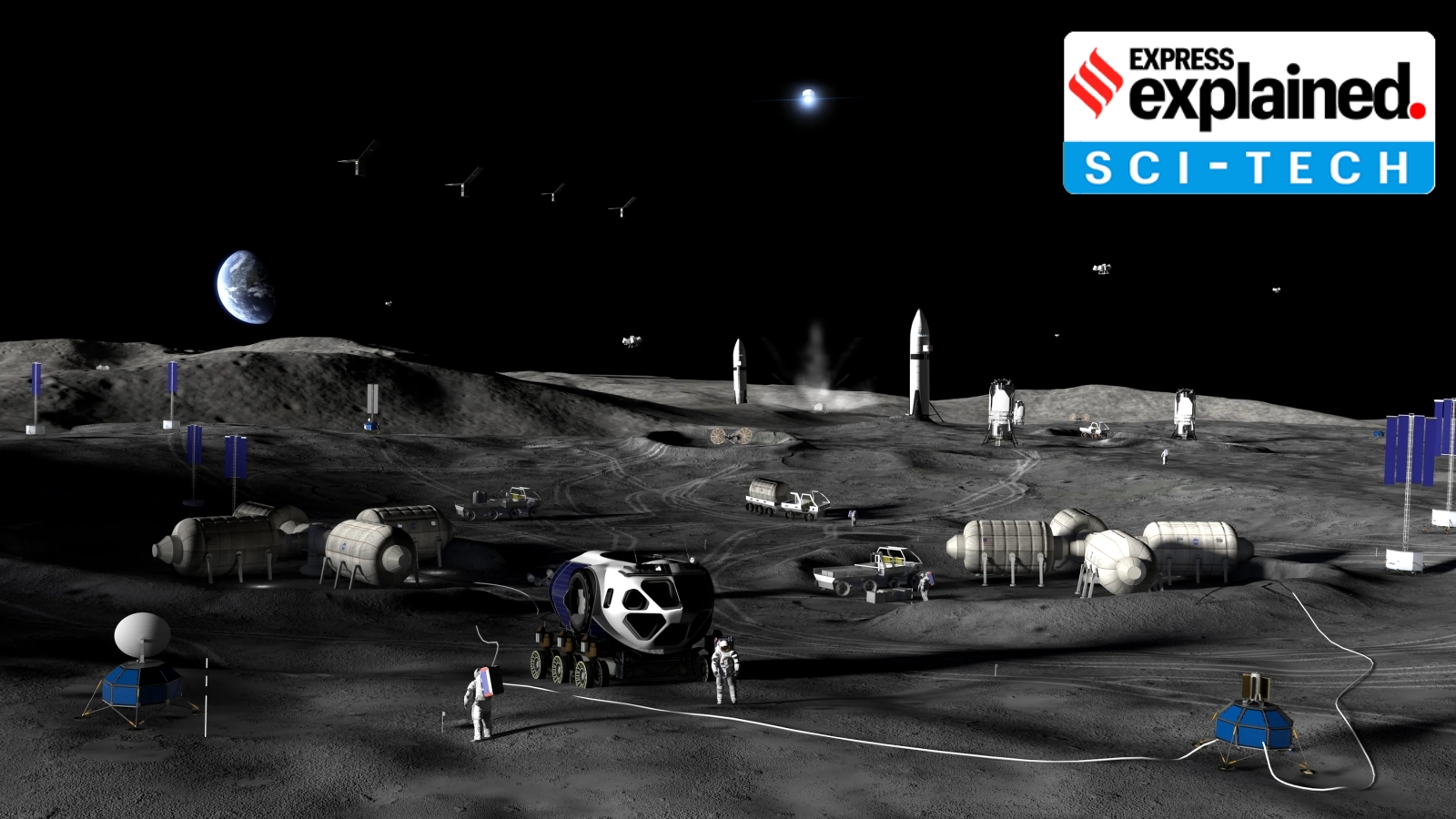
India stands at a pivotal crossroads in space exploration as NASA invites ISRO to collaborate on a permanent lunar outpost. This partnership could accelerate India's technological trajectory and redefine its role in the global space economy.
- India has been invited to collaborate on NASA's ambitious permanent Moon Base programme.
- Participation offers ISRO a chance to leapfrog decades of technological development in human spaceflight.
- The collaboration aligns with India's existing commitment to the Artemis Accords.
- Economic feasibility suggests shared international infrastructure is more sustainable than independent lunar bases.
The invitation for the Indian Space Research Organisation (ISRO) to join NASA's Moon Base programme marks a potential watershed moment in the history of Indian space exploration. While diplomatic relations between New Delhi and Washington have seen periods of volatility, this scientific overture suggests a strategic alignment that transcends traditional geopolitics. By integrating into a permanent lunar research station, India could transition from a regional space power to a central pillar of extraterrestrial colonization.
The Moon Base programme is not merely a series of missions but an attempt to establish a permanent human presence on the lunar surface. This involves the creation of habitats, energy grids, and resource extraction facilities capable of supporting astronauts and robotic systems for extended durations. Given the sheer scale of the engineering challenge, NASA is actively seeking international partners to distribute both the financial burden and the technical risks.
Why This Matters
BozokMedia analysis shows that the current era of space exploration is characterized by a widening gap between those who possess 'deep space' infrastructure and those who do not. For India, joining this programme is not about a lack of capability—as evidenced by the success of the Chandrayaan missions—but about strategic acceleration. Developing a fully independent lunar ecosystem would require trillions of rupees and decades of trial and error; collaborating with NASA allows ISRO to 'leapfrog' these hurdles.
"The transition from visiting the Moon to inhabiting it requires a paradigm shift in life-support and resource management that no single nation can afford to master in isolation."
Historically, India has maintained a policy of strategic autonomy, avoiding alignment with any single power bloc. However, the decision to join the Artemis Accords in 2023 as the 27th signatory signaled a shift. The Accords establish a framework for the peaceful and transparent use of space, though critics argue they represent a US-led effort to set the rules of lunar governance, notably excluding rivals like Russia and China.
There is a critical economic argument for this partnership. While the Bharat Antariksh Station (India's planned space station) is a proud national goal, the scientific demand for a dedicated, solo-operated station may not justify the immense operational costs. Much like the International Space Station (ISS), a shared lunar infrastructure ensures a steady stream of international research and shared funding, making the venture sustainable in the long run.
| Feature | Independent Path (ISRO Solo) | Collaborative Path (NASA-ISRO) |
|---|---|---|
| Development Speed | Slow/Incremental | Rapid/Accelerated |
| Financial Risk | High (Solely borne by India) | Distributed/Shared |
| Tech Access | Internal R&D | Immediate access to NASA's legacy tech |
Frequently Asked Questions
Will joining NASA's programme stop ISRO's independent goals?
No, it is expected to complement them. ISRO can maintain its national identity and goals while utilizing shared infrastructure to reach them faster.
Why are Russia and China not part of this?
The Artemis Accords are US-led, and geopolitical tensions have led Russia and China to pursue their own separate lunar cooperation agreements.