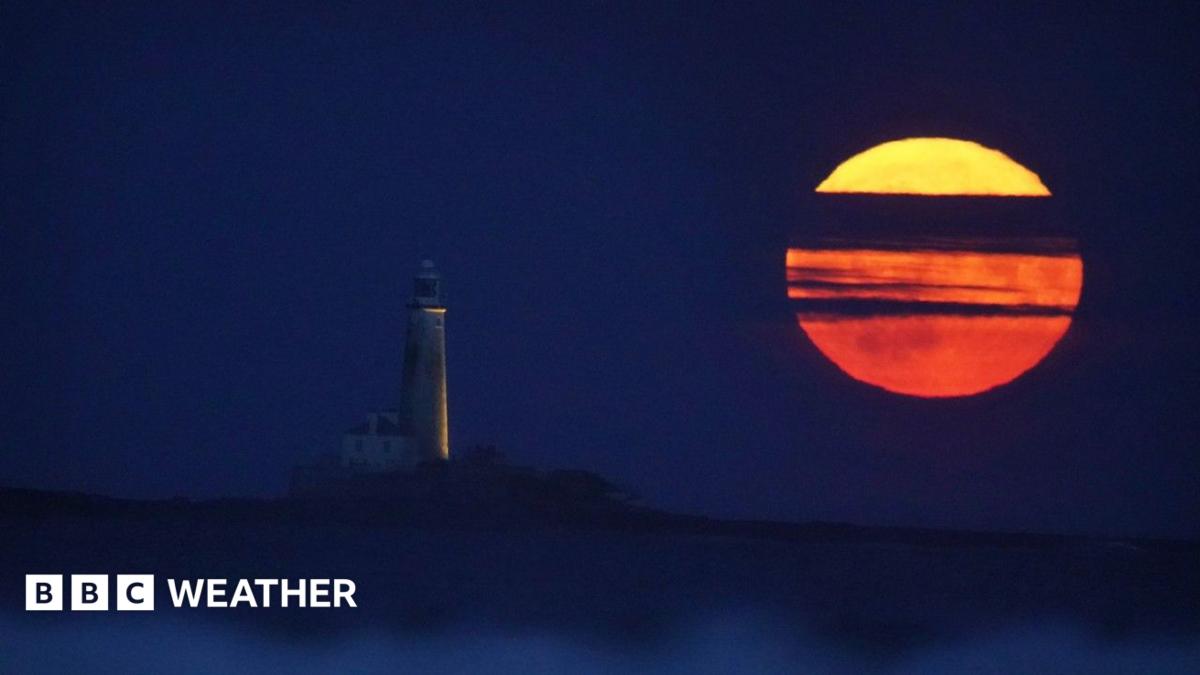
Prepare for a celestial spectacle as the orange 'Buck Moon' rises tonight, offering a breathtaking view before a busy month of solar and lunar eclipses.
Key Takeaways
- The July 'Buck Moon' will reach its peak tonight.
- The moon may appear with a distinct orange hue due to atmospheric conditions.
- This event serves as a prelude to an upcoming month of eclipses.
Stargazers are in for a treat tonight as the 'Buck Moon' prepares to ascend the night sky. This full moon, characterized by its potential orange glow, provides a spectacular celestial display just before we enter a highly active month for solar and lunar eclipses.
Understanding the Buck Moon
The term 'Buck Moon' has been used traditionally to denote the full moon in July, coinciding with the time when young male deer (bucks) grow their antlers. When the moon is low on the horizon, atmospheric scattering often gives it a deep orange or reddish tint, making it a favorite among amateur astronomers.
Why This Matters
BozokMedia analysis shows that the upcoming weeks will be exceptionally busy for astronomy enthusiasts. With a series of solar and lunar eclipses on the horizon, the Buck Moon acts as a stunning visual gateway to this period of increased celestial activity, allowing observers to recalibrate their focus toward the heavens.
The transition from a vibrant full moon to an eclipse season offers a unique window into the mechanics of our solar system.
To witness this phenomenon most effectively, experts recommend finding a location away from heavy light pollution. A clear sky and an unobstructed view of the horizon will provide the best experience for viewing the moon's ascent.
Historical Background
Throughout history, various cultures have named full moons based on the changing seasons and the natural world. The Buck Moon is one such traditional name that connects human observation with the biological cycles of the Earth.
Frequently Asked Questions
1. Do I need special equipment to see the Buck Moon?
No, the Buck Moon is clearly visible to the naked eye, though binoculars can enhance the view.
2. When is the best time to watch it?
The best time is shortly after moonrise, when it is lowest on the horizon and the orange tint is most pronounced.