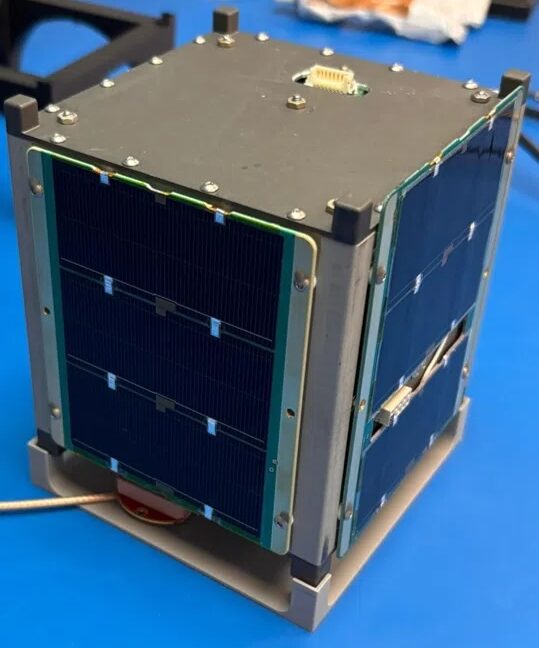
Florida‑based City Labs has put its BOHR satellite into orbit, marking the first practical use of commercial nuclear power in space. The mission paves the way for lunar bases and deep‑space propulsion powered by compact, long‑lasting energy sources.
Miami‑based City Labs lifted its small satellite named BOHR (Betavoltaic Orbital High‑Reliability) aboard SpaceX’s Falcon 9 rideshare launch on Tuesday, delivering the first commercial nuclear‑powered payload to low‑Earth orbit. Placed at an altitude of roughly 350‑400 miles (about 600 km), BOHR joined 80 other payloads, showcasing both a technical breakthrough and a new business model for space power.
Understanding Betavoltaic Micro‑Power
Betavoltaic technology converts the kinetic energy of beta particles emitted during radioactive decay directly into electricity, eliminating the need for moving parts or traditional fuel tanks. Unlike full‑scale reactors, these devices are lightweight, solid‑state, and can operate for years without refueling. Over the past five years, City Labs has refined the chemistry, shielding, and power‑management electronics required for a space‑qualified system, and BOHR represents the first commercial iteration of that research.
BOHR’s Role in a SpaceX Rideshare
SpaceX’s rideshare program bundles numerous small satellites onto a single Falcon 9 launch, dramatically reducing cost per kilogram for emerging space companies. BOHR’s inclusion signals that major launch providers are now comfortable accommodating nuclear‑based payloads, provided they meet stringent safety standards. Once in orbit, the satellite’s betavoltaic cells began generating a steady, low‑power output, proving the concept in the harsh environment of space.
Implications for Future Space Missions
Experts label the BOHR flight a “pathfinder” for long‑duration, power‑intensive missions such as permanent lunar habitats, Mars rovers, and deep‑space telescopes. Solar panels and chemical batteries, the current workhorses, suffer from limited illumination and finite charge cycles. A compact nuclear source can deliver continuous kilowatts for years, enabling scientific instruments, communication arrays, and propulsion systems to operate far from the Sun without frequent refueling.
Regulatory, Safety, and Public Perception Challenges
The launch required a specific nuclear launch license from the U.S. Federal Aviation Administration (FAA), which imposed rigorous limits on radioactive material, launch trajectory, and end‑of‑life disposal. City Labs also adhered to International Atomic Energy Agency (IAEA) guidelines, installing a self‑destruct mechanism that de‑orbits the satellite at the end of its operational life, thereby mitigating space‑debris concerns.
Overall, BOHR demonstrates that nuclear micro‑power can transition from laboratory benches to operational space assets. As humanity’s footprint expands beyond Earth, such power solutions will become indispensable for sustaining off‑world infrastructure and scientific discovery.