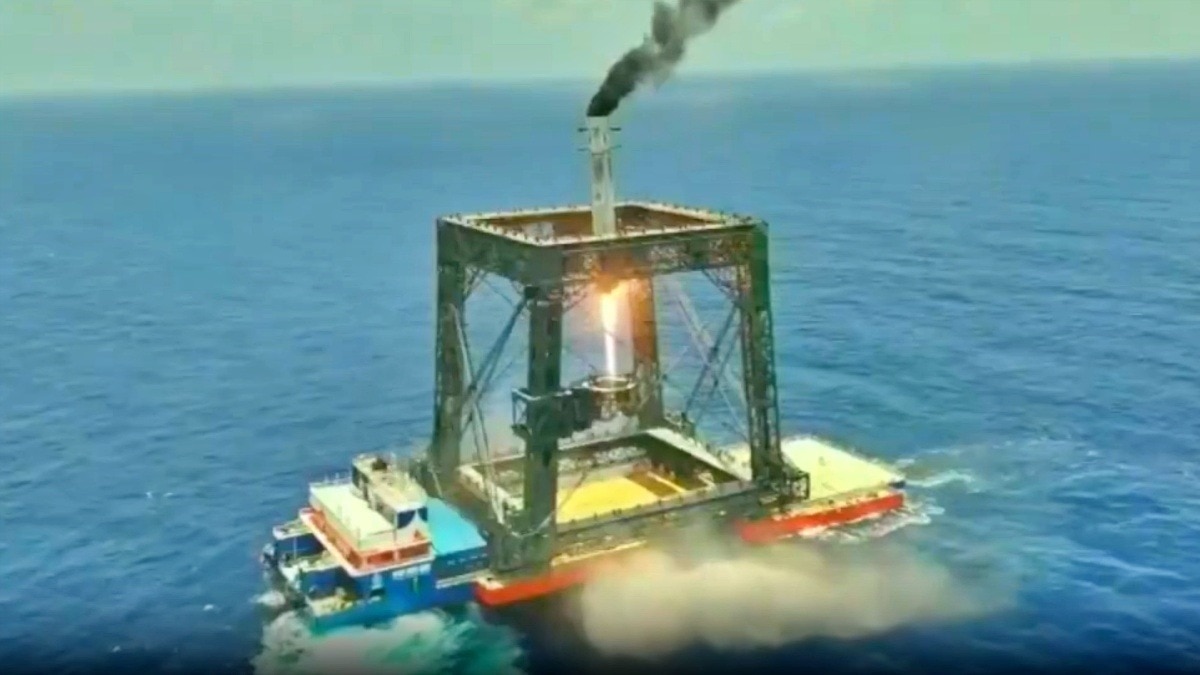
China successfully captured the first stage of its Long March‑10A rocket using a giant net at sea, marking a global first in reusable launch technology. The milestone accelerates its crewed lunar ambitions and promises lower‑cost access to space.
Key Takeaways
- Long March‑10A booster recovered at sea using a net‑based offshore platform.
- First successful net capture of an orbital launch vehicle’s first stage worldwide.
- Sets the stage for China’s crewed lunar missions and a reusable launch economy.
On July 10, 2026, a Long March‑10A carrier rocket launched from the Hainan Commercial Space Launch Site and, after stage separation, its first‑stage booster performed a controlled vertical descent before being snagged by a purpose‑built net on an offshore recovery platform. The China Aerospace Science and Technology Corporation (CASC) confirmed the operation as the nation’s inaugural controlled recovery of an orbital launch vehicle’s first stage.
How the Net‑Based Recovery Works
Unlike traditional land‑based or drone‑ship landings, China’s system suspends a high‑tensile net beneath a floating platform. The booster’s thrust‑vector control and a brief retro‑burn guide it precisely into the net’s capture zone, where it is gently halted and later hoisted for refurbishment. This method reduces deck‑impact stresses and offers greater flexibility in adverse sea conditions.
Contrast with SpaceX’s Drone‑Ship Landings
SpaceX pioneered vertical booster landings on autonomous drone ships using the Falcon 9, where the rocket lands directly on a deck. China’s approach, however, avoids deck‑impact altogether by capturing the vehicle in a net, a technique that could simplify recovery logistics and lower the risk of damage during high‑sea states.
Implications for Lunar Missions and Global Competition
The Long March‑10 family is earmarked for crewed lunar flights slated for the late 2020s. A reliable sea‑based recovery capability is crucial for rapid turnaround and cost reduction, bringing China closer to parity with the United States, Europe and emerging private players in reusable space transport.
Economic and Strategic Outlook
Reusable boosters dramatically cut launch expenses by allowing expensive hardware to be flown multiple times. This breakthrough is expected to lower the price barrier for satellite constellations, deep‑space probes and commercial payloads, while also reinforcing China’s strategic autonomy in space. As the global race for affordable access to orbit intensifies, China’s net‑recovery could become a new benchmark for future launch systems.