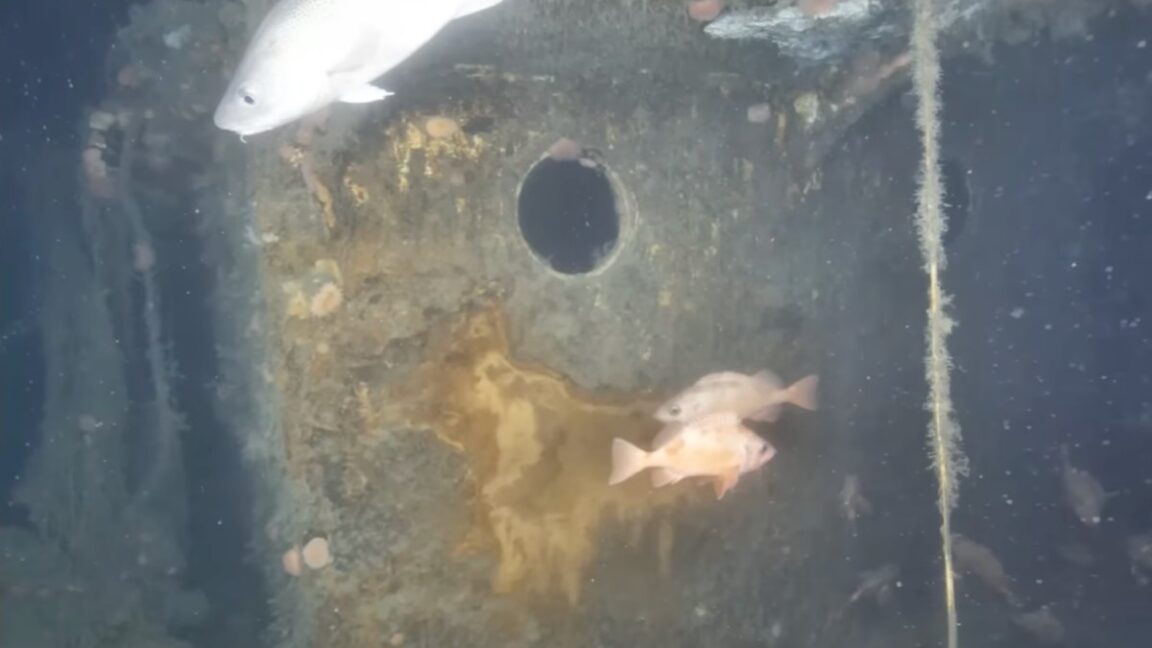
The Royal Canadian Geographic Society has released the inaugural photographs of the Quest shipwreck, sunk in 1962. The once‑lost polar vessel now hosts a vibrant marine ecosystem, offering fresh research opportunities.
मुख्य बिंदु (Key Takeaways)
- First public images of the Quest wreck after 60 years
- Shipwreck transformed into a flourishing marine habitat
- New platform for scientific and environmental studies
The Royal Canadian Geographic Society (RCGS) has published the first photographs of the Quest shipwreck in Canadian Geographic magazine. The vessel, which sank in 1962 during Sir Ernest Shackleton’s final Arctic expedition, has since become a thriving marine ecosystem—a development that opens new avenues for marine biologists and climate researchers.
Historical Background
Originally a Norwegian wooden whaler named Foca I, the ship was renamed Quest by Shackleton’s wife, Emily. After Shackleton’s ill‑fated Endurance voyage—finally located in 2022—he aspired to launch another Arctic mission to explore the Beaufort Sea north of Alaska. Funding from old school friend John Quillier Rowett enabled the purchase, but when Canadian government support was withdrawn, the expedition shifted back to Antarctica, where the vessel underwent extensive retro‑fitting.
Retro‑fit and Technological Upgrades
The upgrades included a new deckhouse, a heated crow’s nest, a wireless set, and an odograph for automatic route tracing. Additionally, a Lucas deep‑sea sounding machine, a sophisticated camera suite, and even a small aircraft were installed, making Quest one of the most advanced exploration ships of its era.
Emergence of a Marine Habitat
Over six decades beneath the waves, the wreck has become a substrate for corals, anemones, and a variety of seaweed. Small fish, crustaceans, and other marine organisms now congregate around the metal framework, turning the decaying hull into a bustling underwater community.
Future Research Opportunities
Scientists can treat the site as a natural laboratory to study climate‑change impacts, species adaptation, and the ecological dynamics of artificial reefs. The wreck also offers a case study for policymakers on preserving historic shipwrecks while leveraging their ecological value.
Quest’s transformation underscores the intersection of history, technology, and environmental stewardship, illustrating how human artifacts, even in ruin, can be reborn by nature.