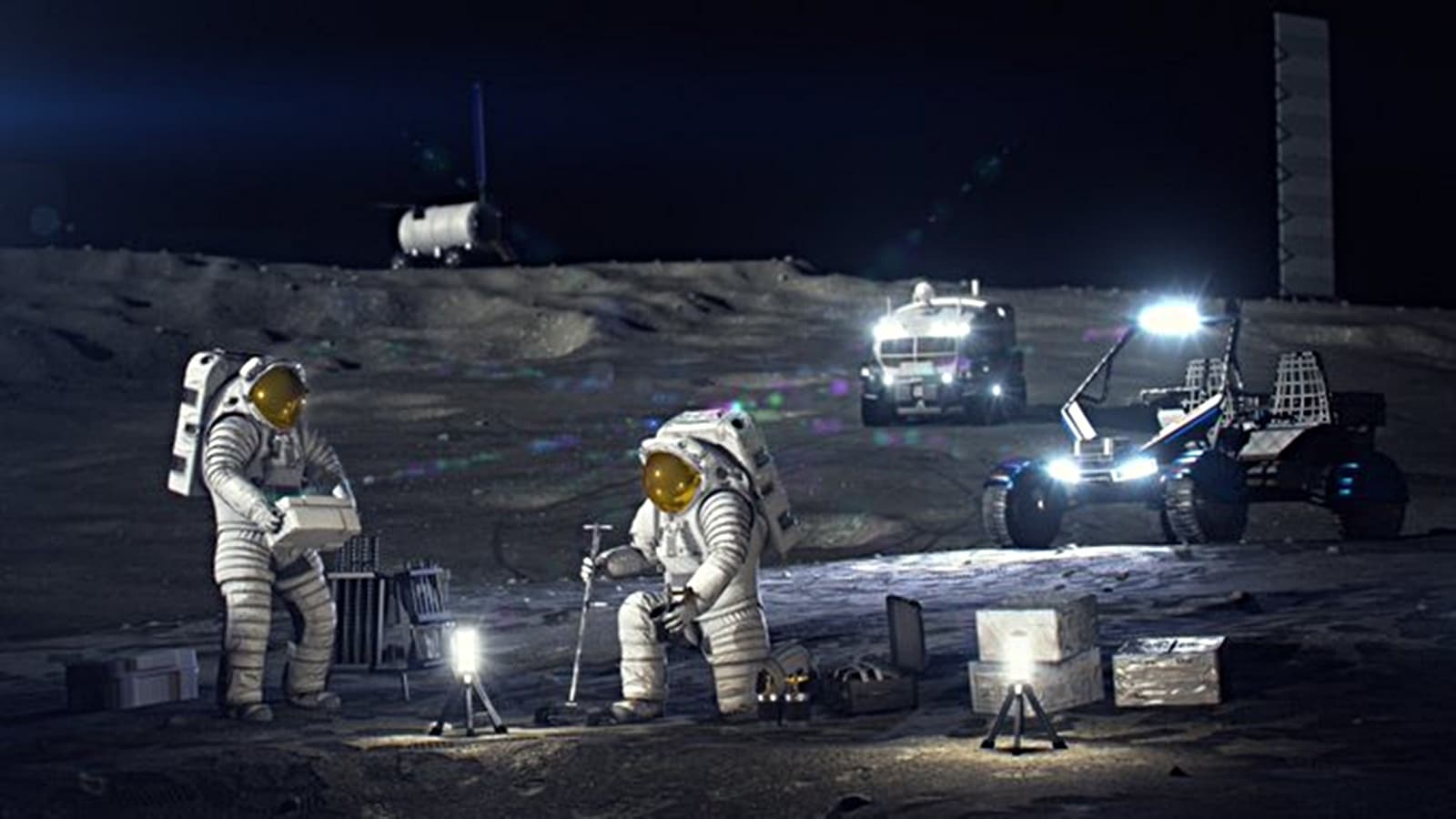
NASA’s Artemis program may soon benefit from a groundbreaking study that shows a six‑person crew with bi‑weekly resupply offers the highest chance of success for a permanent lunar settlement.
मुख्य बिंदु (Key Takeaways)
- Six‑person crew with supply every two weeks maximizes mission success
- Smaller crews or longer resupply gaps raise risk and cut productivity
- Psycho‑social dynamics and environmental disruptions are critical factors
As NASA prepares to cement a long‑term human presence near the Moon’s south pole under the Artemis programme, researchers at George Mason University have applied agent‑based modelling to pinpoint the crew composition that best balances safety, productivity, and sustainability. Their simulations, published in PLOS ONE, indicate that a six‑astronaut team supported by a regular two‑week supply cadence yields the highest probability of a thriving permanent base.
Methodology and Modelling Approach
Agent‑based modelling differs from traditional AI by recreating the interactions of individual “agents” – in this case, astronauts – within a complex system. Instead of relying on linear cause‑and‑effect, the method captures emergent behaviours that arise from interpersonal dynamics, resource constraints, and environmental stressors. The team tested multiple scenarios varying crew size (four to six members), mission length (three to twelve months), and supply frequency (monthly to bi‑weekly).
Key Findings
The most favourable outcome emerged when six astronauts lived on the lunar surface simultaneously, receiving fresh supplies every two weeks and facing limited environmental disruptions. Under these conditions, productivity remained high and the crew could effectively manage unforeseen challenges such as radiation spikes or micrometeorite impacts. By contrast, a four‑person crew with only one monthly resupply experienced a steep decline in task completion—dropping to roughly 20 % of expected output—highlighting the vulnerability of undersized teams.
Psychological and Social Dimensions
Living in an isolated, confined, and extreme (ICE) environment, a lunar base mirrors the most demanding human habitats on Earth, from Antarctic stations to deep‑sea submarines. The study underscores that team cohesion, stress management, and conflict resolution are as decisive as individual technical skills. Simply augmenting astronaut training will not fully mitigate the risks of prolonged isolation; mission planners must fine‑tune crew size, supply logistics, and contingency protocols.
Implications for Future Lunar Architecture
By drawing lessons from other remote outposts, the research provides a template for designing resilient lunar infrastructure. NASA already emphasizes psychological preparation, but this analysis suggests that a scientifically calibrated crew composition could be the linchpin for sustainable extraterrestrial habitation—not only on the Moon but potentially on Mars and beyond.