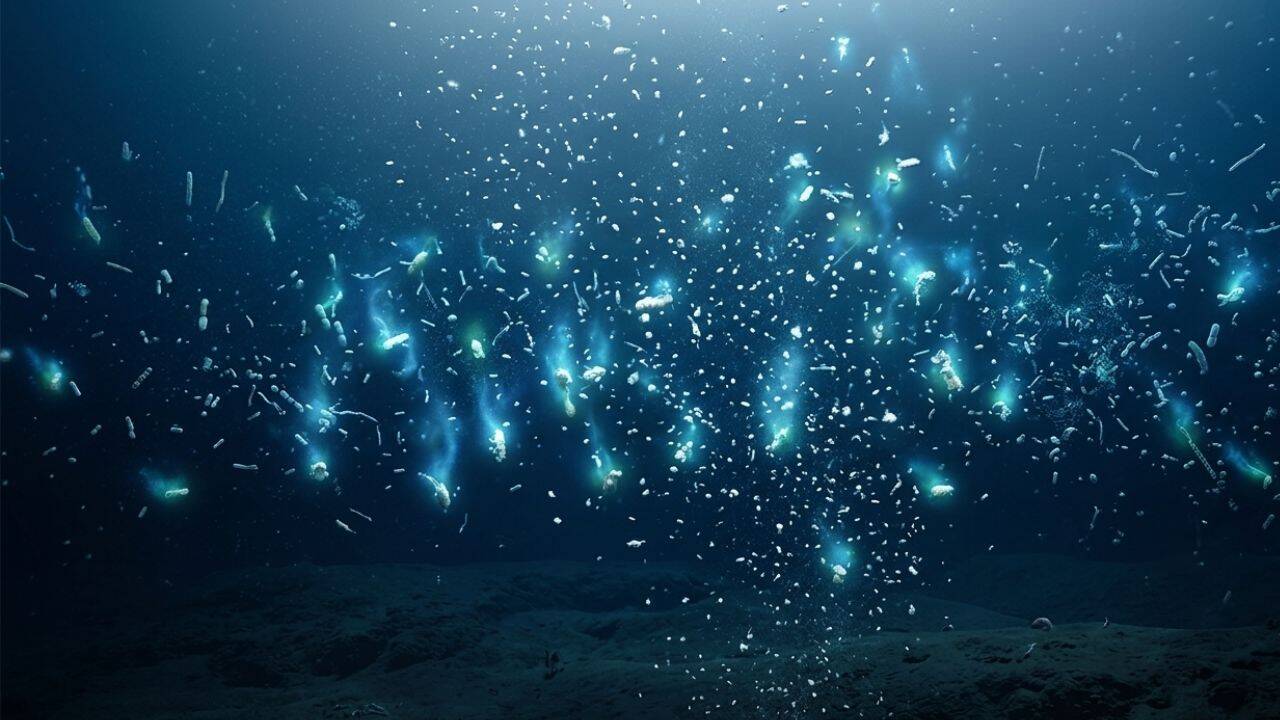
Scientists have discovered that the crushing pressure of the deep ocean squeezes nutrients out of sinking marine snow, giving deep‑sea microbes an unexpected food source. The finding suggests that more carbon may be sequestered in deep waters than previously thought, reshaping our understanding of the Earth’s carbon cycle and future climate models.
Key Takeaways
- Extreme deep‑sea pressure releases nutrients from marine snow.
- This process transports additional carbon into deep ocean waters.
- Implications demand a revision of carbon‑cycle budgets and climate models.
In a breakthrough study, researchers led by Dr. Ellen Richards replicated the immense pressures of the abyssal ocean in high‑pressure chambers and observed that sinking marine snow—tiny aggregates of dead algae and organic detritus—yields essential nutrients when compressed. These nutrients become a readily available food source for the otherwise starved microbial communities that thrive miles below the surface.
Background: The Role of Marine Snow
Marine snow has traditionally been viewed as a passive conveyor, ferrying carbon from the sun‑lit surface to the ocean floor where it is largely buried. The new research overturns this view, showing that under extreme pressure, the physical structure of these particles collapses, liberating nitrogen, phosphorus, and trace minerals that sustain deep‑sea bacteria and archaea. This process effectively turns the ocean’s “snowfall” into a hidden fertilizer.
Implications for the Global Carbon Cycle
If deep‑sea microbes can tap into this newly released nutrient pool, they can metabolize more carbon than previously estimated. Current carbon budget models often assume limited organic input at abyssal depths, but the study suggests a higher flux of carbon into the deep ocean’s dissolved pool. This could mean that a larger fraction of anthropogenic CO₂ is being sequestered away from the atmosphere, altering projections of long‑term climate warming.
Future Research Directions
The team plans to extend measurements across different ocean basins, from the Pacific’s trench systems to the Southern Ocean’s cold depths, to quantify regional variations in pressure‑driven nutrient release. Integrating these data into Earth system models will enable more accurate predictions of carbon sequestration efficiency and its feedback on global temperature trajectories.
Broader Significance
Beyond marine microbiology, the findings highlight the interconnectedness of physical oceanography and biogeochemical cycles. By revealing a previously overlooked mechanism that moves carbon and nutrients into the planet’s largest reservoir, the study calls for a reassessment of how deep‑sea processes are represented in climate policy and mitigation strategies.