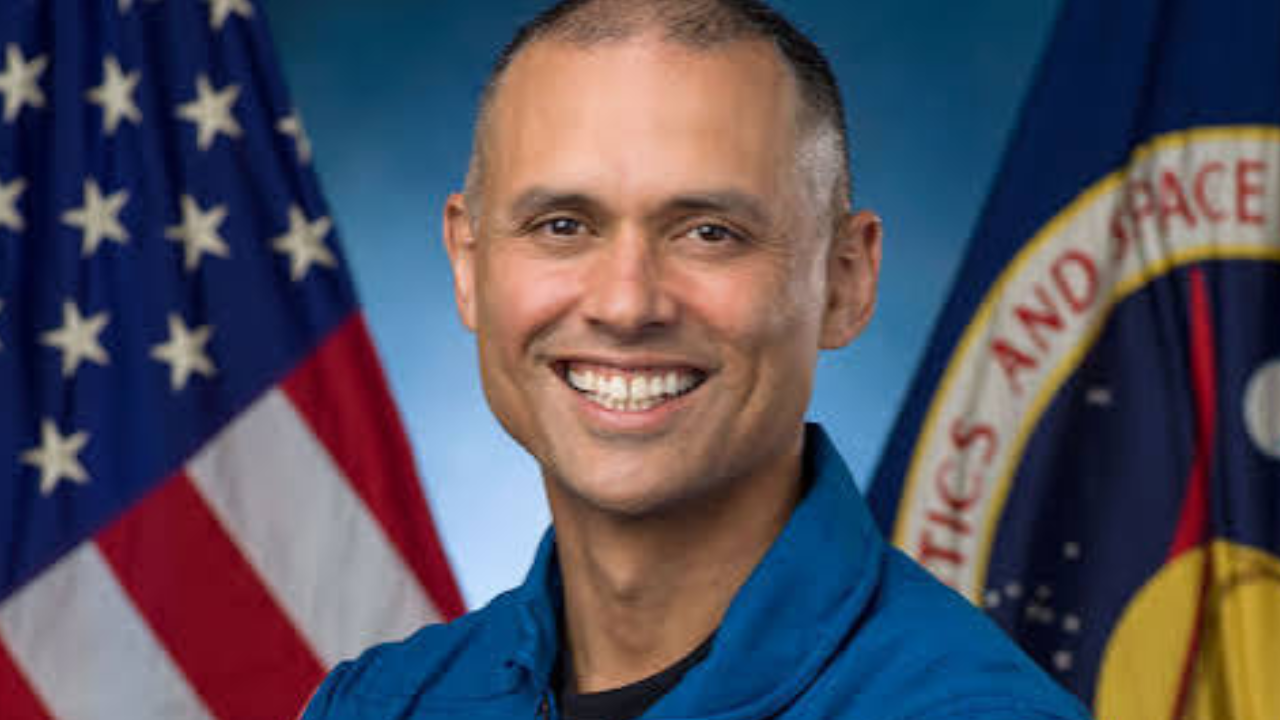
Indian‑origin NASA astronaut Anil Menon lifted off aboard Russia's Soyuz MS‑29 for an eight‑month stay on the International Space Station. He will conduct critical research on microgravity’s impact on human physiology and test new medical technologies for deep‑space travel.
Key Takeaways (मुख्य बिंदु)
- Anil Menon embarks on an eight‑month ISS mission aboard Soyuz MS‑29
- Experiments will focus on microgravity effects on blood flow, vein structure and fluid production
- His background spans NASA, SpaceX, medical research and military emergency medicine
On July 14, 2026, Russia’s Roscosmos launched the Soyuz MS‑29 from the Baikonur Cosmodrome in Kazakhstan, carrying Indian‑origin NASA astronaut Anil Menon alongside Russian cosmonauts Pyotr Dubrov and Anna Kikina. The crew will remain docked to the International Space Station (ISS) for an eight‑month expedition, marking a significant milestone for the Indian diaspora in space exploration.
Scientific Objectives
During his tenure on the ISS, Menon will lead a suite of experiments designed to unravel how prolonged exposure to microgravity influences human physiology. Key focus areas include alterations in blood flow, venous architecture, and blood composition. Additionally, he will test a novel technology that synthesizes intravenous fluids using the station’s potable‑water system—a capability that could prove vital for future deep‑space missions where medical supplies are scarce.
Personal Background
Early Life
Born and raised in Minneapolis, Minnesota, Menon is the son of Indian and Ukrainian immigrants. He is married to fellow astronaut Anna Menon, and the couple have two children. A certified flight instructor, he has logged over 1,000 flight hours and participates in endurance events such as Ironman and Kokoro.
Professional Journey
Menon joined NASA in 2014 as a flight surgeon, supporting astronauts living and working aboard the ISS. In 2018 he transitioned to SpaceX, where he helped establish the company’s medical program, assisted with preparations for its inaugural crewed flights, and contributed to the development of the Starship vehicle destined for lunar and Martian missions. Selected as a NASA astronaut in December 2021, he entered the agency’s rigorous two‑year training pipeline the following month.
Education and Research
He earned a degree in neurobiology from Harvard University, conducting research on Huntington’s disease. A Rotary Ambassadorial Scholar, he spent a year in India supporting polio vaccination campaigns. Later, he pursued medicine and engineering at Stanford University, collaborating with NASA’s Ames Research Center on soft‑tissue modeling. His emergency‑medicine residency included service with the California Air National Guard, wilderness medical support for remote adventure races, and a deployment to Afghanistan during Operation Enduring Freedom. Post‑residency, he worked with the Himalayan Rescue Association, providing medical care to climbers on Mount Everest.
Implications for the Future
Menon’s multifaceted expertise exemplifies the interdisciplinary skill set required for long‑duration spaceflight. The data generated from his ISS experiments will inform medical protocols for upcoming Artemis lunar missions and eventual crewed journeys to Mars, ensuring astronaut health remains a priority as humanity pushes farther into the cosmos.