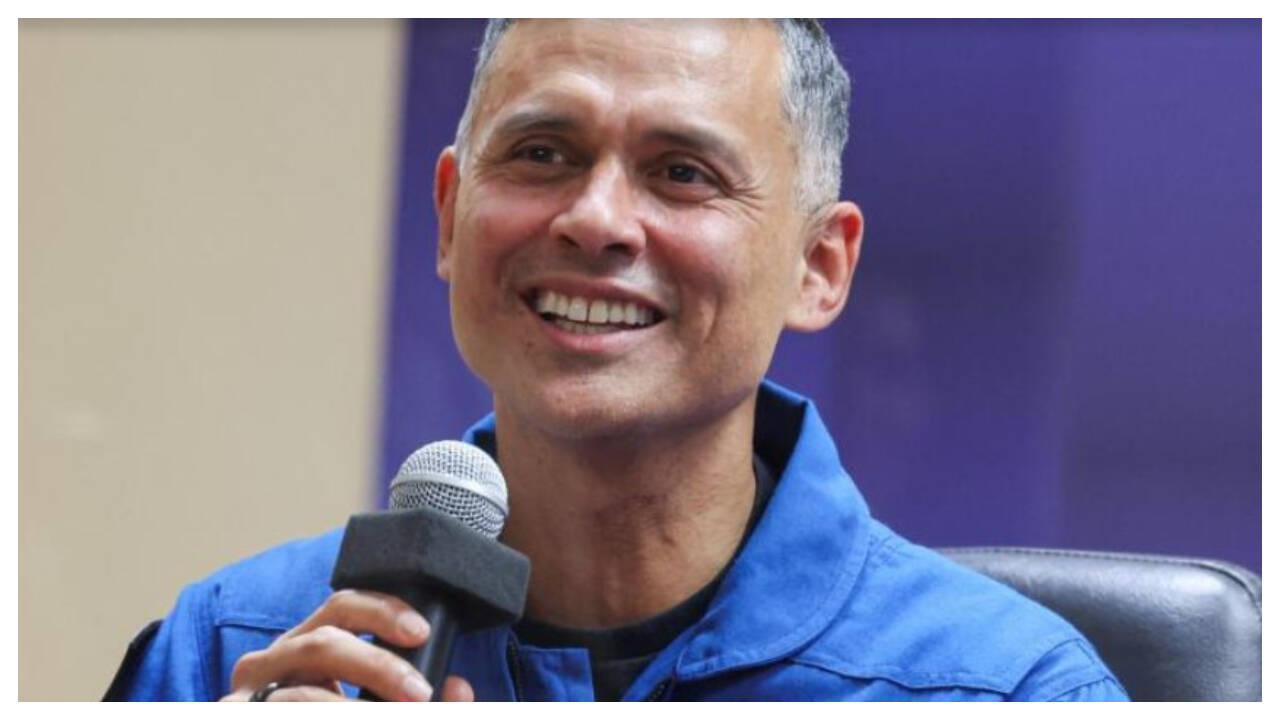
U.S. Space Force Colonel Anil Menon, the first NASA astronaut of Malayali descent, will spend eight months aboard the International Space Station. His mission will examine microgravity’s impact on human health, develop in‑space IV‑fluid production, and test ultrasound technology, marking a historic milestone for Kerala and global space research.
मुख्य बिंदु (Key Takeaways)
- Anil Menon is the first NASA astronaut of Malayali heritage
- Eight‑month ISS stay focusing on microgravity health and manufacturing studies
- Testing new IV‑fluid synthesis and ultrasound capabilities in space
Anil Menon, a colonel in the United States Space Force, is slated to join a long‑duration crew on the International Space Station (ISS) for an eight‑month expedition. The assignment is a personal triumph and a source of pride for Kerala and the broader Indian diaspora.
Background and Selection
Born in Trichur, Kerala, Menon’s family emigrated to the United States in the early 1970s. He earned a Ph.D. in aerospace engineering from the University of Texas at Austin and later rose through the ranks of the U.S. Space Force, attaining the rank of colonel. In 2023 NASA added him to its astronaut class, making him the first person of Malayali origin to qualify for a spaceflight.
Scientific Objectives on the ISS
The core of Menon’s mission is to investigate how microgravity influences human physiology—bone density loss, muscle atrophy, and immune system alterations—data that are critical for future deep‑space voyages to the Moon and Mars. Additionally, he will pilot cutting‑edge technologies for on‑orbit production of intravenous (IV) fluids and conduct high‑resolution ultrasound examinations, innovations that could revolutionize medical care both in space and on Earth.
Kerala’s Growing Space Legacy
Kerala has already contributed significantly to India’s space program; scientists from the state have played pivotal roles in ISRO’s landmark missions, including the Mars Orbiter Mission (Mangalyaan) and Chandrayaan‑2. Menon’s flight extends this legacy onto the global stage, offering a tangible role model for aspiring engineers and scientists from the region.
Implications and Future Prospects
Successful in‑space IV‑fluid synthesis could make long‑duration missions more self‑sufficient, reducing reliance on Earth‑based resupply. Likewise, refined ultrasound techniques in microgravity promise better diagnostic capabilities for astronauts and could translate into improved point‑of‑care imaging for remote or emergency settings on the ground. Menon’s research may also feed into terrestrial medical advances for conditions such as osteoporosis and sarcopenia.
As the world watches Menon’s journey, it becomes evident that space exploration is evolving from a national endeavor into a tapestry woven from individual heritage, scientific collaboration, and shared human ambition.