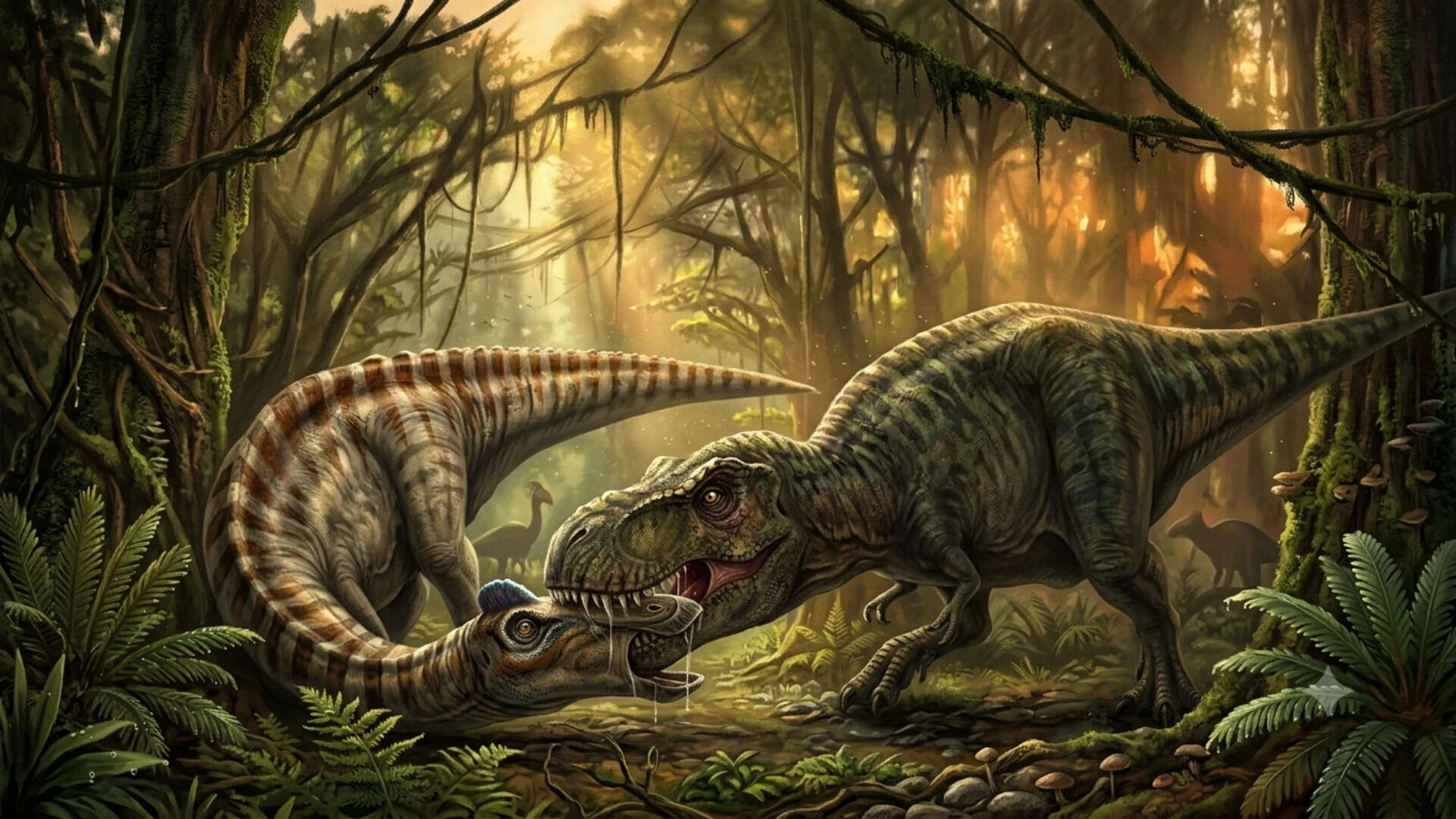
A striking fossil shows a T‑rex tooth lodged in an Edmontosaurus skull, dating back 66 million years. The find provides direct evidence of a clash between the two dinosaurs and offers vital clues about the hunting behavior of the iconic predator.
Key Takeaways
- A T‑rex tooth is found embedded in an Edmontosaurus skull dating to ~66 million years ago.
- The fossil records a direct predator‑prey interaction between two iconic Cretaceous species.
- Evidence suggests active predation rather than mere scavenging by T‑rex.
In a newly excavated site in the northeastern United States, paleontologists uncovered a remarkable specimen: a Tyrranosaurus rex tooth firmly lodged in the cranial cavity of an Edmontosaurus—a massive, duck‑bill herbivore that roamed the Late Cretaceous. Radiometric dating places the fossil at approximately 66 million years old, precisely at the Cretaceous‑Paleogene boundary when a mass extinction event wiped out most non‑avian dinosaurs.
Scientific Context and Significance
While the T‑rex has long been dubbed the “king of the dinosaurs,” its exact hunting tactics have remained a matter of debate. Prior evidence largely consisted of bite marks, isolated teeth, and predator‑prey trackways, leaving room for speculation about whether the massive theropod was an active hunter or primarily a scavenger. This specimen, however, provides a rare, unambiguous snapshot of a direct encounter, as the tooth is physically trapped within the skull, indicating a violent interaction.
Detailed Analysis
Lead researcher Dr. Maria Allen notes that the tooth’s angle, depth, and lack of extensive wear suggest a rapid, forceful bite rather than a post‑mortem scavenging event. Microscopic examination reveals clean cut‑marks with minimal abrasion, supporting the hypothesis of an active predatory strike. The positioning also implies that the Edmontosaurus either fell prey to a sudden ambush or was engaged in a defensive struggle when the tooth became lodged.
Implications for Paleontology
This discovery reshapes our understanding of Late Cretaceous trophic dynamics. It raises questions about the population density of large herbivores, the role of apex predators in regulating ecosystems, and how such interactions may have influenced survival odds during the terminal extinction event. Future research will seek comparable specimens to determine whether this encounter was an isolated incident or part of a broader pattern of T‑rex predation.
Overall, the fossil underscores the intricate predator‑prey arms race that defined prehistoric ecosystems, offering a tangible link to the behavior of creatures that vanished millions of years ago.