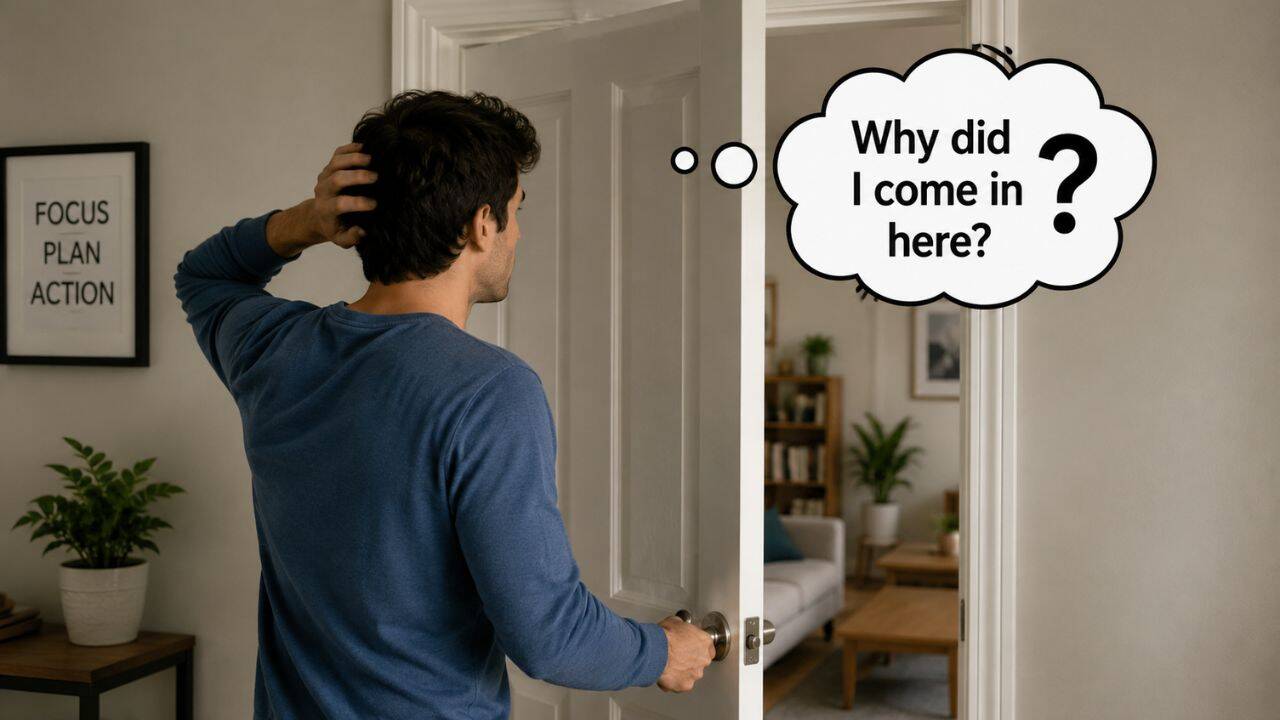
Stepping into a new space often makes us lose track of what we originally set out to do. This ‘doorway effect’ is a normal brain function that segments experiences into distinct events, and retracing steps can help restore the forgotten thought.
Key Takeaways
- The doorway effect causes a brief lapse in memory when moving between rooms.
- The brain re‑categorizes environments as separate events, updating its mental model.
- Attention shifts and working‑memory limits amplify the forgetfulness, while retracing steps can recover the lost intention.
When you walk from one room into another, the task or idea you were just about to act on often slips from memory. Psychologists label this temporary lapse the “doorway effect.” The phenomenon was first documented in a 2006 study by Robert Radvansky and colleagues, who found that participants were significantly less likely to recall a target word after passing through a virtual doorway into a new environment.
How the Brain Processes a New Entry
Our brain constantly updates its internal map of the world. Crossing a threshold signals a transition to a new “event,” prompting the hippocampus and prefrontal cortex to segment the experience. This event segmentation forces the brain to reorganize recent information, temporarily de‑prioritizing the content held in working memory.
Role of Working Memory and Attention
Working memory has a limited capacity—only a handful of items can be actively maintained at any moment. When a new room is entered, attentional resources shift toward novel visual cues such as lighting, décor, and spatial layout. This shift reduces the cognitive bandwidth available for the original intention, leading to the familiar “What was I about to do?” moment.
Practical Strategies to Counter Forgetting
Simple habits can mitigate the doorway effect. Writing down a task before moving, using digital reminders, or mentally rehearsing the next step can anchor the intention in long‑term memory. If you find yourself blanking, walking back through the same doorway and retracing your steps often restores the contextual cues that trigger recall.
Future Directions and Research Opportunities
Understanding the doorway effect deepens our knowledge of how the brain partitions continuous experience into discrete episodes. Ongoing research is investigating whether similar effects occur with digital “doorways” such as app switching, and whether targeted cognitive training can reduce susceptibility. Insights from this line of inquiry could inform everything from interior design to educational curricula, making environments more memory‑friendly.