A new subject‑wise quiz for UPSC CSE 2027 aspirants focuses on Science & Technology, covering geostationary orbit, potential lunar ice contamination, and the Soyuz MS‑29 mission. The test aims to reinforce static syllabus concepts while integrating the latest space‑research developments.
मुख्य बिंदु (Key Takeaways)
- Rising debris concerns in Geostationary Orbit
- Potential contamination of lunar ice by lander exhaust
- Soyuz MS‑29 as a model of international cooperation
UPSC has released its week 171 Science & Technology quiz, featuring three carefully crafted multiple‑choice questions that probe an aspirant’s grasp of orbital mechanics, lunar exploration challenges, and collaborative space missions. By blending core syllabus material with cutting‑edge research, the quiz offers a realistic preparation experience for the upcoming prelims.
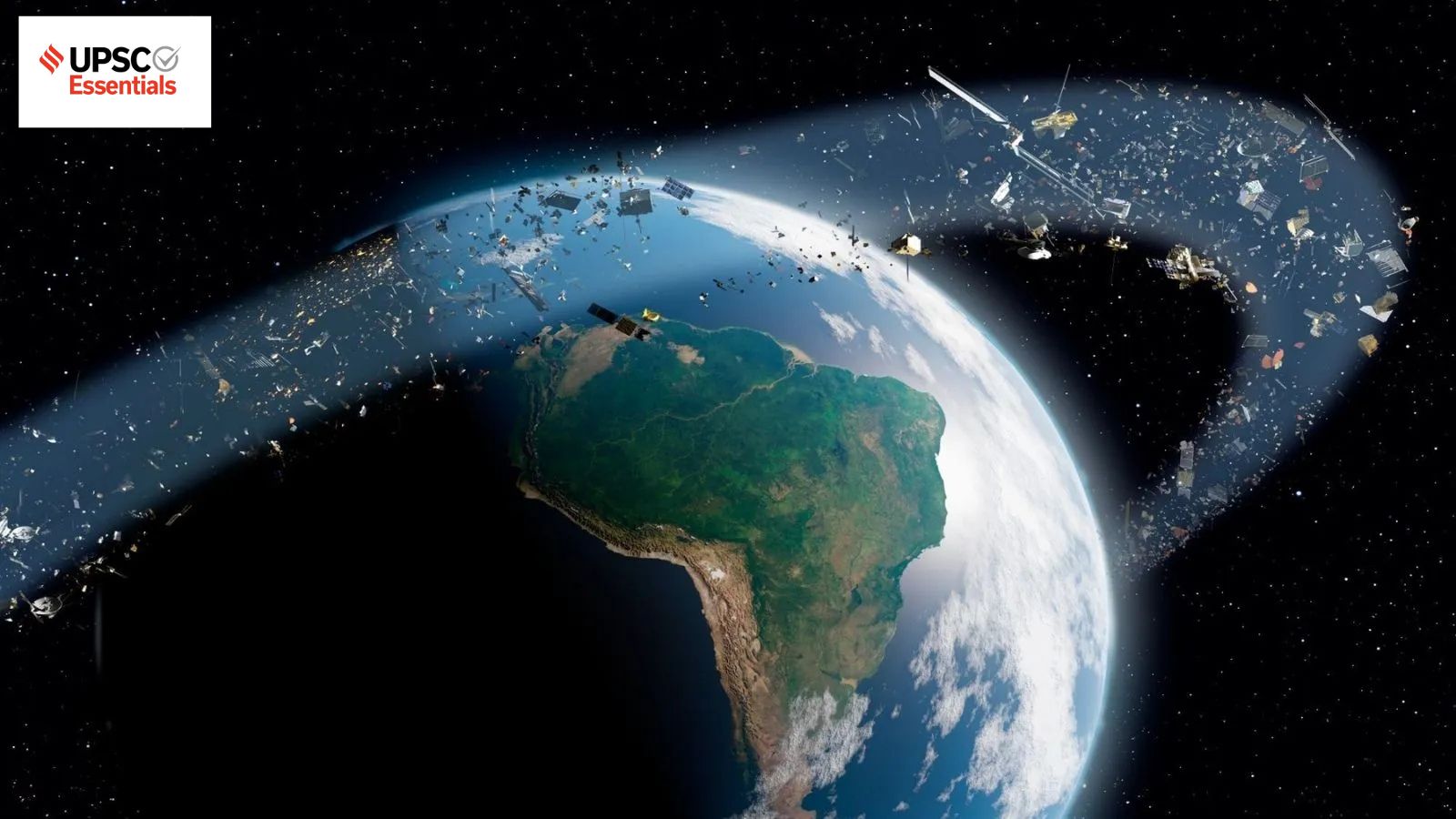
Geostationary Orbit – New Debris Alarm
The first question asks candidates to evaluate statements about GEO: its synchronization with Earth’s rotation, suitability for low‑latency communications, and debris density compared with Low Earth Orbit (LEO). Recent studies have uncovered a previously hidden cloud of micro‑debris in GEO, raising collision risk for communication and weather satellites. While GEO still hosts fewer fragments than LEO, the correct answer confirms only the first statement, highlighting the nuanced understanding UPSC expects.
Lunar Ice Contamination – Exhaust Gas Threat
The second question links two assertions: that lunar lander exhaust could pollute ancient ice deposits, and that methane would travel ballistically across the Moon’s air‑less surface. Simulations indicate that methane from future crewed missions can indeed hop across the lunar terrain and become trapped in permanently shadowed craters, potentially altering the pristine chemical record that scientists use to study pre‑biotic chemistry. Both statements are true, and the second explains the first, mirroring the cause‑effect reasoning often tested in the exam.
Soyuz MS‑29 Mission – An International Endeavour
The third question identifies the partners of the Soyuz MS‑29 mission, underscoring the collaboration between NASA, Roscosmos, JAXA and other agencies. Understanding such joint ventures is crucial for UPSC, which frequently asks about India’s role in global space initiatives and the strategic implications of multinational projects.
Strategic Prep Tips for Aspirants
Candidates should deepen their knowledge of GEO’s operational advantages and debris mitigation strategies, study the scientific significance of lunar ice in the context of planetary protection, and stay abreast of current international missions. This holistic approach not only secures marks in the quiz but also builds a robust foundation for the broader Science & Technology section of the prelims.