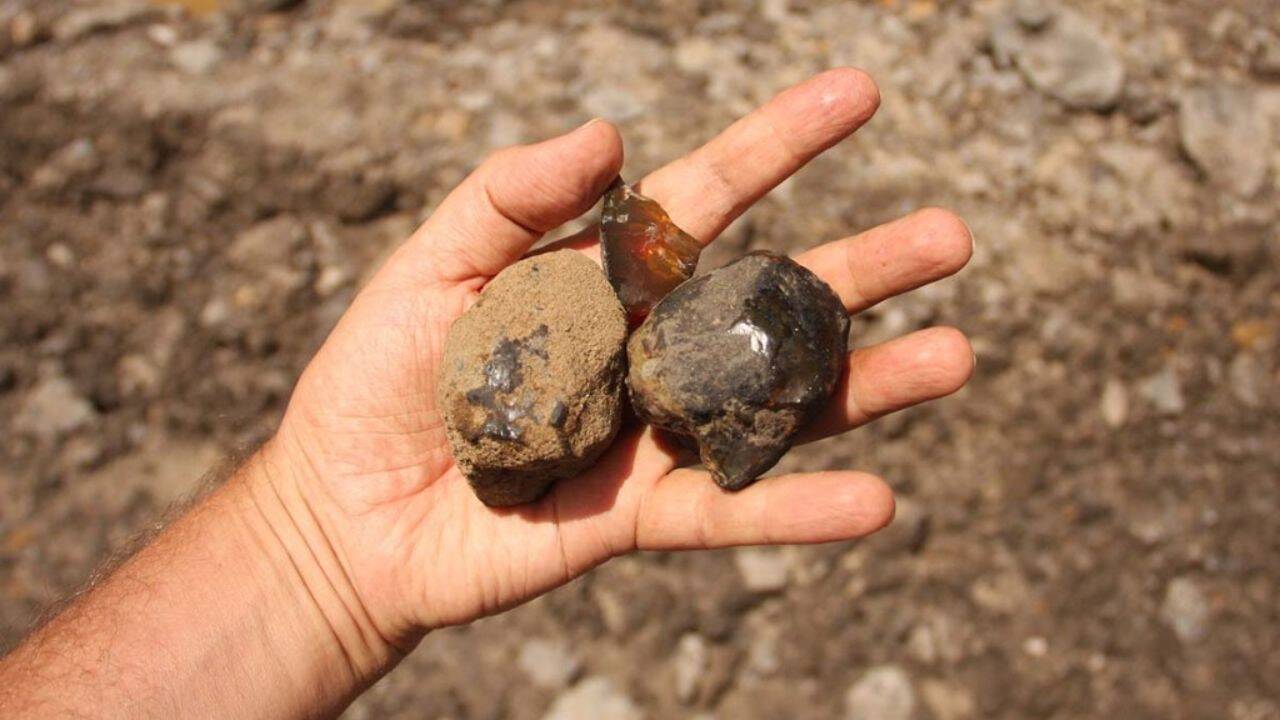
A newly uncovered insect‑laden amber from South America has exposed a 112‑million‑year‑old forest that vanished from the fossil record. The find opens fresh avenues for reconstructing ancient climates, biodiversity, and continental drift patterns.
Key Takeaways
- First insect‑bearing amber discovered in South America
- Amber preserves evidence of a 112‑million‑year‑old lost forest
- Find will aid reconstruction of ancient climate, biodiversity, and plate tectonics
A team of paleontologists excavated a previously unknown amber core in the remote Patagonian outcrops of Argentina, dating back roughly 112 million years. Embedded within the amber are numerous well‑preserved insects, indicating that a lush, tropical forest once thrived in the region during the Late Jurassic.
Amber Characteristics and Insect Identification
The amber specimen exhibits a deep golden‑brown hue and, under scanning electron microscopy (SEM), reveals encapsulated insect wings, beetle exoskeleton fragments, and even microscopic silica leaf particles. Notable inclusions include ancient beetles, predatory arachnids, and a primitive winged insect lineage that bears little resemblance to modern South American fauna.
Historical and Scientific Significance
Prior amber finds from the continent were largely resin‑rich pebbles or marine fossils; this marks the first confirmed insect‑bearing amber from South America. Its existence provides a tangible snapshot of Jurassic ecosystems before the breakup of Gondwana, shedding light on the timing and environmental impacts of the continent’s drift toward present‑day South America.
Future Research Directions
Researchers plan to conduct genomic sequencing of the trapped micro‑fossils to map evolutionary relationships and adaptive strategies. Additionally, advanced geophysical surveys are slated to locate similar amber deposits, potentially unveiling other hidden Jurassic forests across the continent.
Conclusion
Beyond redefining the paleobiology of South America, this amber discovery is a pivotal step toward reconstructing Earth’s deep‑time ecosystems. As investigations progress, the story of this 112‑million‑year‑old forest will become clearer, illuminating chapters of planetary history that have long remained obscured.