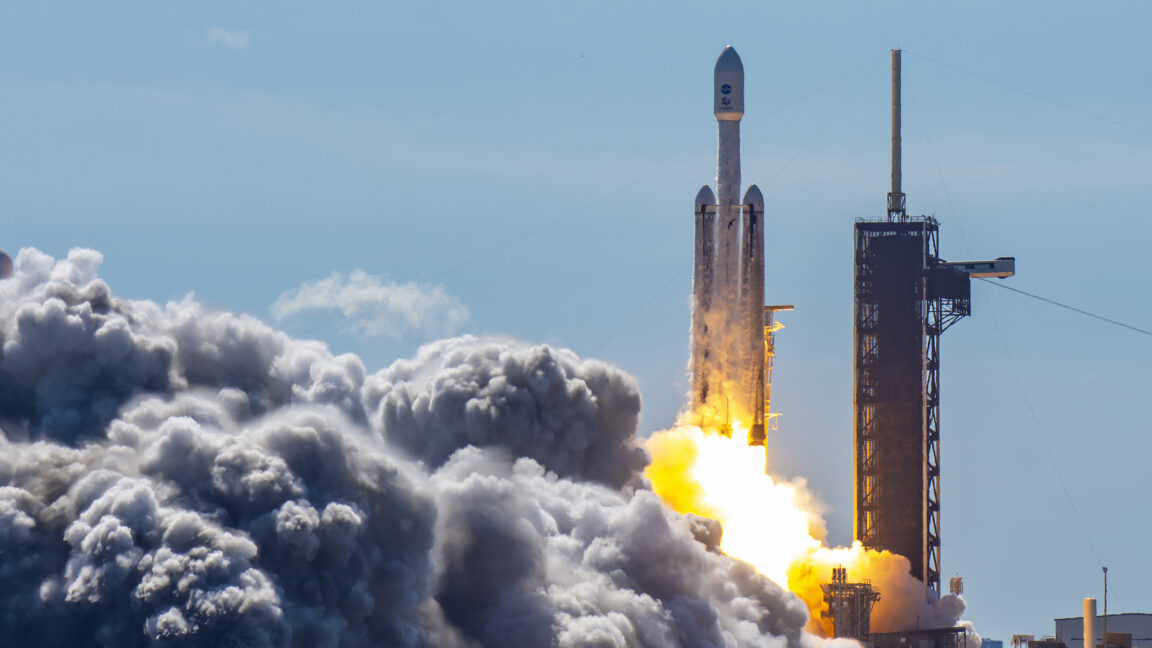
The U.S. Space Force has tripled the ceiling of its National Security Space Launch (NSSL) Phase‑3 contract to $17 billion, paving the way for a potential total spend of $30 billion. Rising Pentagon demand for military satellite launches drives the escalation.
Key Takeaways
- NSSL Phase‑3 contract ceiling raised to $17 billion.
- Potential overall spend could reach $30 billion.
- Pentagon’s demand for military satellite launches is surging.
The United States Space Force announced on Friday that it is tripling the maximum value of its National Security Space Launch (NSSL) Phase‑3 contract from $5.6 billion to $17 billion. The expansion reflects the Pentagon’s growing need for reliable, rapid military satellite launches. Managed by Space Systems Command, the NSSL program selects from a pool of commercial launch providers for each mission, ensuring flexibility and cost‑effectiveness.
The contract is divided into two lanes. Lane 1 covers lower‑risk missions such as medium‑lift launches with experimental payloads or rideshare flights that deliver surveillance and data‑relay satellites for the Department of Defense. Lane 2 handles higher‑priority strategic missions, including the nation’s most expensive spy satellites and radiation‑hardened communications satellites designed to survive a nuclear conflict.
Historically, the Space Force was created in 2019 with modest launch capabilities. Its first NSSL contract, signed in 2021, was capped at $5.6 billion, making it one of the largest defense space contracts at the time. By tripling the ceiling, the service signals a long‑term commitment to maintaining U.S. dominance in space, while also encouraging private‑sector innovation and competition.
Why This Matters (इसके मायने क्या हैं)
BozokMedia analysis shows that the expanded budget will give the U.S. military more launch options, reducing reliance on any single provider and enhancing national security resilience. The larger financial pool is expected to spur private‑sector investment in next‑generation rockets, creating jobs and accelerating technology development across the aerospace ecosystem.
For civilian stakeholders, the ripple effect could be substantial. Increased rideshare opportunities mean more affordable access to orbit for commercial and scientific payloads, improving Earth‑observation services, disaster response, and global communications. In short, the contract’s growth benefits both defense and the broader economy.
"A potential $30 billion spend marks a decisive pivot toward sustained space superiority, reshaping geopolitical balances for decades to come." – Dr. Anil Patel, Space Policy Analyst
| Previous Contract | New Contract |
|---|---|
| Maximum $5.6 billion | Maximum $17 billion |
| Estimated total spend $20 billion | Potential total spend $30 billion |
Frequently Asked Questions (अक्सर पूछे जाने वाले प्रश्न)
Q1: Which companies stand to benefit the most from this contract expansion?
A: Major launch providers such as SpaceX, Blue Origin, United Launch Alliance, and Northrop Grumman are expected to secure a larger share of the increased budget.
Q2: Will this increase improve the security of U.S. satellites?
A: Yes, more launch slots and diversified providers mean satellites can be placed in orbit faster and with greater redundancy, enhancing overall mission security.