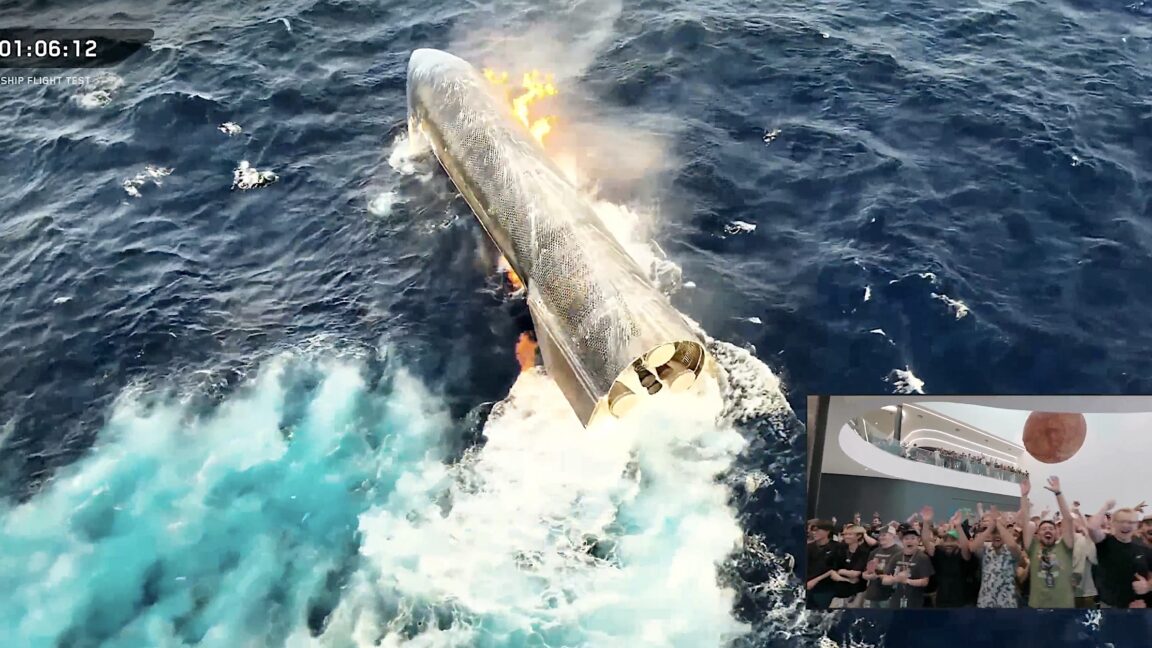
SpaceX successfully recovered its 13th full‑scale Starship test after a pristine splashdown in the Indian Ocean. The company now plans to try a tower‑based capture on the upcoming flight.
Key Takeaways
- Starship achieved an intact splashdown in the Indian Ocean
- Heat‑shield tiles survived temperatures up to 2,600°F
- Next mission may feature a tower‑catch maneuver
Details of the Successful Splashdown
On Friday, SpaceX’s 13th Starship test flight concluded with the vehicle gently tipping over and floating unscathed in a remote stretch of the Indian Ocean west of Australia. Unlike earlier water landings that ended in fire, this splashdown was clean and intact.
Heat‑Shield Inspection
Drones surveyed more than 18,000 ceramic tiles that blanket the stainless‑steel airframe. The tiles endured re‑entry temperatures of up to 2,600°F (1,430°C), providing crucial data for the program’s rapid‑turnaround goals.
Historical Background
The Starship program, launched in 2019, has undergone multiple water‑landing tests. Earlier missions often saw the vehicle’s heat shield ablaze, inflating refurbishment costs. This intact splashdown marks a pivotal engineering milestone.
Why This Matters
BozokMedia analysis shows that a successful tower‑catch could dramatically shorten turnaround times, enabling multiple Starship flights per day and slashing launch costs.
"If the data checks out, we’ll attempt to catch the ship with the tower on the next flight," Elon Musk wrote on X.
Future Plans
Musk indicated the next flight will target a longer‑range trajectory, possibly low‑Earth orbit, with the aim of returning the vehicle to the launch pad. Mechanical arms on the tower, already proven on the Super Heavy booster, will try to secure the Starship as it hovers.
Frequently Asked Questions
Q1: Will tower‑catch become a standard procedure for all Starship missions?
A: If the upcoming test succeeds, it could become routine, but technical refinements are still required.
Q2: What post‑splashdown steps are needed before re‑use?
A: Rapid de‑salination, detailed tile inspection, and corrosion mitigation are essential before refurbishment.