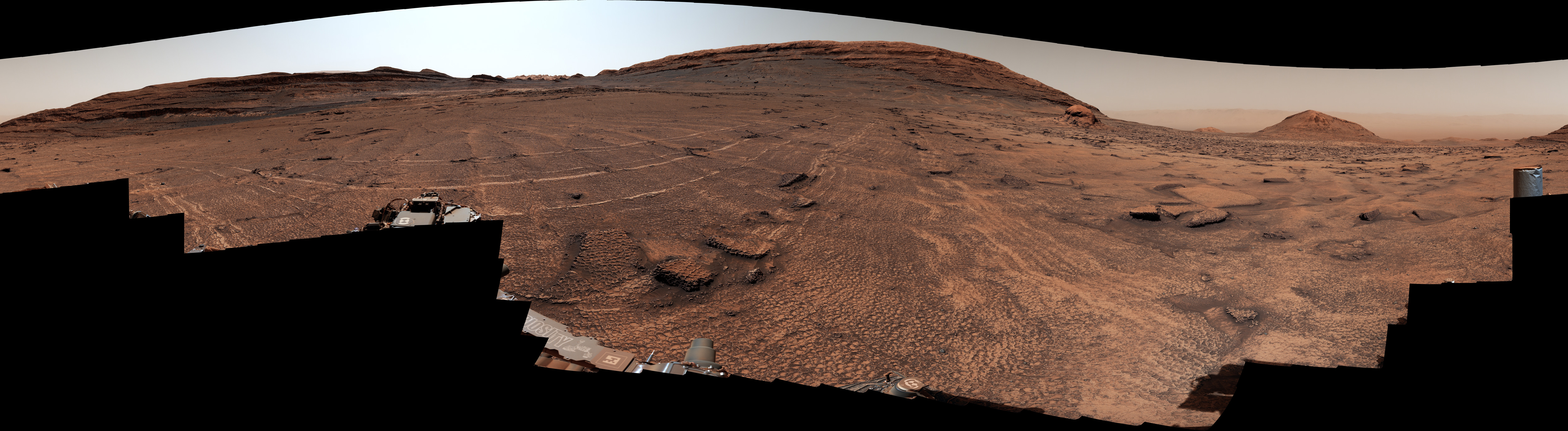
NASA's Curiosity rover has identified an expansive field of polygonal fractures in the Valle Grande region of Mars, revealing fascinating geometric patterns that could unlock the planet's geological secrets.
Key Takeaways
- Curiosity rover discovered extensive polygonal fractures in Mars' 'Valle Grande' valley.
- The patterns resemble honeycomb structures, measuring between 1.5 to 3 inches across.
- These features offer critical clues about Mars' historical climate and water presence.
NASA’s Curiosity rover has captured imagery of a stunning geological phenomenon while ascending the Martian valley known as “Valle Grande.” The rover has identified a massive field of honeycomb-like textures, scientifically referred to as polygonal fractures. Each fracture measures approximately 1.5 to 3 inches (4 to 8 centimeters) in width, creating a striking geometric landscape.
In a high-resolution 360-degree panorama captured during the mission's 4,930th and 4,931st sols, these shapes were seen stretching across the horizon. The patterns even wrap around the base of “Miraflores,” a 20-foot-tall butte capped with sand. Ashwin Vasavada, a project scientist at NASA’s Jet Propulsion Laboratory (JPL), noted that the sheer scale of this 'sea of polygons' is unprecedented.
Why This Matters
BozokMedia analysis shows that these polygonal structures are vital indicators of a planet's environmental evolution. Such patterns typically form through processes like mud cracking, extreme temperature fluctuations, or sediment compression involving water. By studying these, scientists can reconstruct the ancient hydrological cycles of Mars.
"We’ve seen a lot of fascinating landscapes through Curiosity’s eyes, but this sea of polygons took our breath away." — Ashwin Vasavada, NASA JPL
Historical Context: Since landing on August 5, 2012, Curiosity has transformed our understanding of the Red Planet. It has previously discovered sulfur crystals, meteorites, and organic molecules—the precursors to RNA and DNA—confirming that ancient Mars possessed the chemical ingredients necessary to support microbial life.
Frequently Asked Questions
1. What causes these polygonal shapes on Mars?
They are likely formed by geological processes such as the drying of mud, thermal contraction, or water being squeezed out of sediments.
2. How long has Curiosity been on Mars?
The rover has been exploring the Martian surface since August 2012, marking over 14 years of continuous scientific discovery.