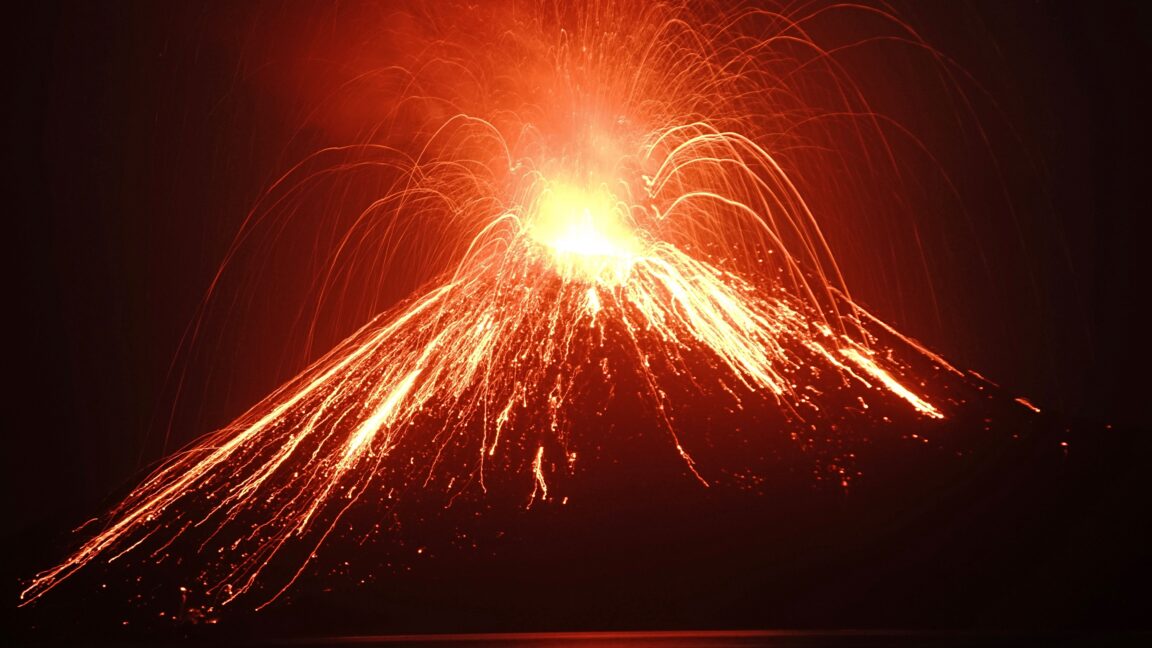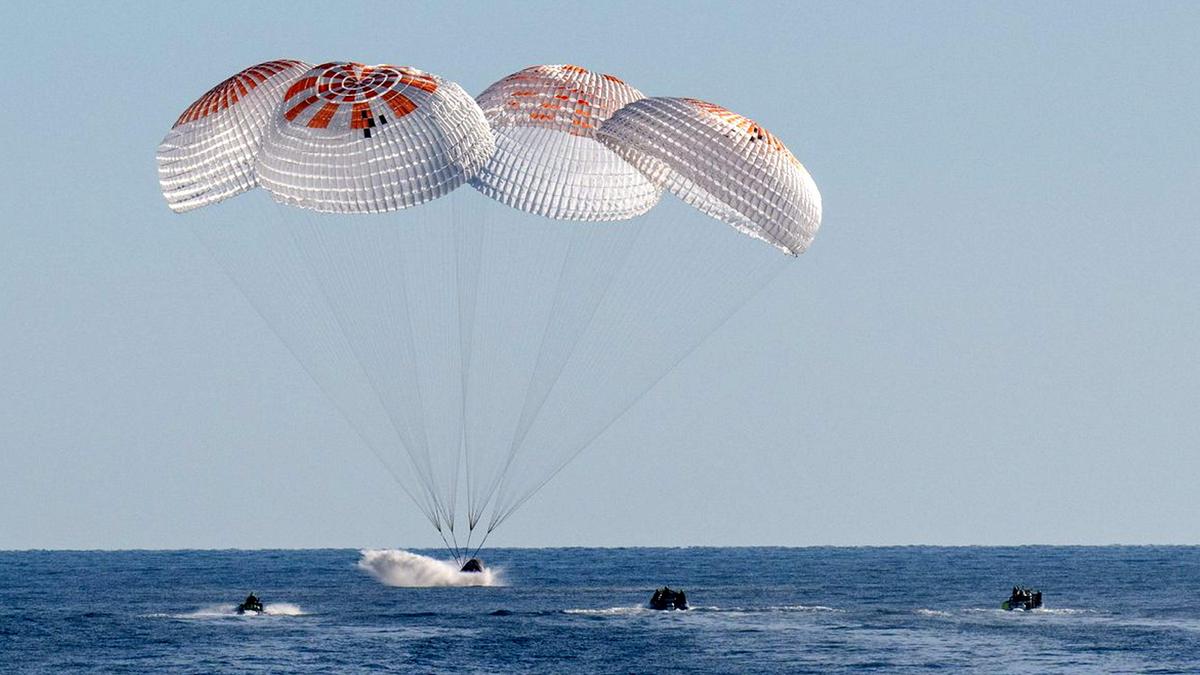
Returning from orbit is a violent struggle against atmospheric friction and extreme heat. Discover the engineering marvels like blunt body theory and heatshields that keep astronauts alive.
- Re-entry converts over 98% of a capsule's kinetic energy into intense heat.
- The 'Blunt Body Theory' uses rounded shapes to deflect heat away from the spacecraft.
- A 'Communication Blackout' occurs due to the formation of an ionized plasma sheath.
- Precise entry angles are critical to prevent bouncing off the atmosphere or burning up.
While a launch vehicle battles gravity to gain orbital velocity, re-entry is a controlled struggle against the Earth's atmosphere. The goal is to systematically shed immense kinetic energy through aerobraking and thermal protection within a very narrow window of safety.
Surviving the Inferno: Heatshields and Blunt Body Theory
Early aerospace scientists feared that atmospheric re-entry was an impossible feat. The massive kinetic energy of an orbiting capsule would convert into heat so intense it could melt any known structural material. The breakthrough came with the Blunt Body Theory, which proved that a capsule with a rounded forebody could deflect most of the heat into the surrounding air rather than absorbing it.
To manage this, spacecraft utilize a robust Thermal Protection System (TPS). This is achieved through ablation—where the shield material intentionally chars and erodes to carry heat away—or through high-grade thermal insulation that prevents heat transfer to the crew module.
Why This Matters
BozokMedia analysis shows that the margin for error during re-entry is virtually zero. The physics of deceleration must be perfectly balanced with the structural integrity of the craft to ensure human survival.
The ability to manage thermal loads through geometry and material science is what transitioned space travel from science fiction to reality.
The Re-entry Corridor and Communication Blackout
A spacecraft must hit a precise re-entry corridor. If the entry angle is too shallow (the overshoot boundary), the capsule will skip off the atmosphere like a stone on water. If the angle is too steep (the undershoot boundary), the deceleration forces and frictional heat will become lethal.
During this descent, astronauts often experience a communication blackout. The extreme heat strips electrons from air molecules, creating a layer of ionized plasma around the capsule. This plasma acts as a metallic bubble, reflecting radio waves. To mitigate this, engineers use orbital relay networks, like NASA's TDRSS, to transmit signals through thinner regions of the plasma sheath.
Frequently Asked Questions
Question 1: Why does the capsule lose communication during re-entry?
Answer: The intense heat creates a plasma sheath around the vehicle, which blocks radio signals from reaching the ground.
Question 2: What is the purpose of a semi-ballistic body?
Answer: It allows the capsule to use an 'angle of attack' to create aerodynamic lift, helping it steer toward a specific landing zone.