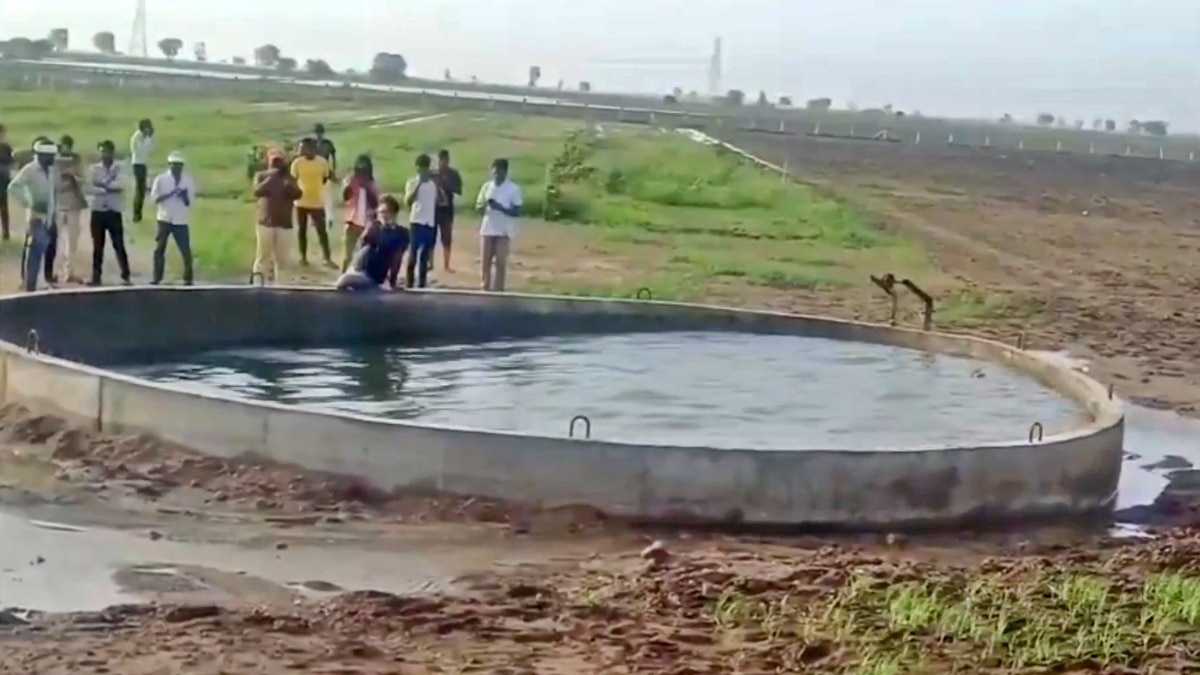
Residents of Morbi district in Gujarat were startled when water in a village well began rippling continuously, sparking fears of an earthquake. Scientists have clarified that the phenomenon is caused by groundwater recharge after heavy rains, not seismic activity.
Key Takeaways
- Well water started oscillating nonstop
- Heavy upstream rainfall triggered rapid groundwater recharge
- Investigations found no seismic activity
What Happened?
In a remote village of Morbi district, Gujarat, water in a local well began shaking continuously, drawing crowds and prompting social‑media speculation about a possible earthquake. District geologist J.S. Vadher quickly ruled out any tectonic cause.
Scientific Explanation
Vadher explained that intense monsoon rains caused a sudden surge in groundwater levels. As water infiltrates porous rock, trapped air is expelled through fractures, creating bubbles and surface ripples that mimic a shaking motion. This effect, known as a "well seiche," is similar to the oscillations observed in large lakes after strong winds.
Why This Matters
BozokMedia analysis shows that such groundwater‑related disturbances, though rare, highlight the impact of extreme monsoon patterns on subsurface dynamics, underscoring the need for robust monitoring systems in flood‑prone regions.
"Rapid groundwater recharge after heavy rainfall can generate noticeable surface vibrations, misleading the public into fearing seismic events," said a hydrogeology expert.
Frequently Asked Questions
Q1: Is the shaking well a sign of an impending earthquake?
A: No, investigations confirmed there is no seismic activity associated with the phenomenon.
Q2: Could this happen again in the future?
A: Yes, similar conditions can recur during periods of intense rainfall and rapid groundwater recharge.