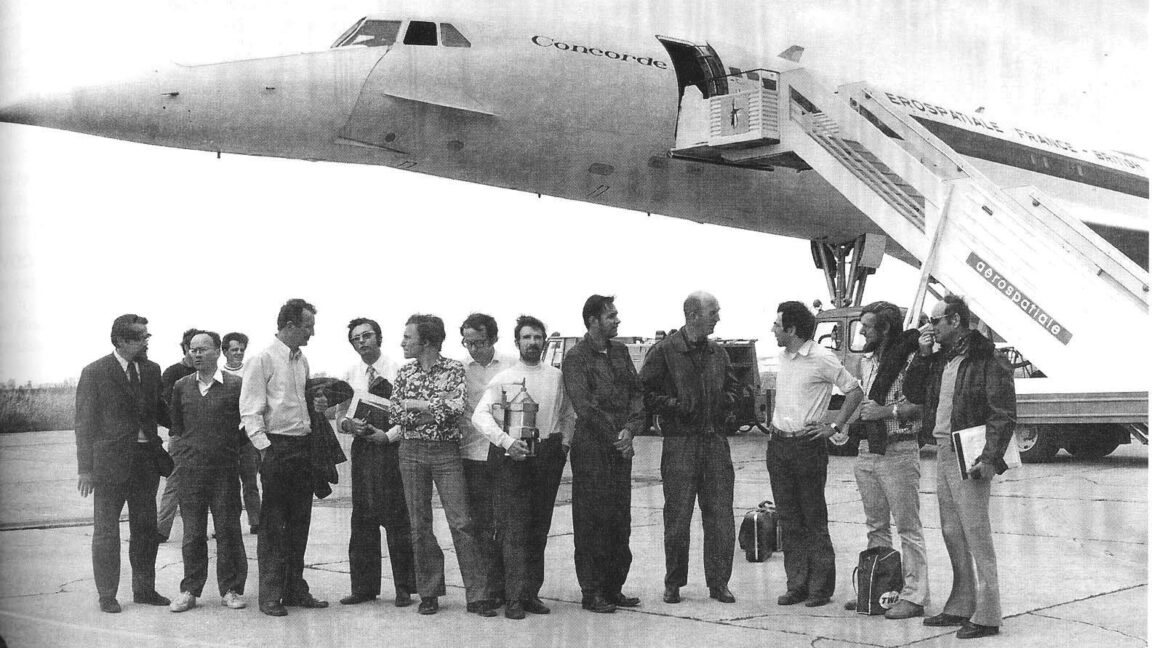
In a stunning feat of engineering and science, a group of researchers used the Concorde supersonic jet to extend a total solar eclipse to a record-breaking 74 minutes.
Key Takeaways
- Scientists used the Concorde aircraft to observe a total solar eclipse for a record 74 minutes.
- The mission took place in June 1973 over Africa.
- The aircraft flew at more than twice the speed of sound to stay within the shadow.
Walking through the National Air and Space Museum of France, aviation enthusiasts are greeted by legends. However, for the science community, the Concorde F-WTSS 001 prototype holds a much deeper significance. Painted right behind its iconic nose is a map tracing the path of a total solar eclipse from June 1973.
This isn't just decoration; it is a monument to a scientific breakthrough. A team of eight scientists utilized the supersonic capabilities of the Concorde to perform the longest imaging of the Sun's corona ever recorded, essentially racing against the Moon's shadow across the African continent.
Why This Matters
BozokMedia analysis shows that this mission redefined the boundaries of observational astronomy. By flying at supersonic speeds, the crew could stay within the path of totality for much longer than any stationary observer on Earth could ever dream of.
The Concorde didn't just fly through the sky; it raced through time and shadow to unlock the secrets of the Sun.
Comparison of Observation Durations
| Observation Method | Maximum Totality Duration | Speed Requirement |
|---|---|---|
| Ground-based (Equatorial) | ~7.5 Minutes | N/A |
| Concorde Supersonic Mission | 74 Minutes | Mach 2+ |
To put this in perspective, the upcoming solar eclipse on August 12, visible in parts of Europe, will offer only about two minutes of totality from the ground. The Concorde's ability to extend this window by nearly ten times remains one of the most audacious scientific endeavors of the 20th century.
Frequently Asked Questions
Question 1: Why was the Concorde necessary for this mission?
Answer: To stay in the moon's shadow, the plane had to fly faster than the shadow itself was moving across Earth.
Question 2: Where can you see the map of this event?
Answer: The map is permanently painted on the nose of the Concorde F-WTSS 001 prototype in France.