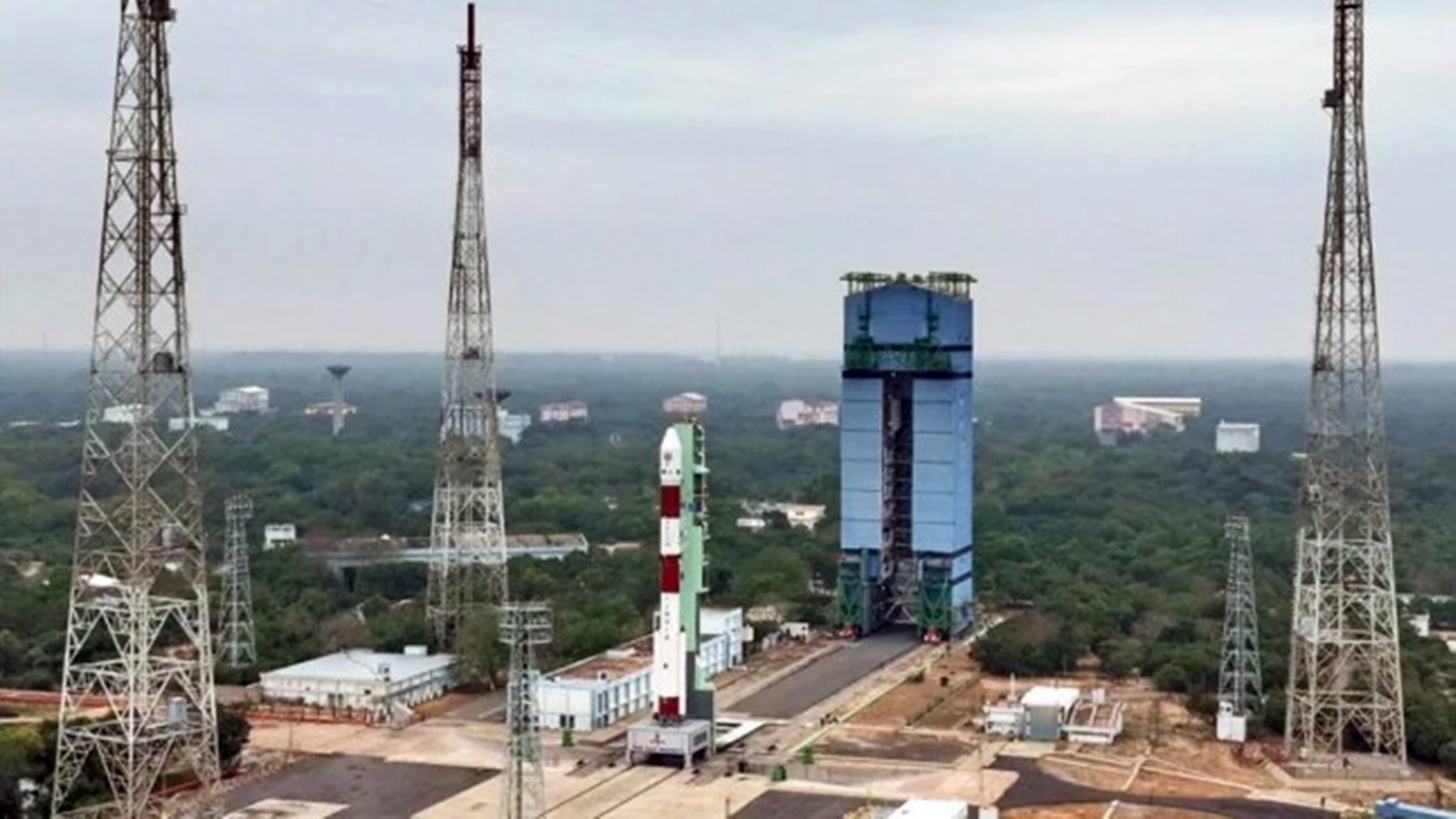
After a series of launch anomalies and a seven-month operational pause, ISRO is set to return to the skies in September with the GISAT-1A satellite, aiming to restore its orbital capabilities.
- ISRO will launch the GISAT-1A (EOS-05) earth observation satellite in the first week of September.
- The launch ends a seven-month hiatus following multiple anomalies in PSLV and GSLV missions.
- NavIC constellation currently lacks standalone positioning capability, making upcoming NVS-03 launch critical.
The Indian Space Research Organisation (ISRO) is preparing to break its seven-month operational silence. Following a string of technical setbacks and a high-profile failure in January, the space agency has scheduled the launch of the GISAT-1A (also known as EOS-05) for the first week of September. This mission is viewed as a critical recovery step for India's space program after a period of significant instability.
The GISAT-1A is a high-resolution earth observation satellite designed to replace the original GISAT-1, which failed to reach its intended orbit in 2021. With a projected mission lifespan of 10 years, the satellite will be instrumental in monitoring natural disasters, forestry, and agricultural patterns across vast geographical areas, providing essential data for national security and environmental management.
Why This Matters
BozokMedia analysis shows that ISRO is currently facing a credibility gap regarding its launch vehicle reliability. Three out of six missions in 2025 and 2026 failed to reach their target orbits. The recurring "anomalies" in the third stage of the Polar Satellite Launch Vehicle (PSLV) suggest a systemic technical challenge that the agency has yet to publicly detail, as failure analysis reports remain classified.
The successful deployment of GISAT-1A is not just about a single satellite; it is about restoring global confidence in the PSLV as a reliable commercial and strategic launch vehicle.
The struggle is further highlighted by the state of the NavIC (Navigation with Indian Constellation) system. Currently, only three satellites (IRNSS-1B, IRNSS-1I, and NVS-01) are operational. Since a minimum of four satellites is required for standalone positioning services, India remains dependent on foreign systems like the US GPS and Russia's GLONASS for critical military and civilian navigation.
Looking ahead, the NVS-03 satellite, already fueled and awaiting takeoff at Sriharikota, is expected to launch in November. This mission is paramount to restoring India's independent positioning capabilities. However, ISRO is trailing significantly behind its own ambitious targets, having fallen short of the 15-mission goal set for the 2025-26 period.
| Mission/Vehicle | Status/Outcome | Key Issue |
|---|---|---|
| PSLV-C62 / EOS-N1 | Failed | Third Stage Anomaly |
| PSLV-C61 / EOS-9 | Failed | Third Stage Anomaly |
| GSLV-F15 / NVS-02 | Partial Failure | Orbit-raising Manoeuvre Failed |
| GSLV-F16 / NISAR | Successful | N/A |
Frequently Asked Questions
Q1: Why did ISRO stop launches for seven months?
The pause followed a series of anomalies in the PSLV and GSLV launch vehicles, necessitating internal reviews to ensure future mission success.
Q2: What is the difference between GISAT-1A and EOS-05?
They are the same satellite; GISAT-1A is the functional name, while EOS-05 is the nomenclature used under ISRO's new naming convention for Earth Observation Satellites.