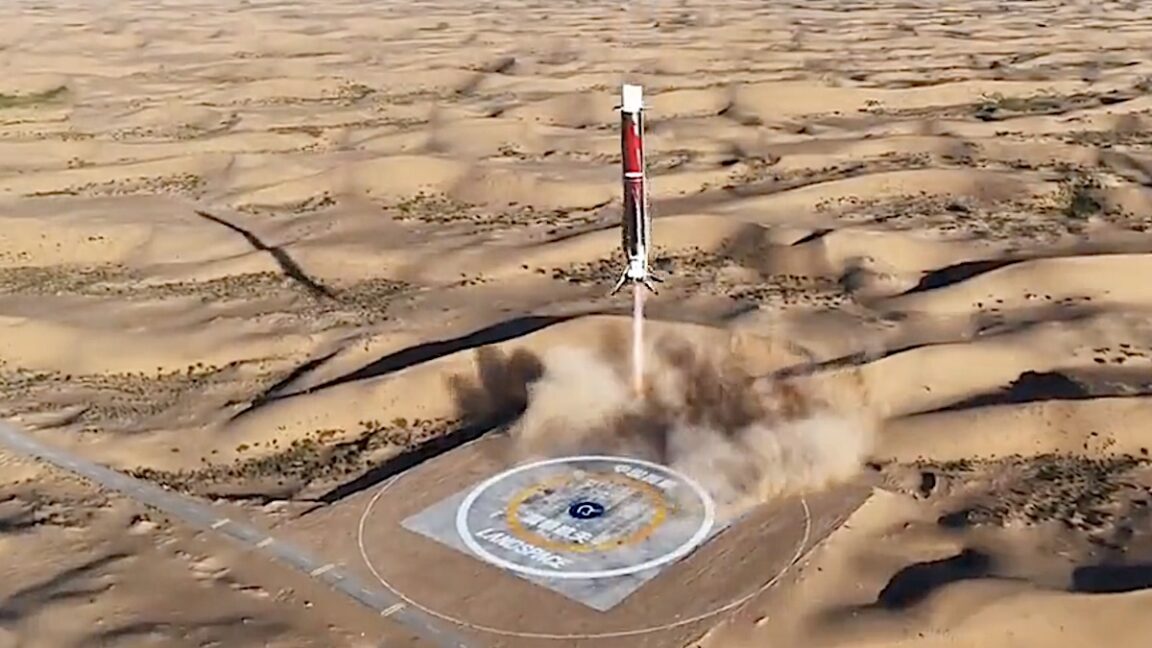
China's space capabilities are accelerating as a second launch operator successfully lands an orbital-class booster, signaling a massive shift in the global space race.
- A second Chinese launch operator has successfully achieved an orbital-class rocket booster landing.
- This follows closely on the heels of China's first successful recovery just over a month ago.
- The rapid adoption of reusable technology highlights China's aggressive space expansion.
The floodgates of China's reusable space technology have officially opened. Just over a month after China recovered its first orbital-class rocket booster, a second launch operator has accomplished a similar feat. This rapid succession of successes underscores the accelerating launch capabilities of the Chinese space sector.
The speed of this development is striking when compared to global benchmarks. In the United States, it took a decade for a second company, Blue Origin, to achieve a propulsive landing of an orbital-class booster after SpaceX revolutionized the industry with the Falcon 9 in 2015. China, however, is compressing this timeline significantly.
Why This Matters
BozokMedia analysis shows that China is effectively building a dual-track space economy. By fostering both state-backed giants and agile private enterprises, China is ensuring a continuous pipeline of innovation that could challenge Western dominance in low-earth orbit access.
We will put the booster back into service for another flight as soon as possible.
The landscape in China is bifurcated. On one side, massive state-owned entities like the China Aerospace Science and Technology Corporation (CASC) lead the charge. On the other, a burgeoning commercial sector is being fueled by intense private capital investment, aiming to mirror the rapid iteration seen in the American commercial space industry.
While companies like Rocket Lab and Relativity Space are working toward their own reusable milestones in the US, China's ability to deploy multiple players simultaneously creates a high-pressure environment for global competition. This shift from expendable to reusable launch vehicles is the single most important factor in reducing the cost of access to space.
Comparison: Rapid Reusability Landscape
| Region | Primary Drivers | Current Status |
|---|---|---|
| China | CASC & Private Startups | Rapidly scaling multiple operators |
| USA | SpaceX, Blue Origin, etc. | Established leaders with evolving fleets |
Frequently Asked Questions
Question 1: What is an orbital-class booster?
Answer: It is a rocket stage capable of delivering payloads into Earth's orbit, which is much harder to recover than suborbital rockets.
Question 2: How does reusability benefit space missions?
Answer: It drastically lowers the cost per launch, allowing for more frequent satellite deployments and deep-space exploration.