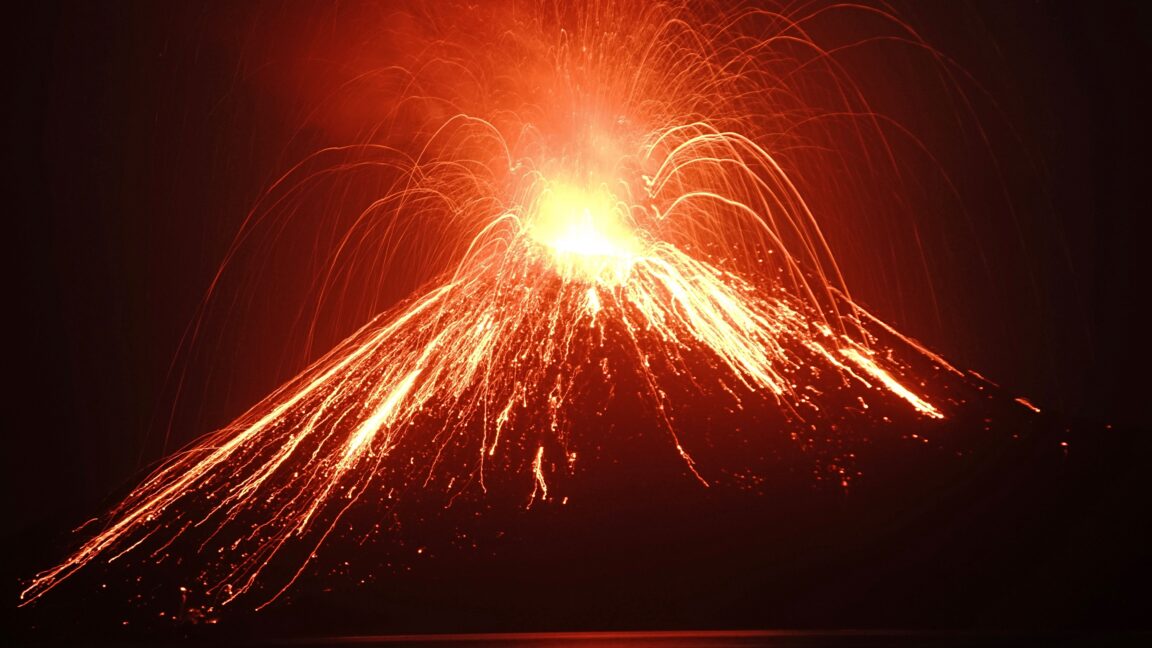
Enormous volcanic eruptions have done more than reshape landscapes; they have fundamentally altered Earth's climate and the trajectory of human societies.
- The 1883 Krakatoa eruption was one of the deadliest in recorded history.
- Over 36,000 lives were lost, primarily due to massive tsunamis.
- It marked the first time a natural disaster was documented globally in near real-time via telegraph.
The first telegram arrived in Singapore on a Monday, sent from the city of Batavia in the Dutch East Indies (now Jakarta, Indonesia). “Terrific detonations from Krakatau (volcanic island),” it reported. Soon afterward, messages poured in: “Stones falling. Village near Anjer washed away.” The telegraph wires continued clattering out harrowing news of destroyed bridges, smashed boats, and lighthouses that had simply “disappeared.” By noon on Tuesday, the true magnitude of the disaster was undeniable: “Where once Mount Krakatau stood the sea now plays.”
Within days, the source of this global shockwave was identified. On the morning of August 27, 1883, a cataclysmic volcanic eruption obliterated two islands in the strait between Java and Sumatra, and much of a third. The human cost was staggering; more than 36,000 people perished, with the vast majority falling victim to the devastating tsunamis triggered by the colossal explosion.
Why This Matters
BozokMedia analysis shows that events like the Krakatoa eruption serve as critical turning points in both geological and sociological history. These events demonstrate how localized tectonic activity can trigger global atmospheric shifts, impacting agriculture and socio-economic stability across continents.
Volcanic eruptions are not just geological events; they are global catalysts that reshape climate, biology, and the very fabric of human history.
Thanks to the burgeoning telecommunications technology of the Victorian era, this was the first time in human history that a global audience could witness and document the immediate and long-term effects of a catastrophe in near real-time. This connectivity changed how the world perceived natural threats.
The data gathered in the years following the eruption laid the essential foundations for the modern science of volcanology. It provided an eye-opening lesson in how massive eruptions can influence global temperatures, crop yields, and even the political stability of nations.
Historical Background
Throughout history, massive volcanic events have been interpreted through various lenses, from divine wrath to omens. However, the Krakatoa event transitioned the world into an era of scientific observation, where data began to replace myth in understanding the Earth's volatile nature.
Frequently Asked Questions
Question 1: When did the Krakatoa eruption occur?
Answer: The most famous and devastating eruption took place in August 1883.
Question 2: How did people learn about it so quickly?
Answer: The expansion of the global telegraph network allowed news to travel across oceans in near real-time.