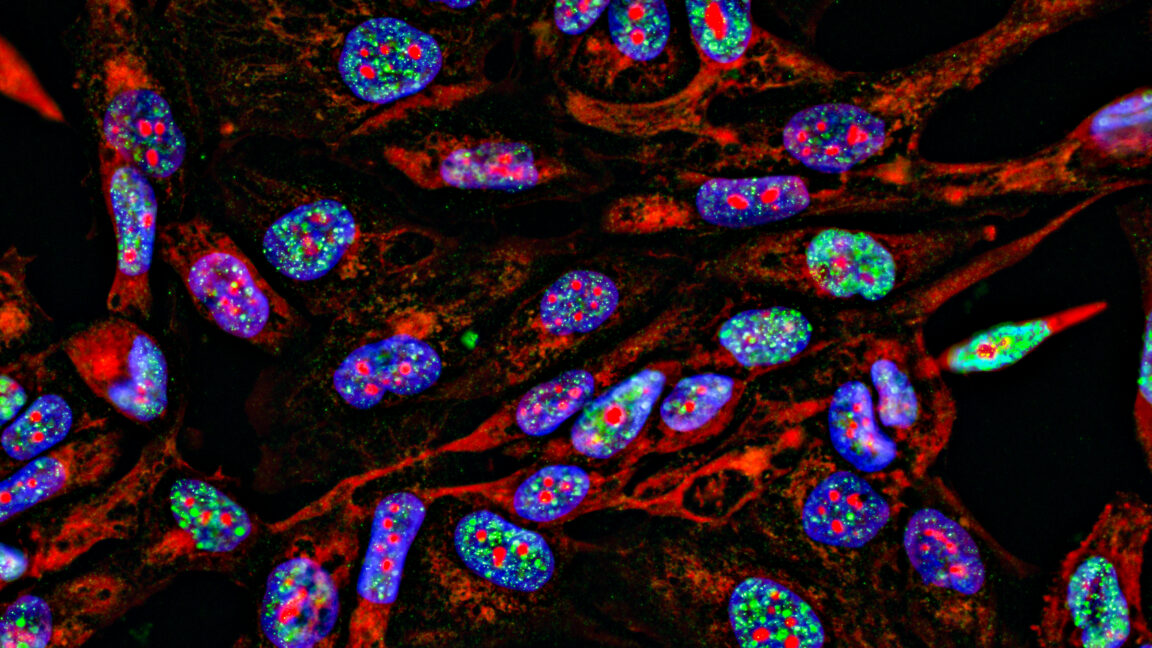
A massive investigation has revealed that lab supply companies are using manipulated images to market commercial antibodies, potentially compromising global biological research.
- Suppliers used manipulated images to demonstrate antibody performance.
- Over 17,000 commercial antibodies are implicated in the investigation.
- Manipulations include data fabrication and removing background noise.
The integrity of biological research has been struck by a significant blow. Reese Richardson, a post-doctoral researcher at Northwestern University, has uncovered widespread image manipulation in the marketing materials of lab supply companies. These images, intended to demonstrate the efficacy of antibodies, appear to have been doctored in ways that would typically lead to the retraction of academic papers.
Antibodies are fundamental to the body's immune defense and are essential tools in various laboratory techniques. While many researchers produce their own, most rely on commercially available antibodies for rapid experimentation. However, the discovery suggests that the very tools being sold to scientists may be backed by fraudulent visual evidence.
Nature of the Manipulations
The investigation revealed that the manipulations were not merely aesthetic adjustments. They ranged from removing background noise to the more egregious act of copying and pasting data to fabricate specific results. This systematic deception has been identified in the marketing materials for over 17,000 commercial antibodies.
The scale of this manipulation suggests a systemic issue within the commercial supply chain of biological reagents.
Why This Matters
BozokMedia analysis shows that this discovery has profound implications for the reproducibility of science. If researchers base their experiments on antibodies that do not perform as advertised, the resulting data becomes invalid, potentially leading to a cascade of failed studies and wasted funding across the global scientific community.
Historical Background
While image fraud has historically been an issue within individual research papers, this case is unique because the fraud is occurring at the industrial level. Instead of an individual scientist cutting corners, entire commercial entities are accused of misrepresenting product capabilities to drive sales.
Frequently Asked Questions
Question 1: How widespread is this issue?
Answer: According to current findings, problematic manipulations have been detected in the marketing of more than 17,000 commercial antibodies.
Question 2: Can this impact published research?
Answer: Yes, if researchers used these specific antibodies to support their findings, the validity of their published work could be called into question.