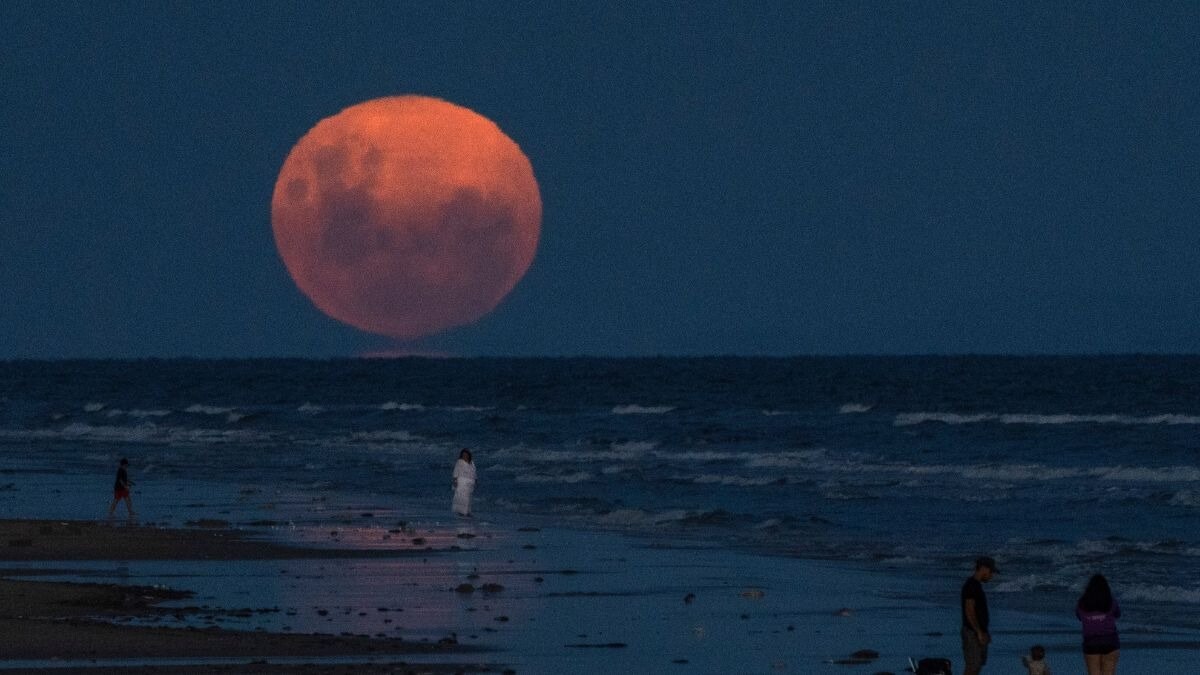
A dramatic deep partial lunar eclipse is occurring on August 28, with 96% of the Moon's surface entering Earth's shadow, creating a spectacular orange-red glow.
- Approximately 96% of the lunar surface is immersed in Earth's umbra.
- The eclipse creates a 'Blood Moon' effect due to light refraction.
- The event lasts over five hours, with the main phase spanning three hours.
Skywatchers across the globe are witnessing a breathtaking celestial spectacle tonight. On August 28, a deep partial lunar eclipse is transforming the Moon into a striking orange-red orb. This phenomenon occurs as the Moon passes deep into the Earth's dark central shadow, known scientifically as the umbra.
What makes this particular eclipse so significant is the sheer scale of the shadow coverage. With nearly 96 percent of the lunar surface submerged in darkness, the event mimics the visual intensity of a total lunar eclipse, often referred to as a 'Blood Moon'.
Why This Matters
BozokMedia analysis shows that such high-percentage partial eclipses are rare opportunities for amateur astronomers to study atmospheric refraction. The alignment of the Sun, Earth, and Moon creates a natural laboratory for observing how Earth's atmosphere affects light.
The coppery glow of the Moon is caused by Earth's atmosphere scattering shorter blue wavelengths and refracting longer red wavelengths toward the lunar surface.
During the eclipse, the Moon does not simply vanish. Instead, it undergoes a color transformation. As sunlight passes through our atmosphere, the blue light is scattered away, while the red and orange wavelengths are bent toward the Moon. This is the exact same atmospheric effect that produces the vibrant colors of a terrestrial sunset.
Historical Background
For millennia, lunar eclipses have captivated human imagination. While ancient cultures often interpreted these celestial shifts through the lens of mythology and omen, modern science has decoded the mechanics of orbital planes and shadow casting, turning a moment of mystery into a moment of profound scientific understanding.
While the Americas are ideally positioned for this viewing, parts of Europe and Africa will also catch the spectacle. Unfortunately, observers in India may find it difficult to view the peak phases as the Moon will remain below the horizon during the most dramatic moments.
Frequently Asked Questions
Question 1: Why is the Moon turning red during an eclipse?
The red color is caused by Earth's atmosphere filtering out blue light and bending red light toward the Moon.
Question 2: Can I use a telescope to see it better?
Yes, while naked-eye viewing is safe, binoculars or a telescope will provide a much clearer view of the shadow's edge and color gradients.