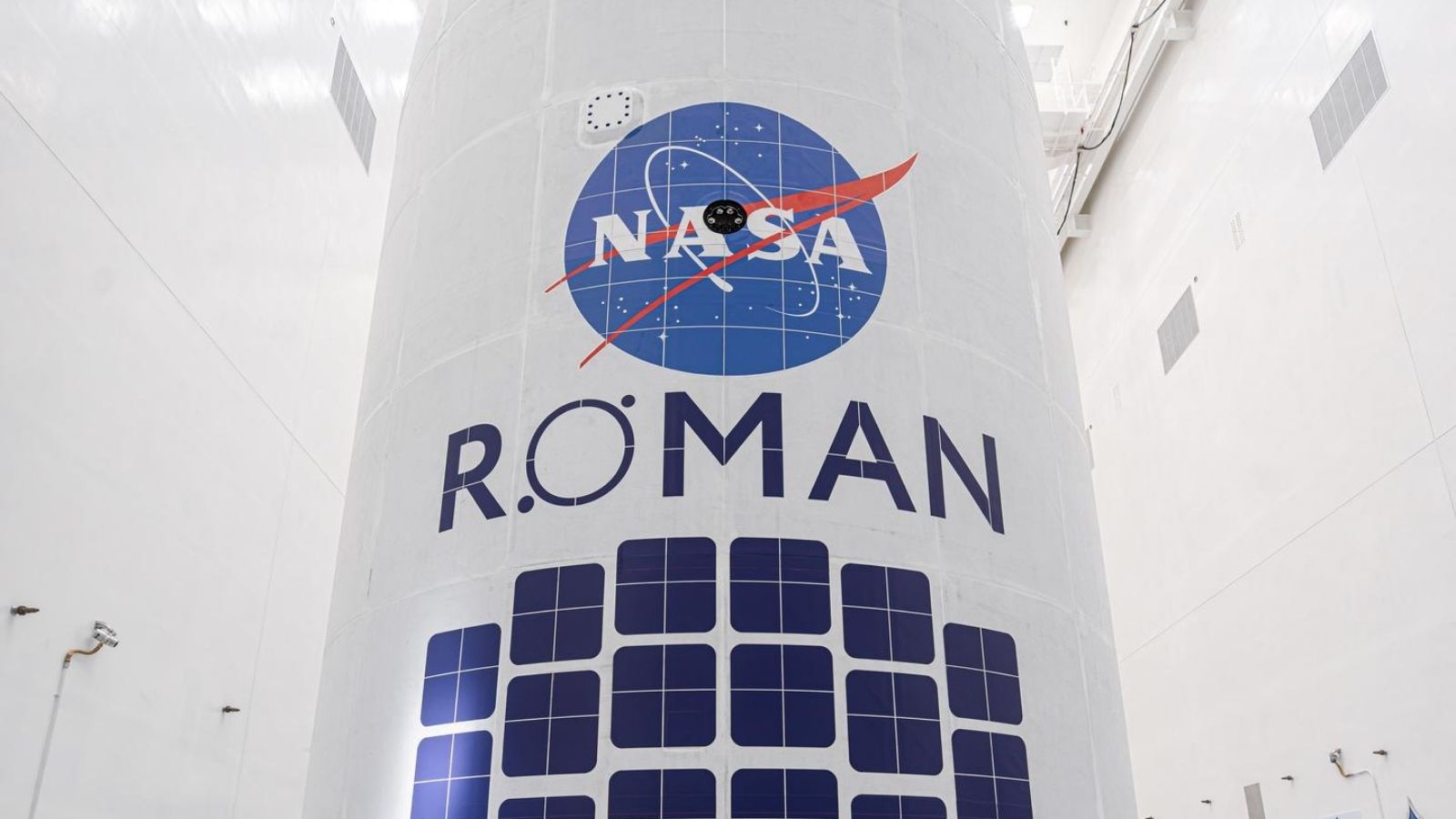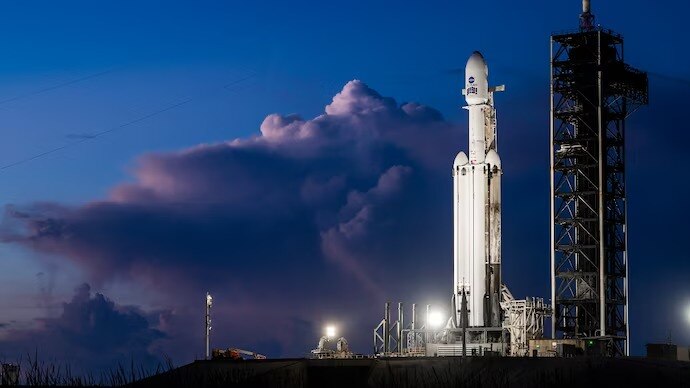
NASA has successfully launched the Nancy Grace Roman Space Telescope, a powerhouse instrument designed to uncover the mysteries of dark energy and discover thousands of new exoplanets.
- The Roman Telescope aims to solve the mystery of Dark Energy and the expansion of the universe.
- It features a field of view 100 times larger than the Hubble Space Telescope.
- The mission will employ gravitational microlensing to detect distant planets.
In a landmark achievement for astrophysics, the Nancy Grace Roman Space Telescope has been launched into orbit. This next-generation observatory is engineered to peer into the farthest reaches of the universe, seeking to unravel the enigmatic nature of dark energy and the mysterious distribution of dark matter that binds galaxies together.
Engineering a Cosmic Survey
Unlike the James Webb Space Telescope (JWST), which acts as a 'deep-dive' instrument focusing on specific targets, the Roman Telescope is designed for wide-area surveys. Its wide-field instrument allows it to capture massive swaths of the sky in a single shot, enabling astronomers to perform a census of galaxies and stars on an unprecedented scale.
Why This Matters
BozokMedia analysis shows that the Roman Telescope fills a critical gap in our current observational capabilities. By combining the sensitivity of JWST with the wide-angle view of Hubble, NASA is creating a synergy that will allow us to map the 'cosmic web.' This is crucial for understanding why the expansion of the universe is accelerating—a phenomenon attributed to dark energy.
"The Roman Space Telescope is not just a tool; it is a gateway to understanding the invisible forces that govern the evolution of the entire universe."
Historical Context and Legacy
The telescope is named after Nancy Grace Roman, a trailblazing astronomer and NASA administrator who was instrumental in the development of the Hubble Space Telescope. Her legacy of persistence and scientific rigor is mirrored in this mission, which seeks to push the boundaries of what is observable.
| Feature | Hubble Telescope | Roman Telescope |
|---|---|---|
| Field of View | Narrow/Focused | Ultra-Wide (100x Hubble) |
| Primary Goal | Detailed Imagery | Cosmic Surveys & Dark Energy |
| Spectrum | Visible & UV | Primarily Infrared |
Frequently Asked Questions
1. How does Roman differ from the James Webb Telescope?
While Webb looks deep into a small patch of sky, Roman looks broad across a vast area, acting as a scout for Webb's deeper investigations.
2. What is gravitational microlensing?
It is a technique where the telescope detects a planet by observing how its gravity bends the light of a distant star.