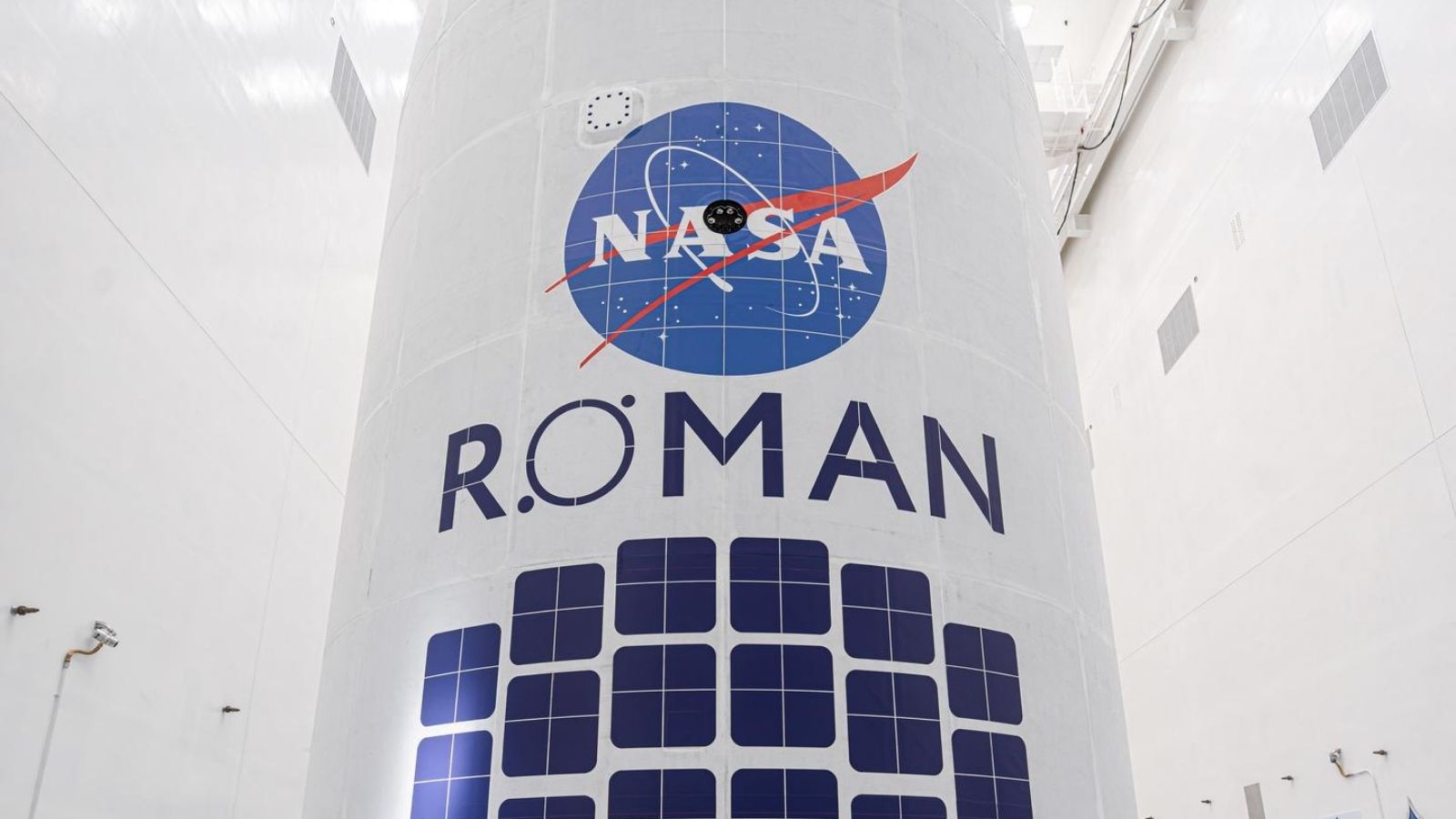
NASA has successfully deployed the Nancy Grace Roman Space Telescope to explore the darkest corners of the universe. The mission aims to decode the mysteries of dark energy and the expansion of the cosmos.
- NASA launched the Nancy Grace Roman Space Telescope via a SpaceX Falcon Heavy rocket.
- The mission focuses on mapping dark matter and understanding dark energy.
- It offers a field of view 100 times larger than the Hubble Space Telescope.
In a monumental leap for astrophysics, NASA has launched the Nancy Grace Roman Space Telescope, sending it on a million-mile odyssey to probe the deepest mysteries of the void. Launched atop a SpaceX Falcon Heavy, the telescope is engineered to survey the sky with unprecedented speed and precision, targeting the invisible forces that dictate the fate of the universe.
The primary scientific objective is to investigate Dark Energy and Dark Matter. While dark matter does not emit light or energy, its gravitational pull is evident in the movement of galaxies. By utilizing a phenomenon known as gravitational lensing, the Roman telescope will map the distribution of this invisible mass across the cosmic web.
Why This Matters
BozokMedia analysis shows that the Roman Space Telescope fills a critical gap in our current observational capabilities. While the James Webb Space Telescope (JWST) acts as a 'zoom lens' focusing on specific, distant objects, the Roman telescope serves as the 'wide-angle lens.' This complementary relationship allows astronomers to scan vast regions of space to find rare objects and then use JWST for high-resolution follow-up studies.
"The Roman Space Telescope will redefine our map of the cosmos, turning the invisible dark universe into a visible scientific reality."
Historically, our understanding of the universe has been limited by the trade-off between resolution and field of view. The Roman telescope shatters this limitation, providing images that are as sharp as Hubble's but cover an area 100 times larger. This will enable the cataloging of billions of galaxies in a fraction of the time previously required.
Beyond dark energy, the mission is poised to revolutionize the search for exoplanets. Using gravitational microlensing, the telescope will detect planets that are far from their host stars, providing a more complete census of planetary systems in the Milky Way and potentially identifying habitable worlds.
| Feature | Hubble Telescope | Roman Telescope |
|---|---|---|
| Field of View | Narrow | Ultra-Wide |
| Primary Target | Galaxy Formation | Dark Energy/Matter |
| Technology | Optical/UV | Wide-Field Infrared |
Frequently Asked Questions
Q1: How does the Roman telescope differ from James Webb?
A: James Webb focuses on deep, narrow observations, whereas Roman performs wide-area surveys of the sky.
Q2: What is Dark Energy?
A: It is a theoretical form of energy that permeates all of space and accelerates the expansion of the universe.