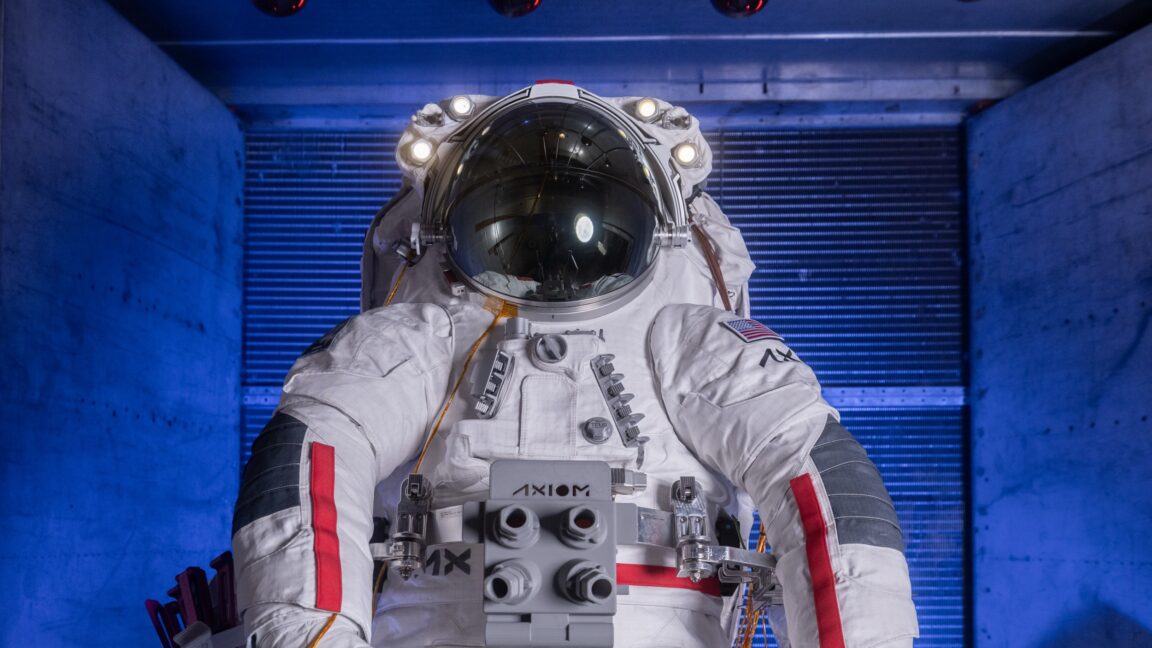
NASA has opted for a lighter, less complex “Sortie Suit” for its initial Artemis lunar landings, aiming to accelerate a crewed touchdown at the Moon’s south pole by 2028. The redesign, developed with Axiom Space, reduces suit mass and simplifies lander interfaces.
- NASA adopts a simplified suit
- Interface with landers streamlined
- Targeting South Pole landing by 2028
NASA announced a shift to a simpler “Sortie Suit” for its first lunar landings as the agency pushes to meet an accelerated Artemis IV timeline that could see humans on the Moon’s south pole as early as 2028.
Directed by Artemis Program Manager Jeremy Parsons, NASA will partner with Axiom Space to develop this variant, which will be flown on landers built by SpaceX and Blue Origin.
The primary objectives are to cut suit mass, reduce mechanical complexity, and simplify the interface between the spacesuit and lunar lander, thereby improving astronaut mobility and lowering overall mission cost.
Historical Background
The Artemis program, launched in 2024, aims to return humans to the lunar surface by 2025 and establish a sustainable presence by 2028. Earlier phases relied on heavyweight extravehicular activity (EVA) suits that contributed to schedule slips. The new approach reflects lessons learned from those delays.
Why This Matters
BozokMedia analysis shows that a lighter, less complex suit could shave critical months off the Artemis IV schedule, strengthening U.S. leadership in the emerging lunar economy and reducing dependence on foreign launch services.
“A streamlined suit directly translates to safer, faster crewed missions,” says Dr. Anita Rao, aerospace engineer at the International Space Institute.
Frequently Asked Questions
Q1: Which landers will use the Sortie Suit?
A: Both SpaceX’s and Blue Origin’s lunar landers are slated to carry the new suit.
Q2: When will the suit be tested?
A: Initial qualification tests are slated for mid‑2026, paving the way for a 2028 crewed landing.