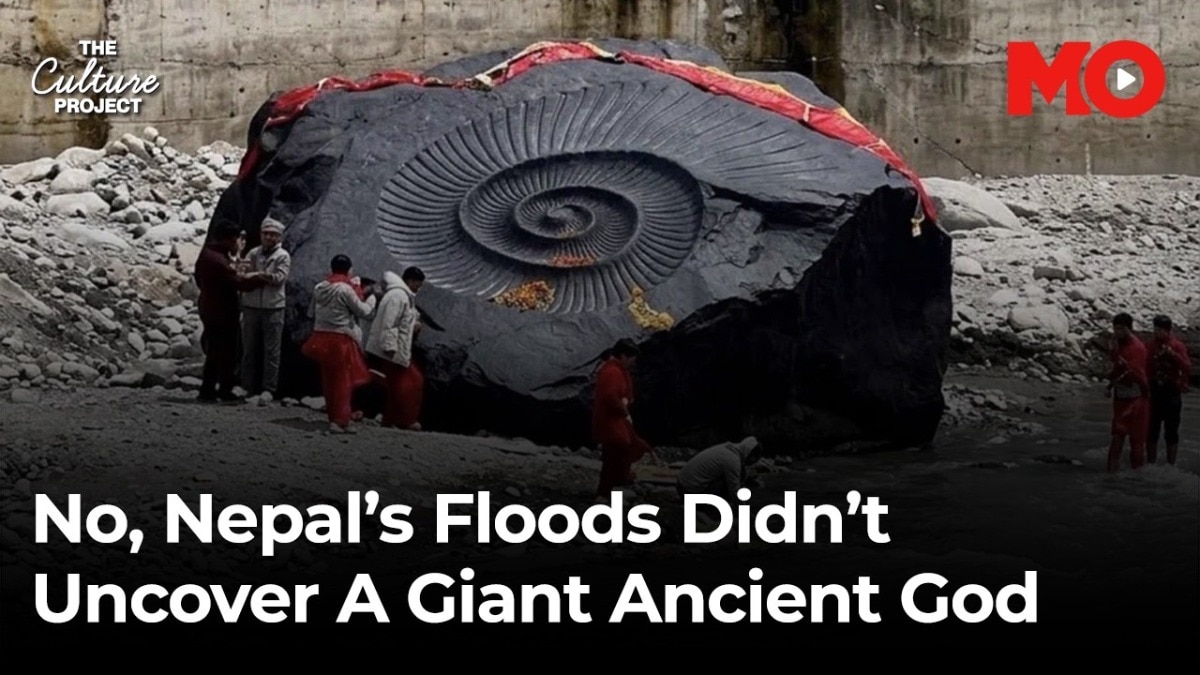
Geological evidence reveals that the Himalayas were once the floor of a vast ocean. This profound transformation has linked ancient marine fossils to the birth of divine myths.
- The Himalayas originated from the tectonic collision of the Indian and Eurasian plates.
- Marine fossils found at extreme altitudes prove the existence of the ancient Tethys Sea.
- These fossils have historically been interpreted as divine symbols in various cultures.
The towering peaks of the Himalayas hold a secret that challenges our perception of time and nature. Scientific research has confirmed that the world's highest mountain range was once the bed of a massive, thriving body of water known as the Tethys Ocean.
Millions of years ago, the relentless movement of tectonic plates forced the seabed upwards. As the Indian plate collided with the Eurasian plate, the sedimentary layers of the ocean floor were thrust into the sky, creating the majestic peaks we see today. Trapped within these rising rocks are the remnants of ancient marine life, preserved as fossils at altitudes where life struggles to survive.
The Intersection of Science and Myth
Beyond the realm of geology, these fossils have played a significant role in human spirituality. For centuries, the unusual shapes and textures of these marine remains have been perceived as sacred. In many Himalayan communities, these fossils were not viewed merely as biological remnants but as divine artifacts or symbols of gods, bridging the gap between physical reality and spiritual belief.
The presence of marine life in the heart of the mountains is a testament to the incredible geological dynamism of our planet.
Why This Matters
BozokMedia analysis shows that this phenomenon is crucial for understanding both Earth's history and the evolution of human culture. The transition from a seabed to a mountain range provides a roadmap for understanding climate shifts and tectonic movements that shape our world.
Furthermore, the transformation of biological evidence into religious icons highlights how humans have always sought meaning in the natural wonders surrounding them. It is a profound example of how geology shapes theology.
Frequently Asked Questions
1. How did the Himalayas form?
They were formed by the collision of the Indian and Eurasian tectonic plates, pushing the Tethys Ocean floor upwards.
2. Why are fossils found in mountains?
As the ocean floor was pushed up to form mountains, the organisms living there were trapped and fossilized within the rock layers.