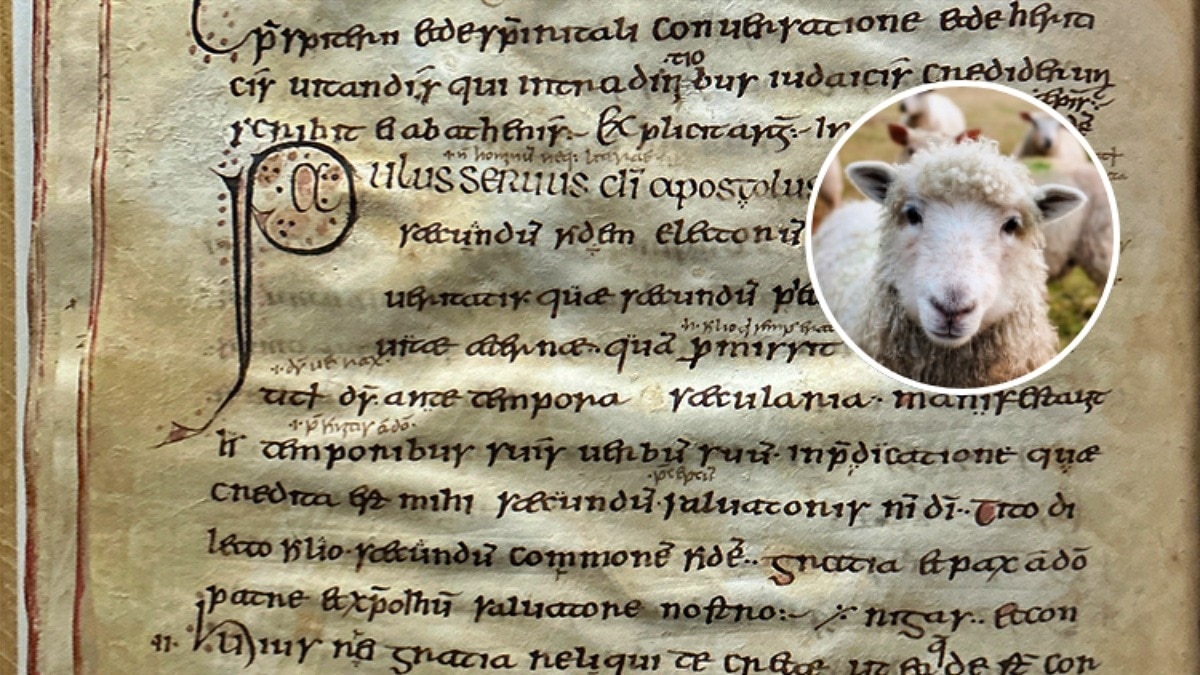
International researchers have reconstructed the evolution of the sheeppox virus by extracting DNA from ancient parchment and Bronze Age remains, tracing its history back millennia.
- Researchers extracted sheeppox virus DNA from centuries-old animal skin parchment.
- The findings trace the disease's evolution back over 3,500 years.
- Ancient manuscripts act as unexpected biological time capsules for pathogen research.
Some of Europe’s most treasured historical manuscripts have been revealed as unlikely biological time capsules. An international team of researchers has successfully reconstructed over 3,500 years of the evolution of the sheeppox virus (SPPV) by extracting ancient DNA from animal skins used to create centuries-old parchment.
The study, published in Science Advances, provides the first genetic evidence of how this highly contagious disease affected livestock long before the modern era. Among the analyzed documents was the 1,000-year-old York Gospels, a premier illuminated manuscript from the Anglo-Saxon period, along with the Corpus Glossary from Cambridge.
Why This Matters
BozokMedia analysis shows that this discovery bridges the gap between paleontology and modern veterinary medicine. By understanding the genetic trajectory of ancient pathogens, scientists can better predict how modern viruses might mutate, offering a critical advantage in protecting global livestock populations and food security.
"Parchment can also preserve animal pathogen DNA, offering a window into past outbreaks," noted Louis L’Hte, lead author from University College Dublin.
The research extended beyond medieval codices to the Bronze Age. By examining DNA preserved in sheep teeth recovered from ancient Eurasian steppe settlements, scientists traced the virus even further back, suggesting sheeppox has threatened livestock for more than 3,700 years. This timeline aligns with the rise of animal domestication and the migration of sheep into Europe.
Interestingly, the study detected the virus in parchment made from calfskin and goatskin, suggesting rare cross-species infections or contamination during the historical manufacturing process. Comparing ancient and modern genomes suggests that major lineages of capripoxviruses diverged between 11,500 and 3,700 years ago.
Frequently Asked Questions
Question 1: What is the sheeppox virus?
Answer: It is a highly contagious disease that affects sheep and goats, causing significant economic loss to farmers.
Question 2: How did researchers find the DNA?
Answer: They extracted genetic material from ancient parchment (animal skin) and Bronze Age animal remains.