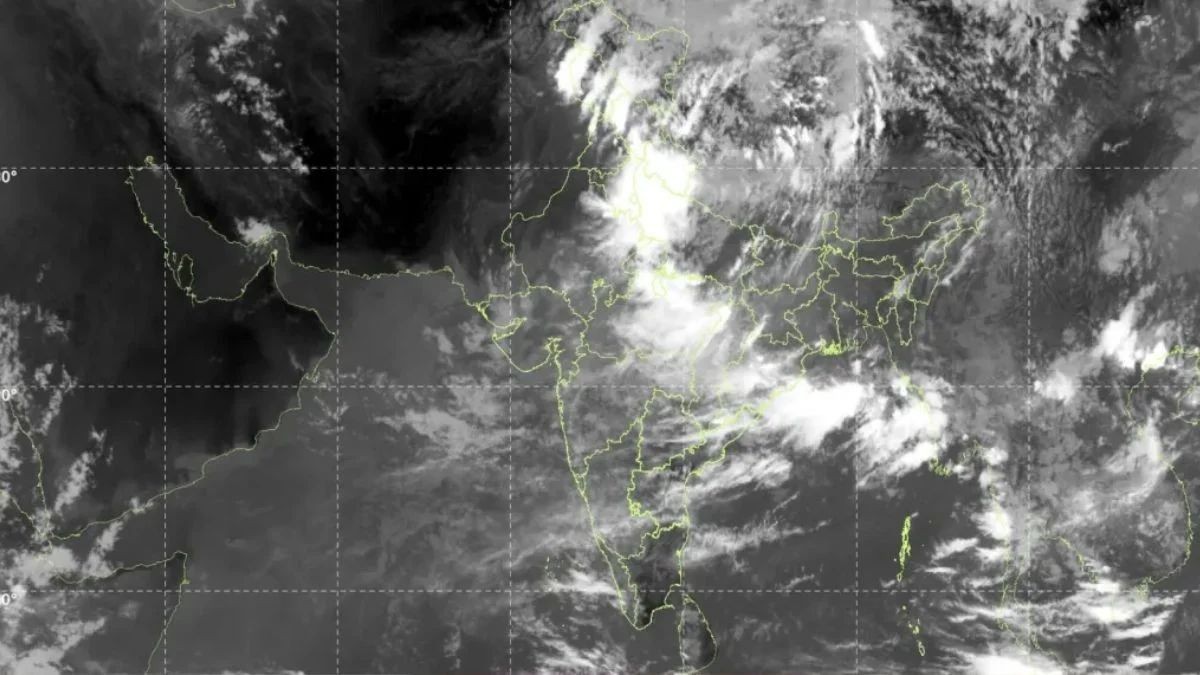
As global temperatures rise, the sudden emergence of the Atlantic Niña phenomenon in the equatorial Atlantic Ocean is offering hope. This cooling event could potentially neutralize the adverse impacts of El Niño, reshaping global weather and monsoon patterns.
- The Atlantic Niña is a cooling phase in the equatorial Atlantic Ocean that influences global climate patterns.
- It has the potential to mitigate the dry spells caused by the Pacific's El Niño, bringing relief to the Indian monsoon.
- Atmospheric indicators like jet streams and velocity potential are key to understanding these complex marine-atmospheric interactions.
Nature hides countless mysteries within itself, the layers of which science is gradually unfolding. Whenever a new natural phenomenon comes to light, humanity is reminded of its limited understanding. In the fields of geology, meteorology, and astronomy, there is still much to learn and comprehend. Amid the rising impacts of climate change, weather unpredictability has heightened scientists' concerns. At a time when weak and irregular monsoons were feared due to El Niño, the activation of the Atlantic Niña has sparked hopes of relief.
Atlantic Niño and Niña are relatively newly understood climate phenomena. Initially, their existence baffled scientists. Studying their patterns and impacts revealed that they are closely linked to global climate and rising temperatures. Although their names resemble the Pacific Ocean's 'El Niño' and 'La Niña', it is incorrect to assume they are identical. They are distinct systems operating in different ocean basins but interacting globally.
The Science Behind Atlantic Niño and Niña
Atlantic Niño and Niña are opposing climate events occurring in the equatorial Atlantic Ocean. An Atlantic Niño occurs when equatorial Atlantic sea surface temperatures become warmer than average. Conversely, during an Atlantic Niña, sea surface temperatures drop below normal. During an Atlantic Niño, easterly winds weaken, whereas during an Atlantic Niña, these winds become relatively stronger. Stronger winds help bring cold water from the ocean depths to the surface. Both events have contrasting impacts on rainfall and weather patterns.
Why This Matters
BozokMedia analysis shows that these oceanic shifts in the Atlantic are highly critical for global food security and agriculture. In monsoon-dependent economies like India, where millions of livelihoods rely on seasonal rains, the emergence of the Atlantic Niña acts as a natural buffer against drought-like conditions. It underscores that climate systems are not isolated but deeply interconnected on a global scale.
The interaction between the Atlantic Niña and Pacific climate drivers highlights the interconnectedness of our global oceans, offering a vital buffer against extreme weather anomalies.
For scientists, a particularly intriguing fact has been that despite rising global temperatures, cooling occasionally appears simultaneously in the equatorial regions of both the Atlantic and Eastern Pacific Oceans. This situation can be linked to events like La Niña and Atlantic Niña. In July and August 2024, amid prolonged and exceptional warmth in the North Atlantic Ocean, unexpected cooling was observed in the equatorial Atlantic region, signaling the development of an Atlantic Niña.
Impact on Global Weather Systems and Jet Streams
The impact of the Atlantic Niña is not limited to immediate weather. Studies over the past four decades indicate that summer ocean conditions in the Atlantic can influence the subsequent winter season. Following a summer Atlantic Niño, a tendency for lower atmospheric pressure over Canada and the northern United States has been observed. This can alter the intensity of jet streams flowing in the upper atmosphere. Jet streams play a crucial role in separating cold and warm air masses and influencing the formation of weather systems, storms, and cyclones.
| Feature | Pacific El Niño / La Niña | Atlantic Niño / Niña |
|---|---|---|
| Location | Equatorial Pacific Ocean | Equatorial Atlantic Ocean |
| Global Impact | Highly widespread (directly affects global temperatures and rainfall) | Regional and indirect (influences West African monsoon and Atlantic hurricanes) |
| Duration & Intensity | Typically active for 9-12 months or longer | Generally shorter duration and lower intensity |
Frequently Asked Questions
Q1: How does the Atlantic Niña affect the Indian Monsoon?
A1: By cooling the sea surface temperature in the Atlantic, it alters atmospheric pressure patterns. This helps counteract the dry conditions typically brought by the Pacific's El Niño, potentially boosting monsoon rains in India.
Q2: What are jet streams and how do they impact weather?
A2: Jet streams are fast-flowing, narrow air currents in the upper atmosphere. They act as boundaries between cold polar air and warm equatorial air, heavily influencing storm tracks and winter weather patterns.