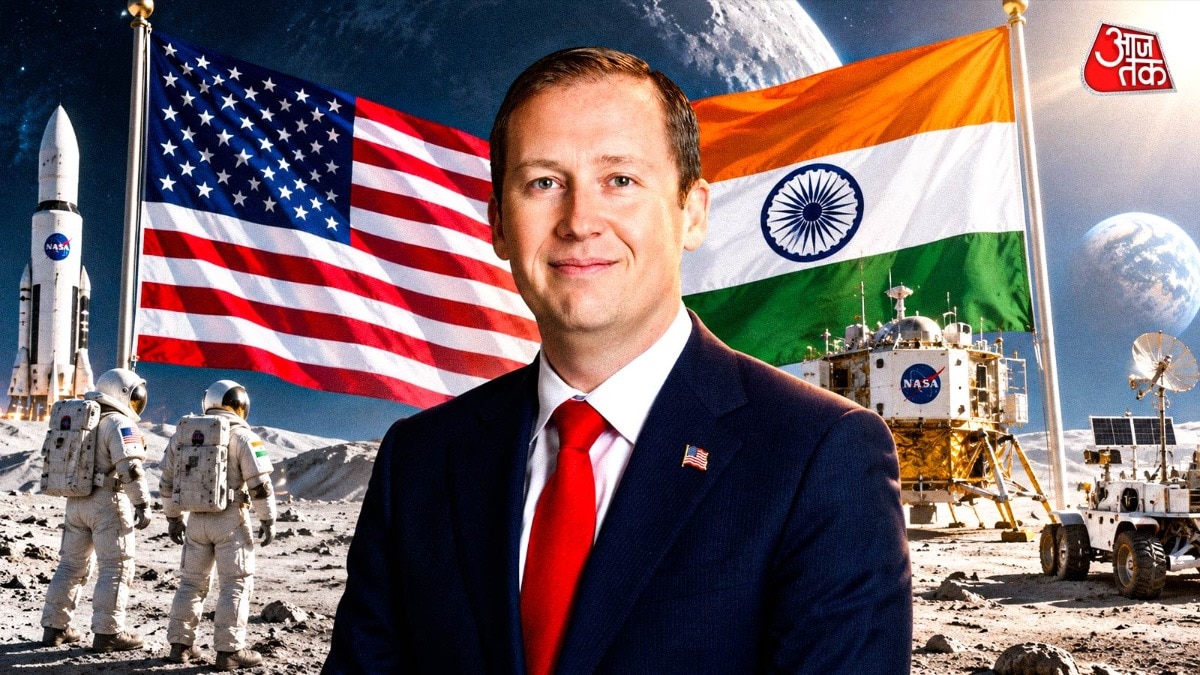
In a landmark move, NASA has invited ISRO to participate in its ambitious lunar base program. This collaboration aims to establish a sustainable human presence on the Moon and pave the way for future Mars missions.
- NASA has officially invited ISRO to collaborate on the Moon Base Program.
- Cooperation will expand to astronaut training and spacecraft docking systems.
- The partnership builds on the success of the NISAR mission and Group Captain Shubhanshu Shukla's ISS visit.
- Significant opportunities are opening up for Indian space startups in the US market.
The strategic partnership between the United States and India in space exploration has reached a new zenith. During the Bengaluru Space Expo 2026, US Ambassador to India, Sergio Gor, announced that NASA has extended an invitation to the Indian Space Research Organisation (ISRO) to join its lunar base program. This invitation signifies a shift from simple cooperation to a deep strategic alliance in deep-space exploration.
The US is preparing for a historic return to the lunar surface and intends for India to be a core partner in these operations. This collaboration is primarily linked to the Artemis Program, which seeks to conduct advanced scientific research on the Moon and establish a long-term human presence. India's signing of the Artemis Accords in 2023 provided the legal and diplomatic framework for this transition.
Why This Matters
BozokMedia analysis shows that this partnership is a calculated move to create a democratic counter-balance to other global space powers. By integrating ISRO's world-renowned cost-efficiency and engineering precision with NASA's vast resources and advanced technology, the two nations can drastically reduce the cost of lunar colonization. This synergy transforms India from a regional space player into a global superpower in extraterrestrial infrastructure.
"The establishment of a joint lunar base is not just about science; it is about creating a sustainable gateway for humanity to reach Mars."
The foundation of this trust was laid by the NISAR (NASA-ISRO Synthetic Aperture Radar) mission. Launched via India's GSLV-F16, NISAR monitors Earth's land, ice, and water changes with unprecedented precision. Furthermore, the journey of Group Captain Shubhanshu Shukla to the International Space Station (ISS) under the Axiom-4 mission has provided India with critical human spaceflight experience, which is indispensable for the upcoming Gaganyaan mission.
Beyond government agencies, the US is actively courting the Indian private sector. Ambassador Gor highlighted startups such as Skyroot, Agnikul, and Bellatrix, noting that American investors are increasingly interested in the Indian space ecosystem. This opens a floodgate of venture capital and technology transfer that could accelerate India's private space industry by a decade.
| Feature | NISAR Mission | Moon Base Program (Proposed) |
|---|---|---|
| Primary Goal | Earth Observation & Disaster Management | Sustainable Lunar Habitat |
| Collaboration Level | Satellite Co-development | Astronaut Training & Infrastructure |
| Key Technology | L-band & S-band Radar | Life Support & Docking Systems |
Frequently Asked Questions
1. What is the Artemis Program?
It is NASA's mission to return humans to the Moon, establish a sustainable lunar presence, and use the findings to prepare for the first human mission to Mars.
2. How does this benefit Indian space startups?
It provides them access to the US market, potential partnerships with global aerospace giants, and increased visibility for foreign direct investment (FDI).