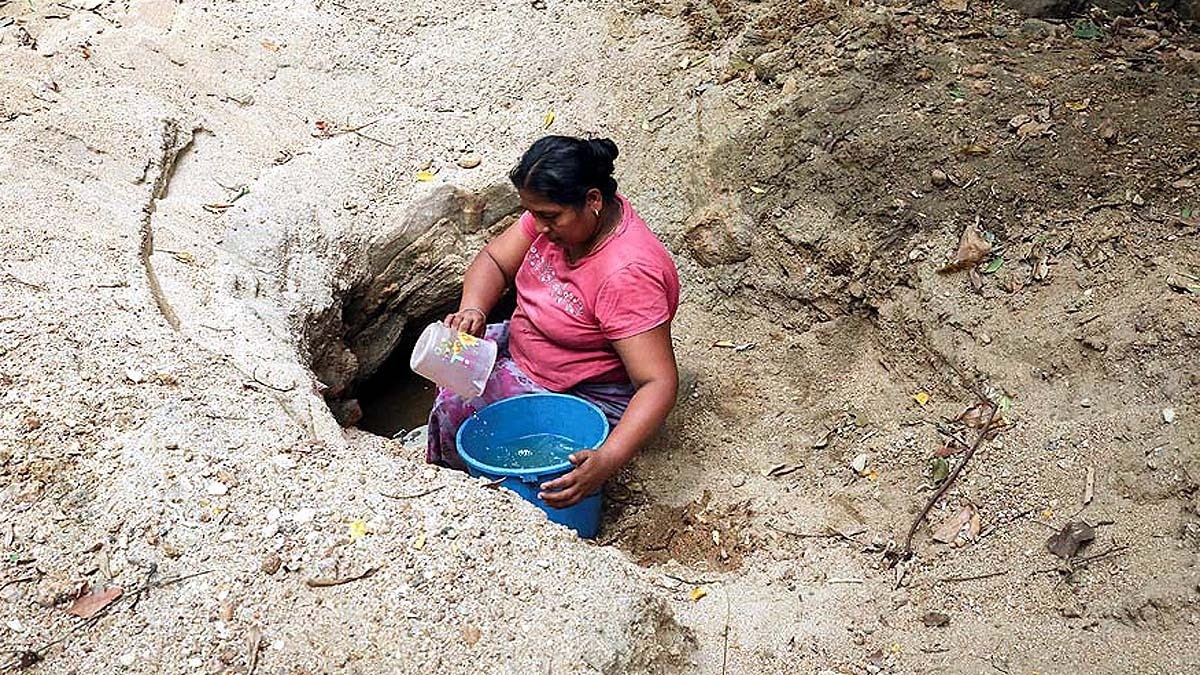
Sri Lanka is facing one of its worst droughts in years, with El Niño causing rainfall deficits of up to 100% in some regions. Reservoirs have plummeted to 10% capacity, leaving thousands of farmers and villagers in despair.
- Rainfall has dropped by 85% to 100% in key agricultural zones.
- National reservoirs are operating at a critical 10% capacity.
- El Niño's warming of the Pacific Ocean is the primary driver of this climatic shift.
Sri Lanka is currently battling a catastrophic drought, the most severe in several years. The phenomenon known as El Niño has severely disrupted rainfall patterns across the island, leading to the drying up of wells, ponds, rivers, and vital reservoirs. In some agricultural heartlands, the rainfall deficit has reached a staggering 85% to 100% compared to historical averages.
The human cost of this crisis is immense. In villages like Galvele Yaya in the Ampara district, farmers like A.M. Pathmasena are fighting for survival. With wells nearly dry, families are forced to dig small pits in the hope of collecting a few drops of seepage. The logistical failure in water distribution has reached a point where some remote villagers must wait up to 23 days for a single government water tanker to arrive.
Why This Matters
BozokMedia analysis shows that this crisis underscores the extreme vulnerability of island nations to global climatic shifts. When critical reservoirs drop to 10% capacity, the impact ripples through the entire economy—from food inflation to a surge in rural debt. This is not merely a weather event but a socio-economic emergency that threatens food security for millions.
"The synergy between rising global temperatures and El Niño creates a feedback loop that accelerates soil dehydration and crop failure beyond traditional recovery speeds."
The agricultural sector has been the hardest hit. Farmers who previously earned steady incomes from crops like cowpeas have seen their entire harvests perish. This has forced many into precarious daily wage labor. Furthermore, the poultry industry is collapsing, as heat stress and water scarcity make it impossible to maintain livestock, leading to the closure of numerous chicken farms.
Historically, the region has dealt with periodic dry spells, but the current intensity of the heatwave combined with the lack of precipitation is unprecedented. The warming of the central and eastern tropical Pacific Ocean alters atmospheric circulation, effectively pushing rain-bearing clouds away from the Sri Lankan landmass.
Frequently Asked Questions
Q1: How is El Niño affecting Sri Lanka's water supply?
A: El Niño causes abnormal warming of the Pacific Ocean, which disrupts monsoon patterns, leading to severe rainfall deficits and the drying up of natural water bodies in Sri Lanka.
Q2: What is the impact on the local economy?
A: The drought has led to total crop failures and the closure of livestock farms, driving farmers into debt and increasing reliance on manual labor for survival.