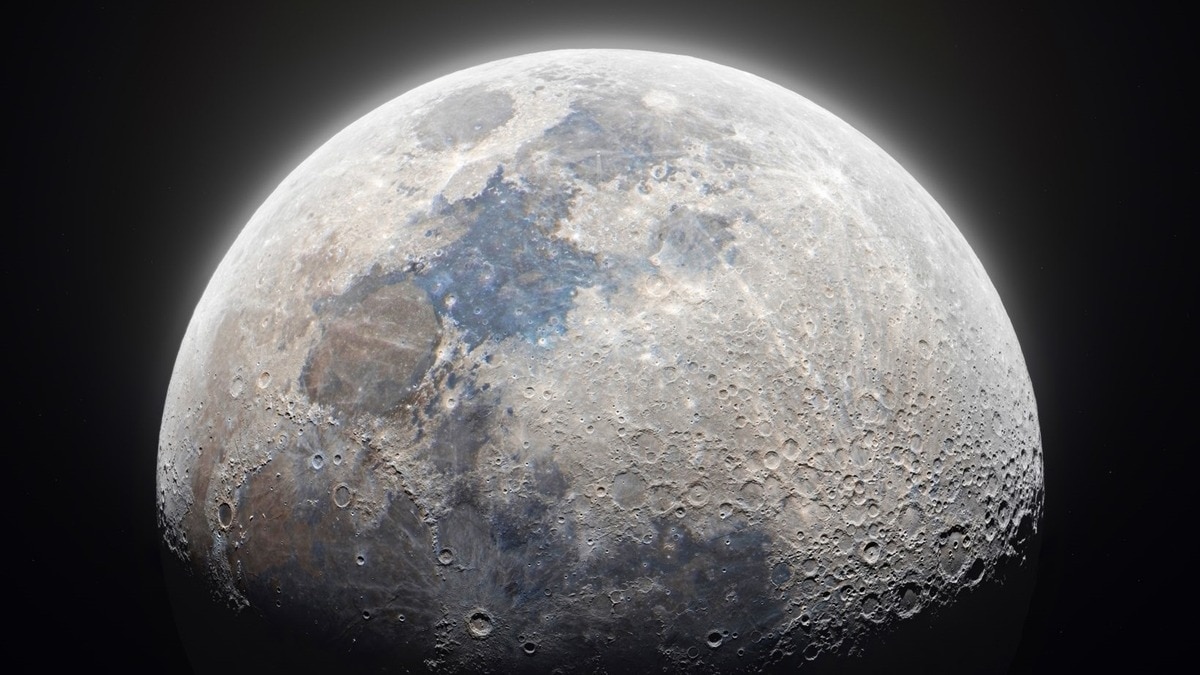
Astronomy enthusiasts are gearing up for a stunning celestial encounter on September 9, as the Moon aligns with Jupiter, offering a perfect visualization of the ecliptic plane.
- A rare occultation occurs as the Moon passes in front of Jupiter.
- Daytime visibility reported across North America and other key regions.
- Ideal opportunity to visualize the Ecliptic—the apparent path of the Sun.
On Wednesday, September 9, the night sky transforms into a living laboratory for astronomy lovers. The primary event is the close encounter between the Moon and Jupiter, the gas giant of our solar system. This alignment is not merely a visual treat but a significant event for those studying planetary motion.
The highlight of this event is the 'occultation,' a phenomenon where the Moon physically blocks the view of Jupiter from Earth. In North America, this will occur during the daytime, making it a rare sighting that requires precise timing and observation. According to leading astronomical sources, this event serves as a prelude to even larger celestial alignments expected later in the year.
Why This Matters
BozokMedia analysis shows that such events bridge the gap between theoretical astrophysics and public curiosity. By observing the precise movement of the Moon across the face of Jupiter, observers can grasp the three-dimensional nature of our solar system. It transforms a flat map of the stars into a dynamic, moving mechanism.
"The precision of a lunar occultation allows astronomers to refine the orbital parameters of planetary bodies with incredible accuracy."
Experts are encouraging observers to use this event to visualize the Ecliptic. The ecliptic is the apparent path that the Sun follows across the celestial sphere over the course of a year. Since the planets orbit the Sun in roughly the same plane, they all appear to stay close to this imaginary line, as demonstrated by the Moon-Jupiter meeting.
Historical Background
For millennia, occultations were viewed as omens by ancient Babylonian and Mayan astronomers. They used these alignments to calibrate their calendars and predict seasonal shifts. While we now rely on computational algorithms, the fundamental geometry of the heavens remains unchanged, linking modern observers to ancient stargazers.
Frequently Asked Questions
Q1: Do I need a telescope to see the occultation?
A: While the Moon and Jupiter are visible to the naked eye, a pair of binoculars or a small telescope will reveal Jupiter's Galilean moons during the approach.
Q2: What exactly is the Ecliptic?
A: It is the projection of Earth's orbit onto the sky, forming a great circle that marks the path of the Sun and most planets.