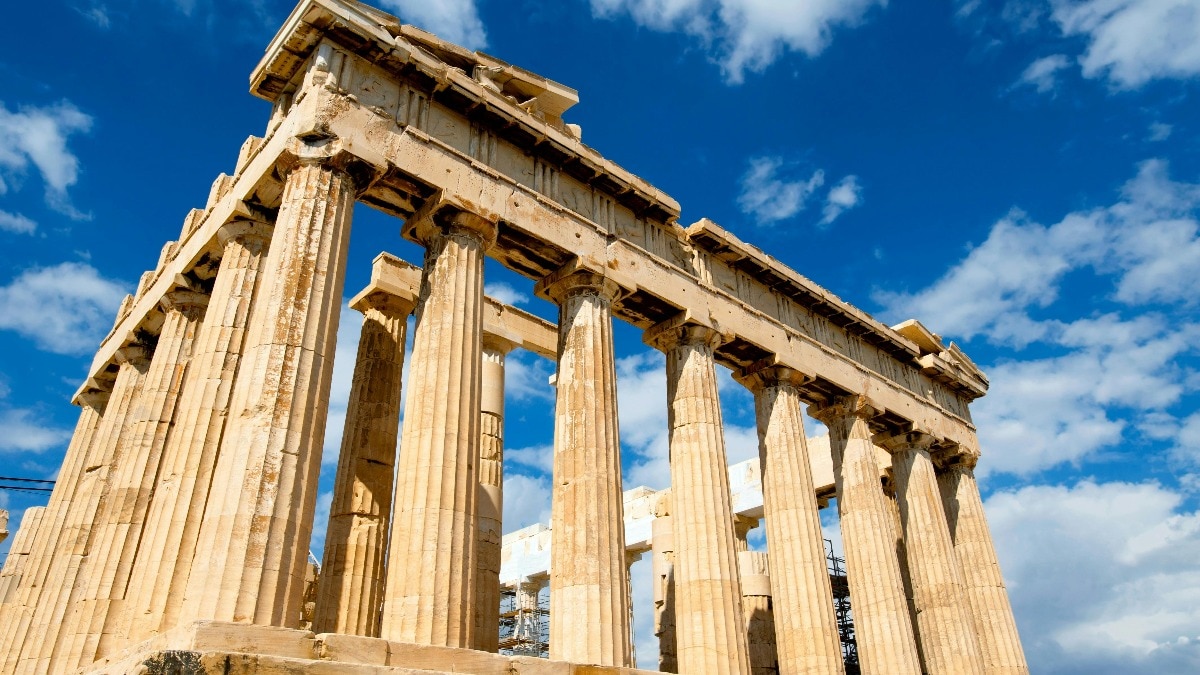
For centuries, the Pythia of Delphi delivered divine prophecies in a trance-like state. New geological evidence suggests that tectonic faults and hydrocarbon gases may have been the secret catalyst.
- Active tectonic faults intersect directly beneath the sanctuary of Delphi.
- Hydrocarbon gases trapped in bituminous limestone provide a physical basis for ancient 'vapours'.
- While geological settings are confirmed, the exact chemical cause of the Pythia's trance remains debated.
For millennia, the Oracle of Delphi was the most influential religious site in the Greek world. People from across the Mediterranean traveled to the slopes of Mount Parnassus to seek guidance on war, politics, and fate. The messages were delivered by the Pythia, a priestess who entered a prophetic trance inside the Temple of Apollo.
Ancient writers, including Diodorus of Sicily, described a fissure in the earth from which mysterious vapours, or pneuma, emerged. For decades, archaeologists struggled to find physical evidence of such a vent, leading many to dismiss these accounts as mere mythology. However, the intersection of geology and history has recently reignited the conversation.
Why This Matters
BozokMedia analysis shows that the Delphi case represents a critical bridge between natural science and cultural anthropology. By identifying the physical triggers for religious experiences, we can better understand how the environment shapes the spiritual architecture of ancient civilizations, transforming 'magic' into measurable geochemistry.
"The presence of faults does not automatically prove a divine trance, but it eliminates the possibility that the ancient accounts were purely imaginary."
Geologists Jelle de Boer and John Hale conducted pivotal studies around 2000-2001, identifying that the sanctuary sits upon a complex fault system. Their research revealed that hydrocarbon gases were trapped within the region's bituminous limestone. These faults acted as conduits, potentially releasing gases into the adyton (inner chamber) where the Pythia sat.
The debate then shifted to the specific chemistry of the gas. Initial theories pointed toward ethylene, which can cause intoxicating effects. However, a 2006 study by Giuseppe Etiope suggested that while methane and ethane were present, ethylene levels might have been too low to induce a full trance. An alternative theory suggests that carbon dioxide may have displaced oxygen, leading to hypoxia and altered states of consciousness.
Historical context provided by Plutarch, a priest at Delphi in the 1st century AD, notes that the vapours had become weaker and less predictable during his tenure. This explains why modern excavations find little active emission; geological vents are volatile and can seal or shift over centuries.
Frequently Asked Questions
Q1: Did science definitively prove that gases caused the prophecies?
A: No. It proved that the geological conditions for gases existed, but the exact physiological effect on the Pythia remains a strong scientific hypothesis rather than a proven fact.
Q2: What is the 'adyton' mentioned in the text?
A: The adyton was the restricted inner chamber of the Temple of Apollo where the Pythia delivered her oracles.