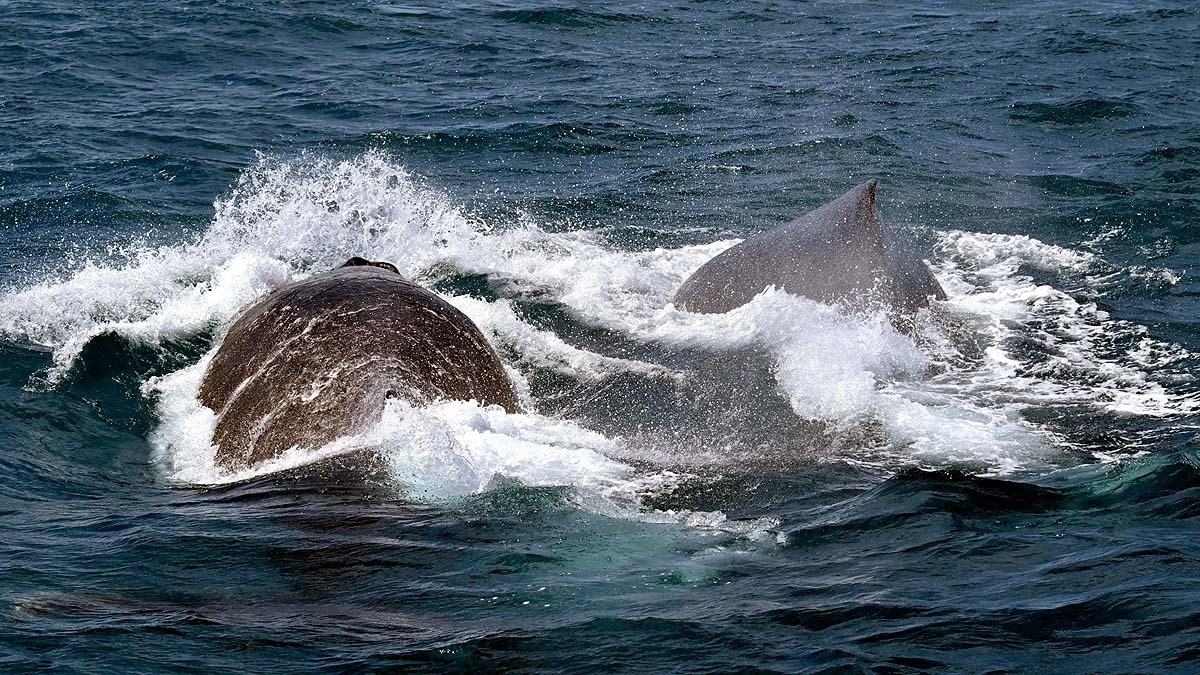
Once on the brink of extinction due to commercial whaling, Humpback whales have seen a massive resurgence in Brazil's waters, now numbering approximately 35,000.
- Humpback whale populations in the South Atlantic have surged to roughly 35,000 individuals.
- The 1986 global moratorium and 1987 Brazilian laws effectively ended commercial whaling.
- The Abrolhos Archipelago has emerged as one of the world's premier breeding grounds for the species.
The coastal waters of Brazil are witnessing a biological miracle. Humpback whales, which were nearly eradicated from the region decades ago due to relentless commercial hunting, have made a triumphant return. Current estimates indicate that there are now approximately 35,000 Humpback whales in the South Atlantic, accounting for nearly half of the global population of the species.
The road to recovery was long and arduous. By the 1980s, the population had plummeted to such critical levels that extinction seemed inevitable. Enrico Marcaivaldi, founder of the Humpback Whale Institute, recalls that 40 years ago, sightings were so rare that when he first encountered a whale, he mistook it for a floating rock.
The Turning Point: Policy and Protection
The resurgence is the direct result of decisive international and national interventions. In 1986, a global moratorium was implemented to halt commercial whaling worldwide. Following this lead, Brazil enacted its own strict legislation in 1987, criminalizing the hunting of whales within its jurisdiction.
Beyond legislation, the Brazilian government established the Abrolhos Archipelago as a protected marine area. The warm waters of this region provide an optimal environment for female whales to give birth and nurse their calves, ensuring a higher survival rate for the newborns.
Why This Matters
BozokMedia analysis shows that this recovery is a benchmark for global conservation efforts. It demonstrates that when predatory commercial interests are replaced by scientific management and habitat protection, nature possesses an incredible capacity for regeneration. As apex mammals, the health of the Humpback population is a key indicator of the overall health of the South Atlantic ecosystem.
"The recovery of the Humpback whale is a testament to the fact that strict legal protections combined with habitat preservation are the only viable paths to biodiversity restoration."
The breeding season in Brazil is now a spectacle of nature. Male whales engage in fierce competitions, slapping their tails on the water to attract females, while mothers meticulously care for their calves. Scientists continue to monitor these populations annually to gather critical data on migration patterns and health.
| Era | Population Status | Primary Driver |
|---|---|---|
| Pre-1980s | Critical Decline | Commercial Whaling |
| 1986-1987 | Stabilization Phase | Global & National Bans |
| Present Day | Robust Recovery | Protected Areas & Breeding Hubs |
Frequently Asked Questions
1. Why did the whale population increase so rapidly in Brazil?
The combination of the 1987 hunting ban and the creation of the Abrolhos protected area provided the safety and environment needed for breeding.
2. Are Humpback whales still considered endangered?
Brazil removed them from the threatened species list in 2014, though global conservation efforts remain ongoing to ensure their long-term survival.


