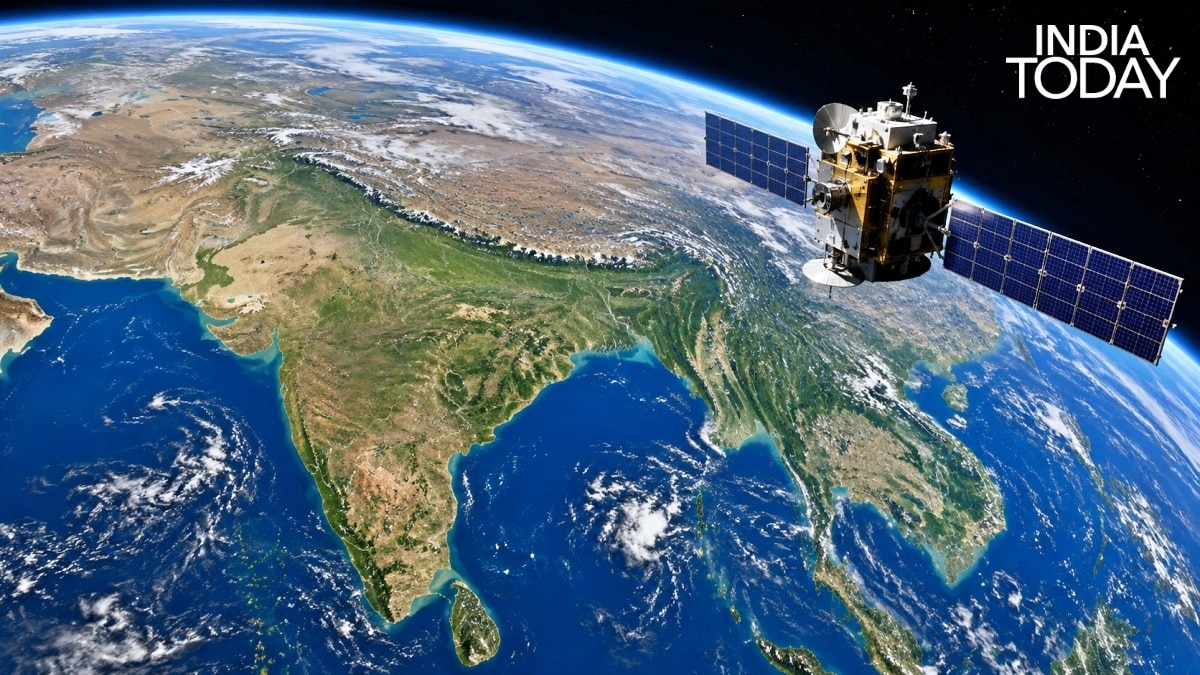
Bengaluru-based space-tech startup GalaxEye has been granted a US patent for its innovative OptoSAR technology. The system integrates optical and radar sensors on a single satellite, enabling clear, all-weather Earth imaging.
- GalaxEye secured a US patent for synchronizing optical and radar sensors on a single satellite platform.
- The OptoSAR system allows for weather-agnostic imaging, bypassing cloud cover and darkness.
- The startup aims to deploy a constellation of 30 satellites over the next five years.
In a significant milestone for India's burgeoning space-tech ecosystem, GalaxEye, a Bengaluru-based startup, has secured a US patent for a breakthrough technology that optimizes how satellites observe the Earth. By merging two fundamentally different imaging modalities on a single platform, the company is poised to redefine global Earth observation.
The core of this innovation is the OptoSAR imaging system. Traditionally, satellite imaging relies on either optical sensors—which act like high-resolution cameras but are hindered by clouds and darkness—or Synthetic Aperture Radar (SAR), which uses microwave signals to see through weather obstacles but lacks the intuitive visual detail of optical imagery. GalaxEye's patented architecture synchronizes these sensors to produce spatially and time-aligned observations from a single source.
Why This Matters
BozokMedia analysis shows that the integration of these two sensors eliminates the 'data misalignment' typically found when combining images from different satellites. This precision is critical for high-stakes sectors such as national security, precision agriculture, insurance claims, and rapid disaster response, where every second and pixel counts.
"This patented technology enables us to serve the global markets and provide weather-agnostic imaging capabilities across sectors," stated CEO Suyash Singh.
The company's journey reached a pivotal point with Mission Drishti, launched on May 3, 2026. Recognized by the Indian government as the world's first satellite to combine optical cameras and all-weather radar, the mission faced a setback in July when a geomagnetic solar storm disrupted communications. Despite this, GalaxEye successfully validated key spacecraft systems before the anomaly occurred.
| Feature | Optical Sensors | SAR (Radar) | OptoSAR (GalaxEye) |
|---|---|---|---|
| Visibility | Daylight/Clear Sky | Day & Night/All-Weather | Unified All-Weather |
| Detail Type | Visual (Colors, Vegetation) | Structural (Surface Texture) | Hybrid Precision Data |
| Obstacles | Blocked by Clouds | Penetrates Clouds | Zero Obstruction |
Looking ahead, GalaxEye is aggressively scaling its operations. The acquisition of the Bengaluru-based spacecraft engineering firm StarOps in August is a strategic move to bolster in-house manufacturing and engineering. The company now plans to launch a constellation of 30 satellites to dominate the commercial imaging market, which is projected to reach $20.15 billion by 2033.
Frequently Asked Questions
1. What makes the OptoSAR technology unique?
It is the first system to synchronize optical and radar sensors on one satellite, providing perfectly aligned images regardless of weather or light conditions.
2. What happened to the Mission Drishti satellite?
The satellite lost communication in July 2026 following a geomagnetic solar storm, though it had already validated critical systems.

