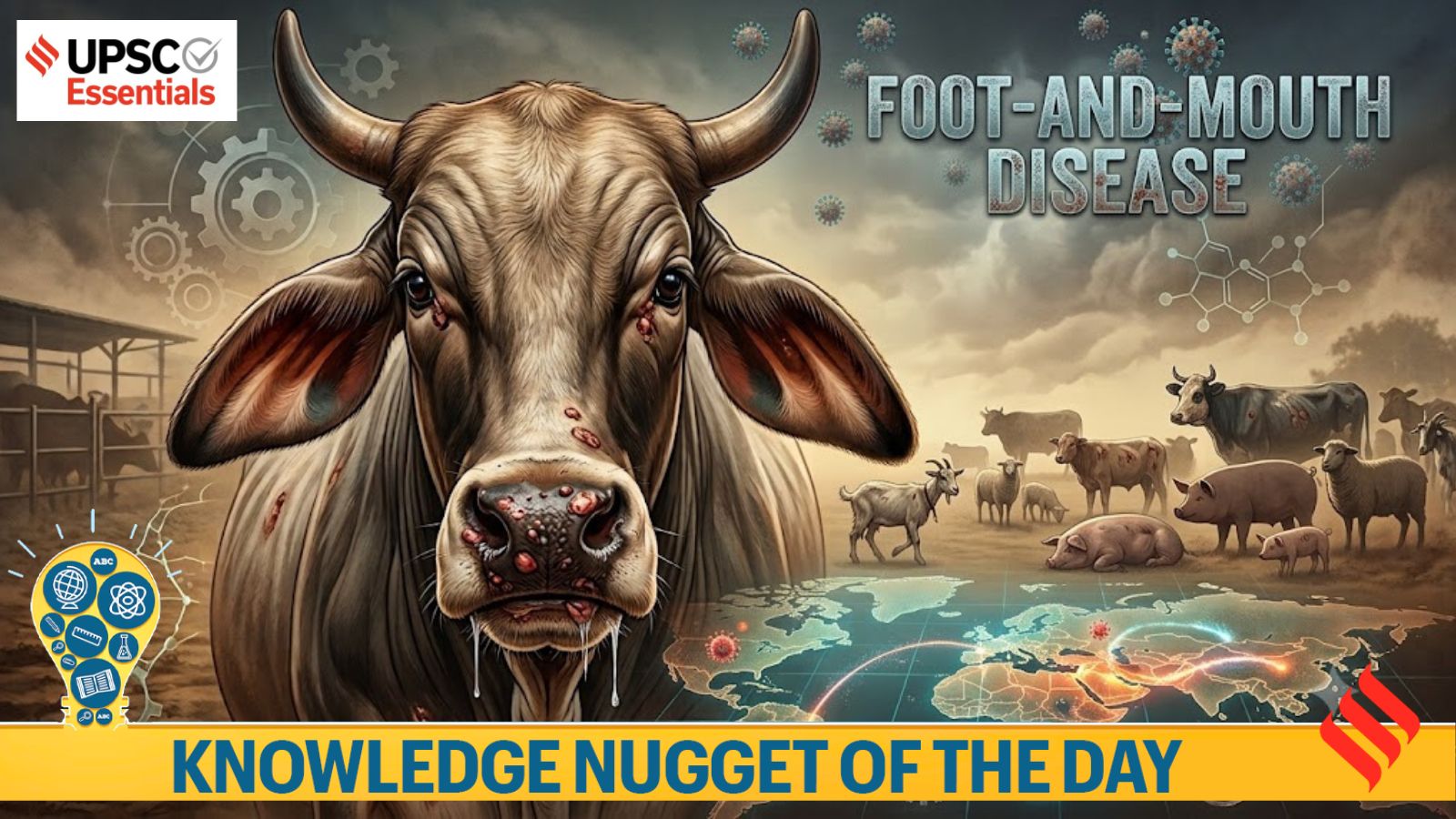
The SAT-1 serotype of Foot-and-Mouth Disease (FMD) is re-emerging in unexpected regions across Europe and the Middle East, sparking global alarm. Learn about the impact on livestock and India's response.
- Foot-and-Mouth Disease (FMD) is a highly contagious viral disease with devastating economic consequences for livestock owners.
- The SAT-1 serotype, traditionally confined to Africa, is now appearing in new regions like China, Mongolia, and Israel.
- There is no specific antiviral treatment for FMD; control relies on vaccination and strict biosecurity.
- India's NADCP scheme provides 100% central funding to combat FMD and Brucellosis.
After a nearly 60-year hiatus, the SAT-1 serotype of Foot-and-Mouth Disease (FMD) is making a significant and alarming comeback. Detected in regions far beyond its traditional African range, including parts of Europe, the Middle East, and even Asia, this outbreak is putting global animal health authorities on high alert.
FMD is a highly contagious viral infection affecting cloven-hoofed animals such as cattle, buffaloes, pigs, sheep, and goats. The virus is notoriously resilient, spreading not just through direct animal contact but also via contaminated vehicles, equipment, and even footwear. Infected animals suffer from painful blisters in the mouth and on the feet, leading to reduced milk production, infertility, and severe weight loss.
Why This Matters
BozokMedia analysis shows that the resurgence of SAT-1 is not merely a veterinary concern but a massive economic threat. The movement of this virus can trigger international trade embargoes, destabilize food supply chains, and devastate the livelihoods of millions of farmers who depend on livestock.
There is no specific antiviral treatment that eliminates FMD; management is primarily focused on supportive care and preventing further transmission.
Global Spread and History: First identified in 1948, SAT-1 was historically associated with Southern Africa. However, the World Organisation for Animal Health (WOAH) reported significant new occurrences in 2025 and 2026, with countries like China, Mongolia, Israel, and Cyprus reporting their first-ever cases, while Türkiye and Greece saw its return after decades.
India's Defense: The NADCP Framework
To mitigate such risks, India implemented the National Animal Disease Control Programme (NADCP) in 2019. This Central Sector Scheme is fully funded by the Government of India and aims to eradicate FMD and Bovine Brucellosis through mass vaccination drives. The program ensures the procurement of high-quality vaccines and strengthens cold chain infrastructure across states.
| Feature | FMD (SAT-1) | Brucellosis |
|---|---|---|
| Causative Agent | Virus | Bacteria (Brucella abortus) |
| Primary Symptoms | Blisters, Fever, Drooling | Abortion, Infertility, Fever |
| Control Strategy | Vaccination & Biosecurity | Vaccination & Management |
Frequently Asked Questions
1. Does FMD affect humans?
Answer: No, FMD is not a major human health threat; its impact is primarily economic and related to food production.
2. How can farmers prevent the spread?
Answer: Prevention requires a combination of regular vaccination and strict biosecurity measures, such as disinfecting equipment and limiting animal movement.