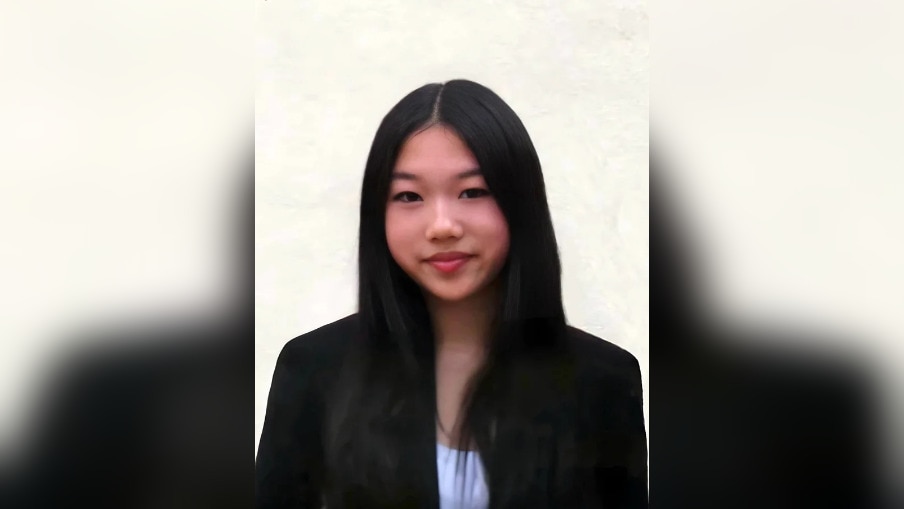
Sixteen-year-old Kelly Liu from San Jose is revolutionizing how we track air pollution near schools. By combining artificial intelligence with low-cost sensors, she is uncovering dangerous localized pollution patterns that official monitoring systems completely miss, sparking a critical policy debate on environmental justice.
- 16-year-old Kelly Liu is using AI mapping and low-cost sensors to track air quality around schools in San Jose, California.
- Traditional monitoring stations are too sparse to capture hyper-local pollution spikes near busy roads and industrial areas.
- This student-led initiative has evolved into a broader policy discussion regarding environmental equity and school ventilation standards.
At just 16, a poignant question about dirty air became a groundbreaking effort to make the atmosphere students breathe visible. Kelly Liu began her work in San Jose, California, by looking at what official monitoring systems missed around individual schools. Using AI mapping and low-cost sensors, she helped bring air-quality data closer to students, particularly in underserved communities that suffer the brunt of environmental neglect.
Official monitoring stations can show broad air-quality trends across the South Bay, but they do not always capture what is happening outside individual schools, especially those near busy roads, industrial sites, and other local sources of pollution. Kelly wanted to know what those regional numbers were leaving out. More than better maps, she wanted to give communities evidence to ask why some students face greater exposure to pollution than others.
Air pollution can change dramatically from one neighborhood to another. A school next to a busy highway may face a very different pollution burden from one in a quieter residential area. Traffic, construction, industrial activity, weather, and a building's ventilation can all influence the air students encounter during the school day. Yet traditional monitoring networks are not designed to measure conditions at every school campus due to high infrastructure costs.
| Feature | Traditional Monitoring Stations | Kelly Liu's AI-Sensor Hybrid |
|---|---|---|
| Cost | High (Expensive infrastructure) | Low-cost, accessible sensors |
| Resolution | Regional (Broad geographic trends) | Hyper-local (School-specific data) |
| Data Analysis | Manual / Standard reporting | Predictive AI mapping & geographic integration |
To bridge this gap, Kelly turned to technology. She used AI to analyze and visualize large amounts of environmental and geographic information. By examining air-quality records alongside factors such as school locations, road networks, and traffic patterns, she could identify vulnerable areas that warranted closer attention. The technology processed information to reveal hidden patterns that would be difficult to identify manually.
Why This Matters
A BozokMedia analysis shows that hyper-local air monitoring is no longer just a scientific luxury but a fundamental necessity for public health policy. Standard regional sensors often paint an overly optimistic picture of air quality, leaving vulnerable populations, particularly children with developing respiratory systems, exposed to undetected particulate matter (PM2.5). Empowering communities with localized data shifts the power dynamic, turning passive citizens into active advocates for environmental justice.
"By bridging the gap between high-level AI analysis and grassroots sensor deployment, young innovators are redefining how communities advocate for clean air and hold policymakers accountable."
The project quickly transitioned from data collection to active advocacy. Kelly helped communicate the findings to connect them to a broader conversation about how schools can protect students from unhealthy air. The discussions raised fundamental questions about environmental equality: should a student's access to clean air depend on the neighborhood where they go to school? This inquiry helped move the conversation toward a broader, countywide approach to school air quality.
Historically, children have been the most vulnerable to poor air quality. Their developing lungs are highly susceptible to fine particulate matter, which can penetrate deep into the respiratory system and worsen chronic conditions like asthma. By providing actionable data, Kelly's model offers a practical framework for combining broad AI predictions with ground-level measurements to drive environmental policy.
Frequently Asked Questions
Q1: Why do official air monitors miss school pollution?
A1: Official monitoring stations are highly expensive and placed far apart, meaning they measure regional trends rather than hyper-local pollution spiked by nearby highways or factories.
Q2: How does AI help in tracking air quality?
A2: AI analyzes massive datasets, including traffic flow, school locations, and geography, to identify and predict which areas are most likely to experience dangerous levels of air pollution.