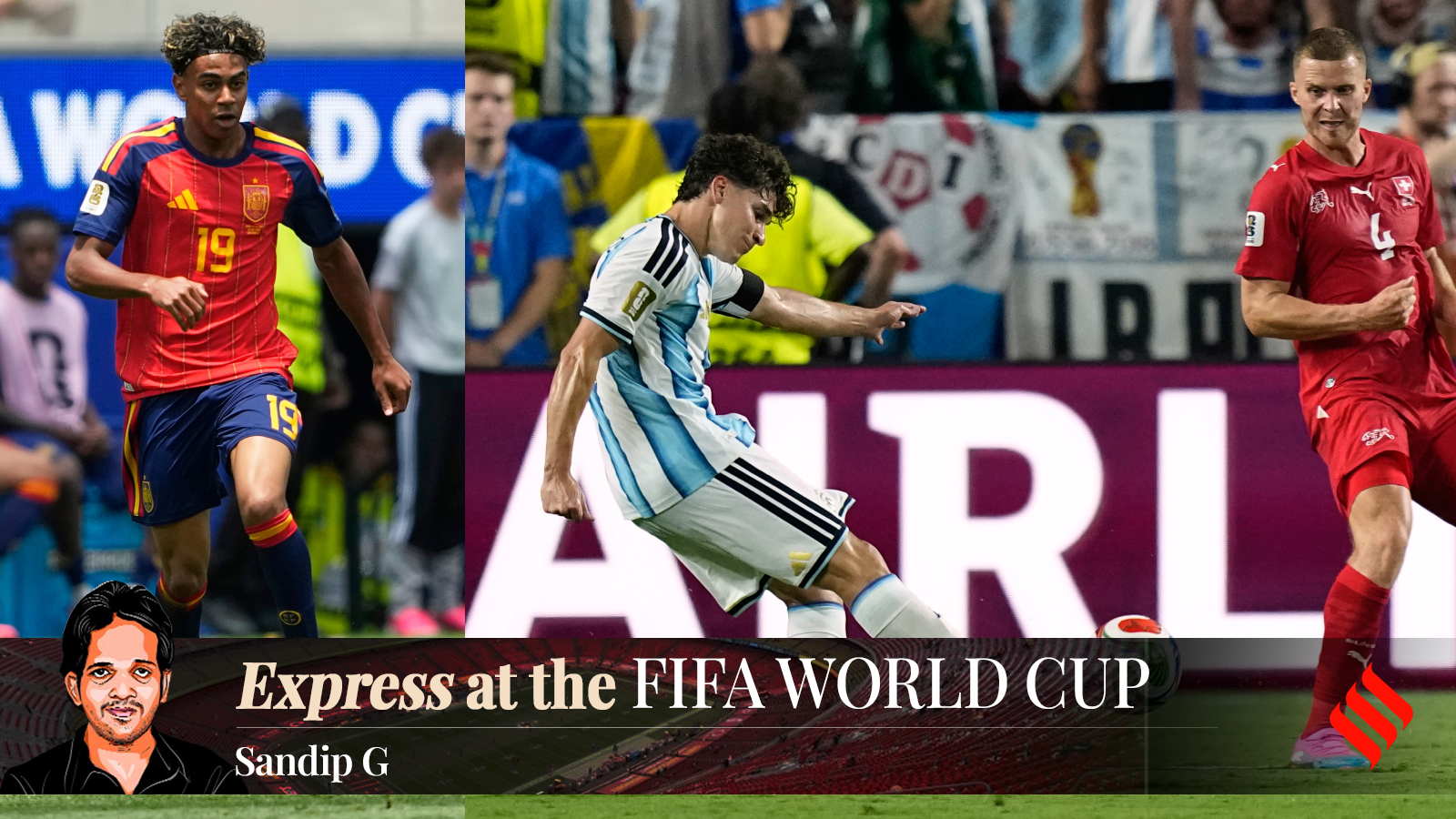
The 2026 FIFA World Cup sees a resurgence of long‑range strikes that are reshaping tactics. Spain’s prodigy Laminate Yamal and Argentina’s forward Julian Alvarez have both delivered decisive goals to reach the semi‑finals, exposing France’s defensive frailties. The trend signals a tactical shift across elite football.
मुख्य बिंदु (Key Takeaways)
- Lamine Yamal and Julian Alvarez score decisive long‑range goals to reach the semi‑finals.
- France’s left side has become a strategic vulnerability.
- Long‑range shooting has doubled since 2019, changing modern football tactics.
At the 2026 FIFA World Cup, goals from outside the box have become more than a statistical curiosity—they are redefining the very fabric of the game. Spain’s teenage sensation Lamine Yamal and Argentina’s striker Julian Alvarez each delivered spectacular long‑range strikes in their quarter‑finals, propelling their teams into the semi‑finals and exposing a new tactical axis.
Historical Context
Over the past two decades, long‑range goals have gradually risen in prominence, but the 2026 tournament marks a sharp inflection point. In Russia 2018, only twelve such goals were recorded, whereas by the time the quarter‑finals of Qatar 2026 concluded, the tally had climbed to thirty‑eight. This surge is driven by multiple factors: refined ball technology, evolving tactical philosophies, and the heightened scrutiny of VAR.
Yamal’s Moment
Spain’s 17‑year‑old prodigy Yamal entered the tournament with a reputation for bold statements—most famously declaring after the Euro‑qualifier win over Belgium, “If anyone should be afraid, it should be them, we knocked them out of the Euros.” In the quarter‑final, he turned that bravado into a 30‑metre rocket that curled into the top‑corner, leaving France stunned. The goal not only highlighted his technical prowess but also underscored the left‑flank weakness that France has historically struggled with.
Alvarez’s Power
Argentina’s Alvarez later delivered a masterclass in long‑range execution against Switzerland. From his right instep, he launched a ball that arced perfectly into the top corner, beating goalkeeper Gregor Kobel despite the latter’s desperate attempts to intervene. Alvarez’s blend of power, curl and a deceptive dip makes his long‑range attempts a recurring nightmare for defenders.
Tactical Implications
These goals are not isolated flukes; they reflect a broader strategic shift. When a penalty area is congested with eleven defenders, one‑touch passes and tap‑ins become ineffective. From outside the box, attackers enjoy more space and time to craft a precise trajectory. Arsenal manager Mikel Arteta noted last season that conversion rates from distance rose to 4.9% from a low of 3% in 2019, likening the evolution to basketball’s embrace of the three‑pointer.
Future Outlook
The upcoming semi‑final pits France against Spain, turning the left‑side duel into a tactical chess match. France’s full‑backs Lucas Digne and Jules Koundé must contend with Spain’s quick‑pressing left‑backs Marc Cucurella and Pedro Porro. Should Yamal and Alvarez maintain their form, long‑range firepower could become the decisive factor.
In conclusion, long‑range shooting has shed its “gambit” label to become a cornerstone of modern football strategy, promising a World Cup narrative that is both more dynamic and unpredictable than ever before.