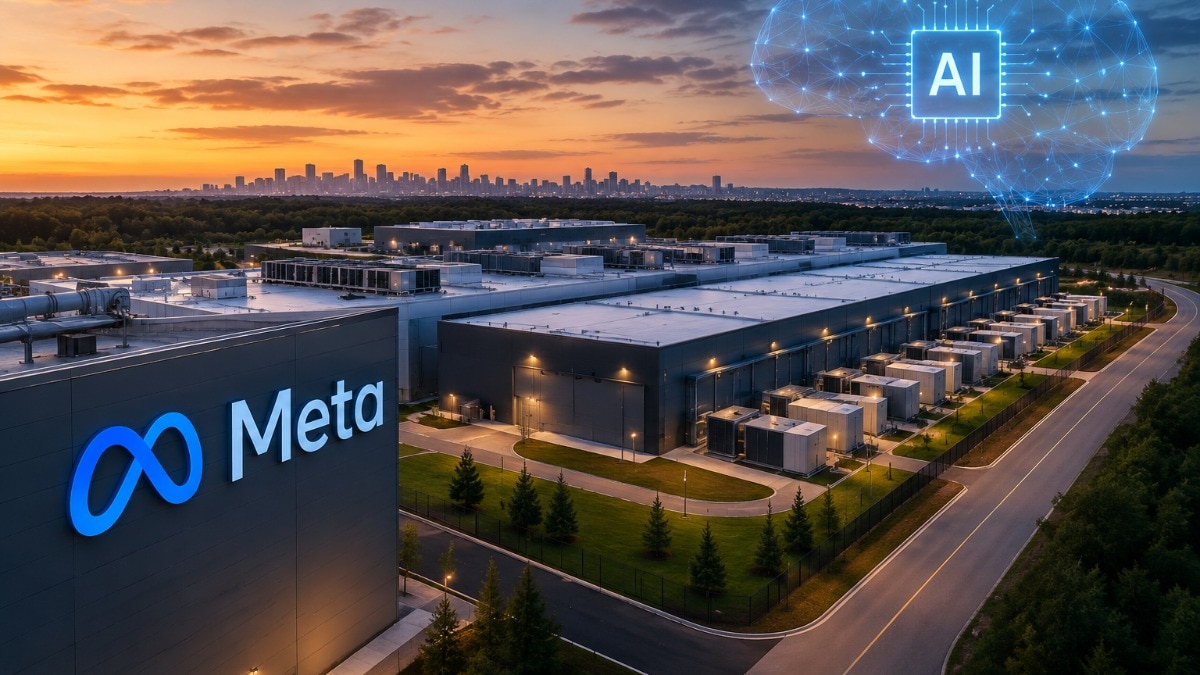
Meta has announced a $9 billion AI data center in Alberta, Canada, expected to use electricity equivalent to 800,000 homes. The firm plans to mitigate environmental impact with renewable energy and closed‑loop cooling, amid growing scrutiny of AI’s resource demands.
Meta is betting big on artificial intelligence by launching a $9 billion data‑center project in Alberta, Canada. The facility, slated for Sturgeon County, will be the company’s first in the country and its 33rd worldwide, with an initial 1‑gigawatt capacity expandable to 1.8 GW as AI workloads grow.
Strategic Rationale
Canada’s abundant natural gas supply, lower energy costs, and cooler climate make Alberta an ideal location for a high‑performance server farm. The province is actively courting tech giants, and the project is part of a broader push to attract large‑scale data‑center investments.
Power and Water Footprint
The centre will consume roughly the same electricity as 800,000 homes. Meta will partner with Pembina Pipeline to build a natural‑gas‑fired plant that will eventually power the site, while Capital Power will provide 250 MW of existing generation in the interim. A closed‑loop liquid‑cooling system will recycle cooling fluid, keeping overall water use below that of a typical golf course.
Environmental Response
Environmental groups, including Greenpeace Canada, have warned that the rapid expansion of AI infrastructure could strain natural resources. “We need a moratorium on mega‑data centers until we legislate environmental and human‑rights protections for AI,” said Keith Stewart. Amazon’s recent disclosure of 2.5 billion gallons of water withdrawal in 2025 illustrates the sector’s growing water footprint.
Implications for the Tech Industry
Meta’s venture underscores the escalating energy demands of AI and signals a trend toward larger, more powerful data centers. While the company pledges to offset its consumption with renewable energy, the broader industry must confront the balance between technological progress and sustainable resource use.