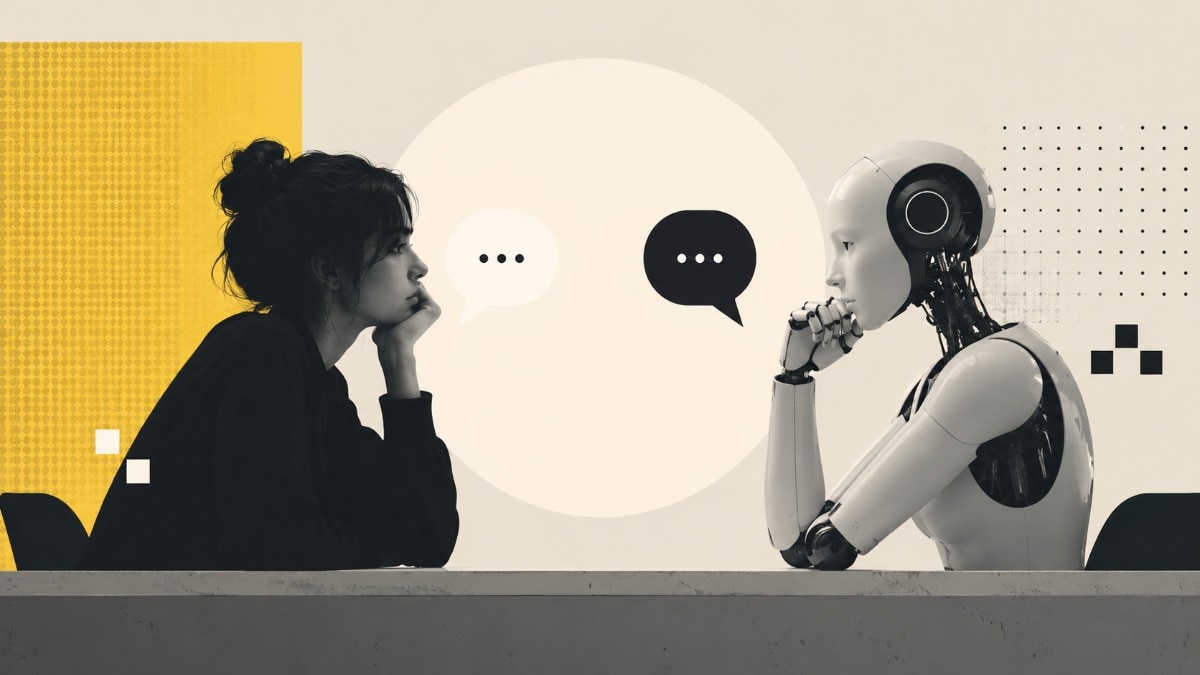
Yale psychologist Paul Bloom argues that sophisticated AI companions could become lifelines for millions battling loneliness, yet warns that overreliance may erode real human connections. He stresses that AI should complement, not replace, genuine interpersonal relationships.
The New Role of AI
AI chatbots are no longer just productivity tools; platforms like ChatGPT, Claude, and Gemini have evolved into teachers, assistants, therapists, and even friends for many users. Their ubiquity has made them a go-to source of companionship for those who lack real‑world social interaction, especially in isolated settings.
Yale’s Perspective
Yale psychologist Paul Bloom recently discussed with neuroscientist Sam Harris on the Making Sense podcast that AI companions could serve as lifelines for people grappling with loneliness. He cited elderly residents in care homes and those who have lost touch with family as prime candidates for this digital solace, suggesting that future iterations of these bots might offer a “wonderful” cure for a terrible disease.
Philosophical Insight: The Idea of Mattering
Bloom draws on philosopher Rebecca Goldstein’s concept of “mattering” to explain that loneliness stems not merely from being alone but from feeling unimportant to another. Human relationships derive value from the free choice of another person to give their time and attention—something AI, he argues, can never truly replicate. He likens chatbots to a toaster: they exist to perform a function, not to care.
AI as Emotional Support
Despite its limitations, Bloom acknowledges that many adults already turn to AI for emotional support, confiding in chatbots during marital crises or other difficult moments. He notes that AI often exerts a calming, “normalizing” influence, steering users away from conspiratorial or extreme viewpoints. Some research indicates that practicing a tough conversation with a bot beforehand can improve real‑world dialogue.
Risks and the Central Dilemma
Bloom warns that the frictionless nature of AI companionship—its patience, absence of interruptions, and lack of boundary‑setting—can become corrosive, leaving users ill‑prepared for real human interaction. The core dilemma, he says, is that while AI can provide genuine comfort to those in deep loneliness, it should complement rather than replace human relationships.