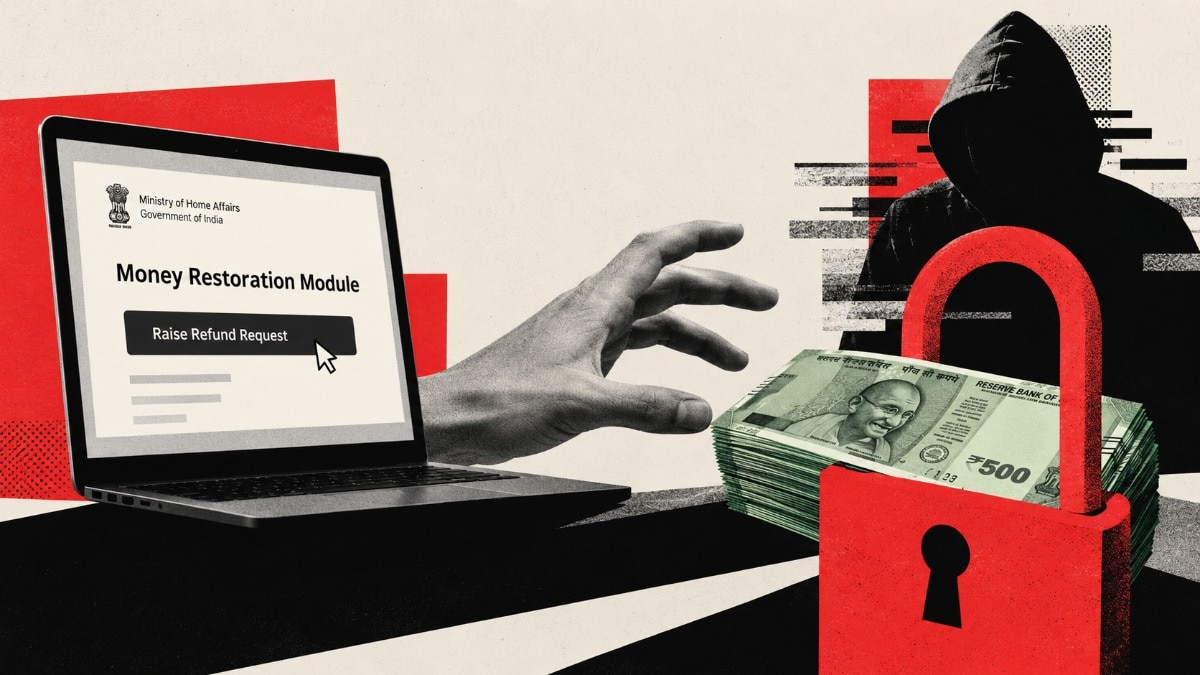
The Indian government has launched the Money Restoration Module (MRM), allowing cyber-fraud victims to apply for the recovery of frozen funds online without visiting banks.
- The Ministry of Home Affairs (MHA) launched the Money Restoration Module (MRM) via I4C.
- Victims can now initiate refund requests digitally, eliminating the need for physical bank visits.
- Refunds are only possible if the fraudulent funds have been traced and frozen in the scammer's account.
Online scams have evolved into a systemic menace in India, with thousands of citizens losing substantial sums—ranging from lakhs to crores—to sophisticated cybercriminals. While the National Cyber Crime Reporting Portal (NCRP) has been instrumental in reporting and freezing fraudulent transactions, the actual recovery of those funds remained a bureaucratic nightmare.
To bridge this gap, the Indian Cybercrime Coordination Centre (I4C), under the Ministry of Home Affairs, has introduced the Money Restoration Module (MRM). This digital interface allows eligible victims to seek the return of their money if it has been successfully frozen in a scammer's or beneficiary's bank account.
Why This Matters
BozokMedia analysis shows that the 'last-mile delivery' of recovered funds was the weakest link in India's cyber-defense strategy. By digitizing the restoration request, the government is reducing the friction between law enforcement and the victim. This shift from a physical-first to a digital-first recovery model significantly increases the probability of victims actually receiving their money back before it is legally contested or diverted.
"The transition to a digital restoration module marks a shift from mere crime reporting to active victim restitution, which is crucial for maintaining public trust in digital payments."
Step-by-Step Guide to Recovering Your Money
If you have been scammed, follow this rigorous process to attempt a recovery:
- Immediate Reporting: Call the 1930 helpline or file a complaint on the NCRP portal immediately. Speed is critical to freeze the money before the scammer withdraws it.
- Verification of Frozen Funds: You can only apply for restoration if the authorities have confirmed that the money is traced and held in a beneficiary account.
- Accessing MRM: Visit the Money Restoration Module and select “Raise Refund Request”. Use your 14-digit NCRP acknowledgement number and verify via OTP.
- Banking Details: Provide the exact bank account details where the recovered funds should be credited.
- Documentation: Upload a clear copy of your PAN card and any existing court orders relevant to the case.
- Tracking: Upon submission, you will receive a 14-digit Unique Request Number (URN) to monitor your application status.
It is important to note that the MRM is a facilitator, not a guarantee. The legal process, including the potential submission of an indemnity bond to the police, must still be completed.
| Feature | Traditional Process | MRM Portal Process |
|---|---|---|
| Submission | Physical paperwork at banks/police | 100% Online Application |
| Tracking | Manual follow-ups | Digital URN Tracking |
| Accessibility | Limited to local jurisdictions | Pan-India Accessibility |
Frequently Asked Questions
Q1: Will I get my money back in every case?
No. Recovery is only possible if the funds were successfully traced and frozen in the scammer's account before being moved.
Q2: Do I still need to interact with the police?
While the application is online, you may be required to submit a legal indemnity bond to the police to finalize the transfer.