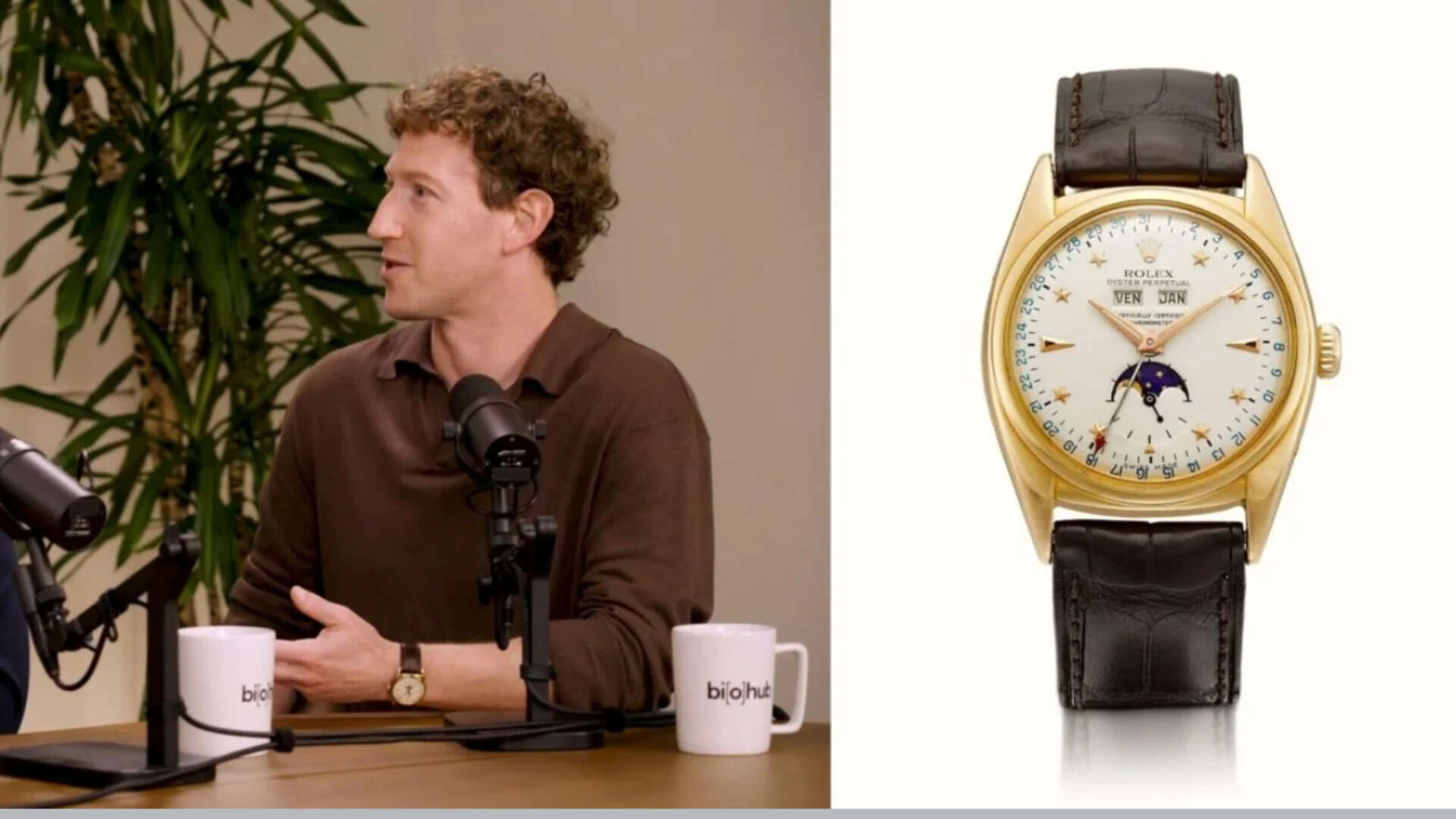
Mark Zuckerberg, wearing a rare Rolex Stelline, underscored the transformative impact of artificial intelligence on medical research. His Biohub initiative leverages sophisticated computer models to tackle human diseases, mirroring his push for tech‑driven health breakthroughs.
Key Takeaways (मुख्य बिंदु)
- Zuckerberg emphasizes AI‑driven Biohub’s importance
- He sports a $2 million vintage Rolex Stelline
- AI opens new horizons for medical breakthroughs
Silicon Valley titan Mark Zuckerberg recently stepped onto a public stage wearing a vintage Rolex Stelline, while championing the pivotal role of artificial intelligence (AI) in reshaping medical research. The timepiece, crafted between 1910 and 1915, is one of fewer than 200 ever produced and now commands multi‑million‑dollar prices among collectors.
History of the Vintage Rolex Stelline
The Stelline is famed for its intricate “Stelline” dial—tiny, hand‑cut metal overlays forming elaborate patterns—making each watch a miniature work of art. Because of its limited run and exceptional craftsmanship, the model regularly fetches $1‑2 million at auction, cementing its status as a pinnacle of horological luxury.
Biohub Initiative and AI’s Significance
In 2016, Zuckerberg and his wife Priscilla launched the Chan Zuckerberg Initiative (CZI)‑backed Biohub, a research hub that harnesses cutting‑edge computational modeling, machine learning, and big‑data analytics to decode disease mechanisms. AI‑powered platforms enable scientists to simulate cellular responses, gene expression, and drug interactions, dramatically reducing both time and cost compared to traditional bench work.
Convergence of Technology and Luxury
Zuckerberg’s choice of a high‑value Rolex is more than a fashion statement; it mirrors his broader philosophy that breakthrough technology should be paired with elegance and precision. Just as he advocates for AI‑driven health solutions, his watch signals a commitment to excellence in both form and function.
Future Prospects
Biohub’s AI models have already identified promising therapeutic pathways for cancers, Alzheimer’s disease, and rare genetic disorders. Continued investment and global collaboration are expected to accelerate patient‑centric drug discovery, potentially reshaping worldwide health outcomes over the coming decades.