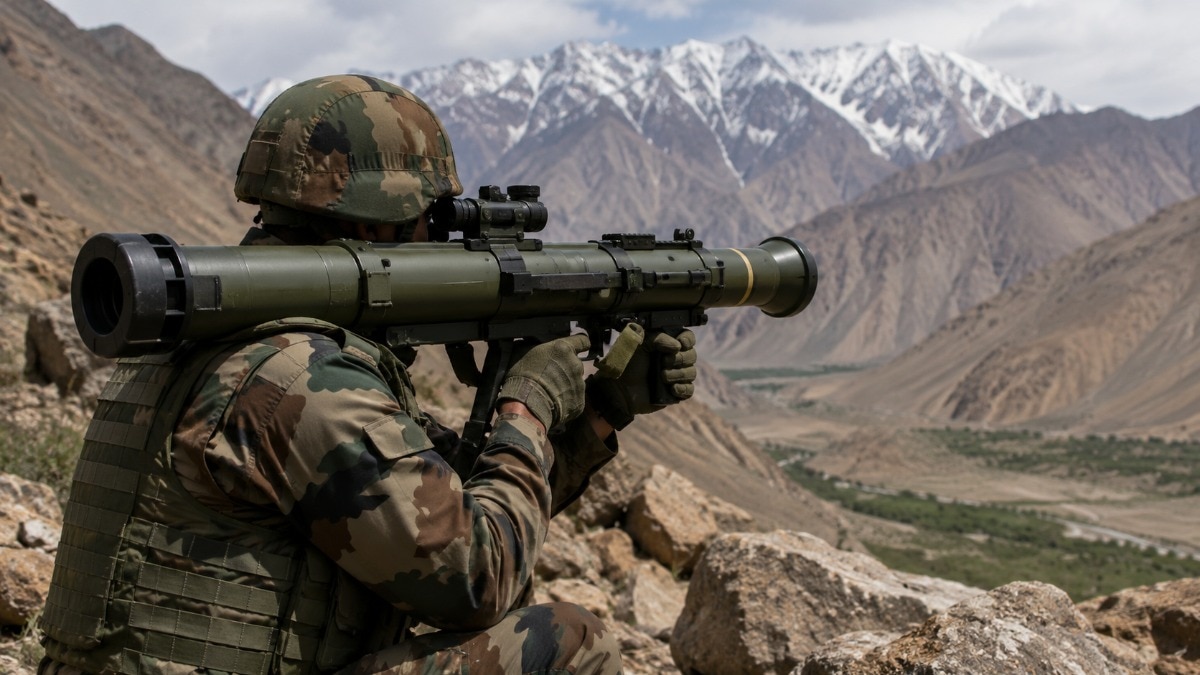
The Indian Army has issued an RFP for 450 locally‑made Carl Gustaf Mk IV multi‑role rocket launchers, aiming to boost infantry firepower and advance the Make in India agenda. The deal will see production shifted to Saab’s upcoming Jhajjar plant.
मुख्य बिंदु (Key Takeaways)
- RFP released for 450 indigenous Carl Gustaf Mk IV launchers
- Production slated for Saab's new Jhajjar facility in Haryana
- Launcher features modern sights, long barrel life and multi‑role 84 mm ammunition compatibility
The Indian Army, as part of its ongoing infantry modernisation programme, has launched a Buy (Indian) Request for Proposal to acquire 450 Carl Gustaf Mk IV multi‑role rocket launchers. The proposal includes the launchers, spares, accessories, technical documentation, training support and long‑term maintenance, aiming to replace older shoulder‑fired weapons with a lighter, more versatile system suitable for high‑altitude, desert, forest and urban environments.
Technical Overview
Saab’s 84 mm Carl Gustaf Mk IV is the latest iteration of a globally‑used recoilless weapon. Weighing roughly 6.6‑7 kg (excluding sights and accessories), it is considerably lighter than earlier models, enhancing infantry mobility without sacrificing battlefield effectiveness. Designed as a multi‑role platform, the Mk IV can fire a spectrum of 84 mm rounds already in the Indian inventory—anti‑armor, bunker‑busting, high‑explosive, smoke, and illumination—offering flexibility across diverse combat scenarios.
Performance Requirements
The RFP stipulates that the new launchers must match or exceed the accuracy and reliability of the existing Mk III systems. A minimum barrel life of 1,500 rounds or 15 years is mandated, with operational reliability across temperatures from –20 °C to +50 °C and in dusty, humid, or otherwise extreme conditions. Compatibility with modern fire‑control solutions—digital sights, red‑dot optics, and a digital shot counter—is required, alongside Picatinny rails for mission‑specific accessories, improved shoulder support, and ergonomic enhancements to reduce soldier fatigue.
Domestic Production Strategy
Saab’s upcoming facility in Jhajjar, Haryana, will become the first overseas production site for the Carl Gustaf system. The plant will manufacture complete launchers and critical components, reinforcing India’s indigenous defence manufacturing base. Local production promises a steady supply of spares, maintenance support, and ammunition, aligning with the broader Make in India objectives and reducing dependence on foreign logistics chains.
Strategic Implications
Beyond immediate firepower gains, the procurement signals a decisive shift toward self‑reliant defence capabilities. It dovetails with India’s recent successes in domestically producing advanced missiles, aircraft, and naval platforms, potentially opening avenues for future exports. If the Jhajjar plant meets its timelines, the Indian Army could see a marked improvement in infantry lethality while the nation cements its status as a regional defence manufacturing hub.