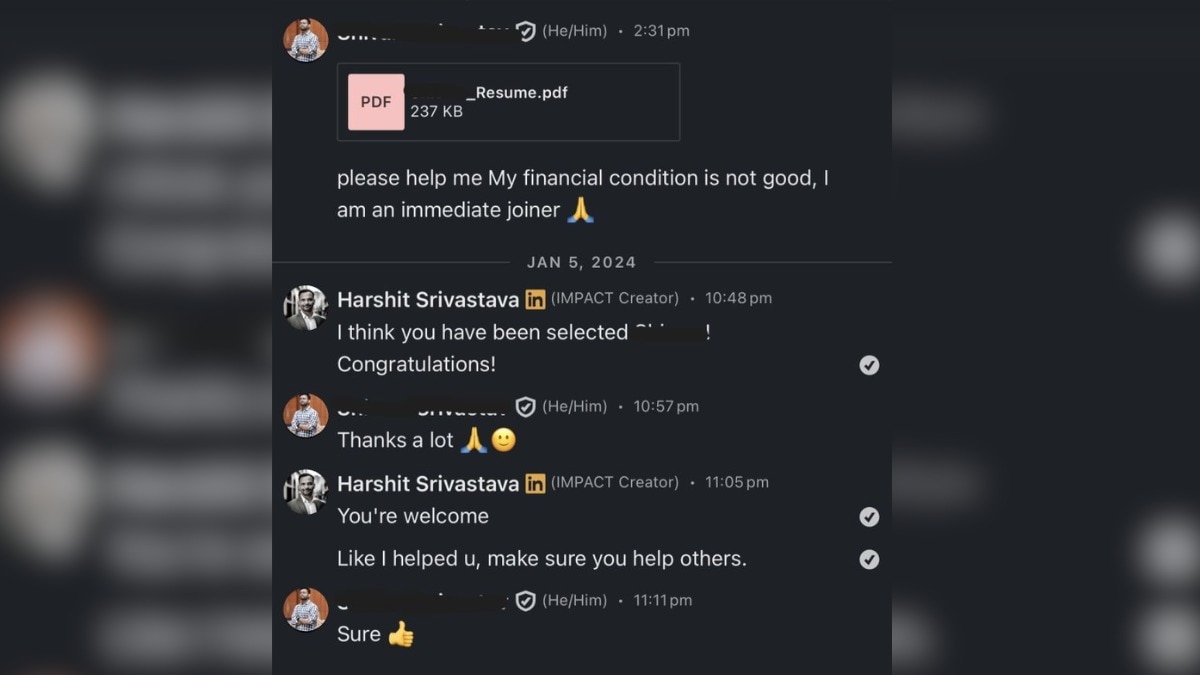
The founder of a Delhi startup revisited a resume rejected by an AI-driven ATS and gave the candidate a job, igniting a broader conversation about balancing automation with human judgment in recruitment.
Key Takeaways (मुख्य बिंदु)
- AI‑based ATS initially rejected a qualified applicant
- The founder manually reviewed the profile and offered an interview
- The incident sparked a debate on the need for human oversight in automated hiring
Harshit Srivastava, founder of the Delhi‑based recruitment platform Hiring Inside, shared on LinkedIn how a candidate’s résumé was filtered out by an Applicant Tracking System (ATS). A desperate plea from the candidate prompted Srivastava to take another look.
The candidate messaged, “Please help me. My financial condition is not good. I am an immediate joiner.” Rather than feeling pity, Srivastava wanted to verify whether the algorithm had missed a deserving talent.
After a fresh review, the company scheduled an interview and shortly thereafter sent a single‑word congratulatory note: “Congratulations.” The candidate later explained that the job helped him meet unpaid EMIs and cover his parents’ medical expenses.
Srivastava reflected, “Technology should help us hire faster, but it must never stop us from looking twice.” He emphasized that every résumé carries professional experience, and sometimes the weight of an entire family’s livelihood.
Historical Background
Applicant Tracking Systems emerged in the late 1990s as large corporations sought to automate the flood of applications. With the rise of cloud‑based AI algorithms in the 2000s, these systems became faster and more scalable, yet concerns about bias and lack of contextual understanding grew. Studies indicate that 30‑40% of qualified candidates are inadvertently filtered out, especially those who do not follow rigid keyword formats.
Why This Matters (इसके मायने क्या हैं)
BozokMedia analysis shows that incidents like this affect not only individual lives but also the broader labor market. When AI tools overlook socioeconomic hardships, companies risk losing productive talent, leading to hidden costs in productivity and diversity.
Moreover, human‑led re‑evaluation fosters a more inclusive workplace, granting equal opportunity to candidates from varied backgrounds. This strengthens brand reputation and contributes to long‑term economic stability.
“AI should complement, not replace, human judgment in hiring; only then can it boost both diversity and efficiency,” says HR‑tech expert Dr. Rina Kumari.
ATS vs. Human Review Comparison
| Criteria | ATS (Automated) | Human Review |
|---|---|---|
| Speed | Filters hundreds of resumes within minutes | Requires hours to read each application thoroughly |
| Bias Potential | Keyword‑driven, often inherits hidden biases | Subjective but can be mitigated with structured evaluation |
| Context Understanding | Cannot grasp financial or personal hardships | Can interpret messages, tone, and personal circumstances |
Frequently Asked Questions (अक्सर पूछे जाने वाले प्रश्न)
Can AI hiring tools be trusted without human oversight? No. While AI can streamline initial screening, final decisions should always involve human judgment to ensure fairness.
Are ATS solutions affordable for small startups? Yes, many cloud‑based platforms offer low‑cost plans, but they work best when paired with regular human review.


