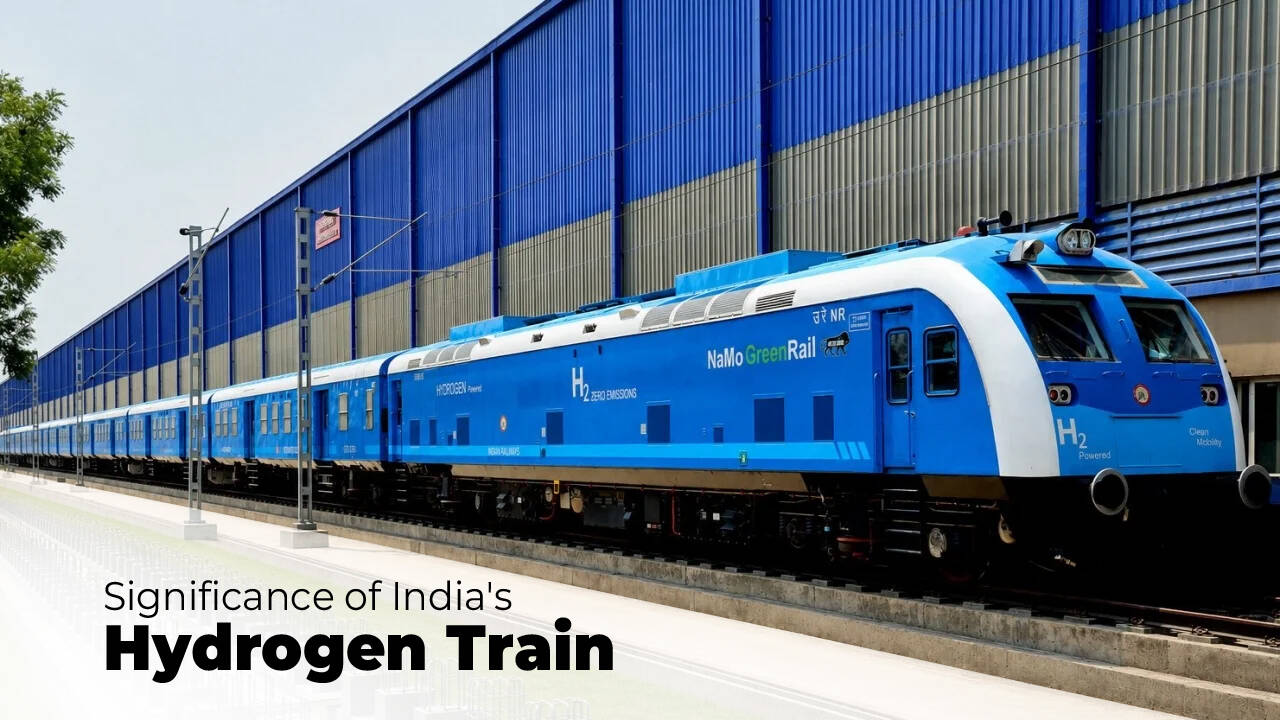
Prime Minister Modi flagged off the nation’s inaugural hydrogen‑powered train, a 10‑coach, 2,600‑passenger set that will run at up to 75 km/h on the Jind‑Sonipat corridor, marking a major step toward greener transport.
Key Takeaways (मुख्य बिंदु)
- India launches its first hydrogen‑powered train
- 10 coaches, capacity for 2,600 passengers, operational speed up to 75 km/h
- Runs on the Jind‑Sonipat route, showcasing green mobility
On July 17, 2026, Prime Minister Narendra Modi officially inaugurated India’s first hydrogen‑powered train. Designed to operate between Jind and Sonipat in Haryana, the train can reach a maximum speed of 75 km/h (though engineered for 110 km/h) and carries 2,600 passengers across ten coaches. This addition places India among a select group of nations—such as Germany, China, and France—operating commercial hydrogen passenger trains.
Historical Background (ऐतिहासिक पृष्ठभूमि)
The concept of using hydrogen as a clean energy carrier dates back to the 1970s, but practical railway applications only materialised in the 21st century. Germany pioneered commercial hydrogen trains in 2018, followed by China’s operational deployments and France’s regional services. India’s push aligns with its National Green Hydrogen Mission and the broader goal of electrifying 99% of its rail network, aiming to provide a zero‑emission alternative for non‑electrified routes.
Hydrogen trains rely on Proton Exchange Membrane (PEM) fuel cells, where onboard hydrogen stored in high‑pressure cylinders combines with atmospheric oxygen to generate electricity. The process produces only water vapor—no smoke, soot, or CO₂—making the trains exceptionally quiet and environmentally friendly. Indian Railways has built an integrated hydrogen ecosystem at Jind, encompassing electrolysis‑based production, compression, storage, and refuelling facilities.
Why This Matters (इसके मायने क्या हैं)
According to BozokMedia analysis, hydrogen trains are not merely a technological novelty but a strategic lever for India’s energy security and climate commitments. In remote or hilly corridors where electrification is cost‑prohibitive, hydrogen‑driven coaches can replace diesel locomotives, lowering fuel expenses and curbing greenhouse‑gas emissions, thereby benefitting local economies and public health.
Furthermore, as green‑hydrogen production scales and costs decline, these trains could serve as a mobile demand sink, encouraging broader investment in domestic hydrogen facilities. This symbiotic growth supports India’s ambition to become a global exporter of green hydrogen while simultaneously greening its own rail network.
"Hydrogen trains are a critical piece of India’s net‑zero roadmap, but their long‑term success hinges on robust supply chains and safety protocols," says Pranav Master, Director, Crisil Intelligence.
Frequently Asked Questions (अक्सर पूछे जाने वाले प्रश्न)
How long does it take to refuel the hydrogen train? The integrated Jind facility can complete a full refuelling cycle in roughly 30 minutes, considerably faster than conventional diesel refuelling.
Is the train fully autonomous? No; the train is powered by two hydrogen‑driven power cars complemented by lithium‑iron‑phosphate batteries, providing redundancy and enhanced energy efficiency.