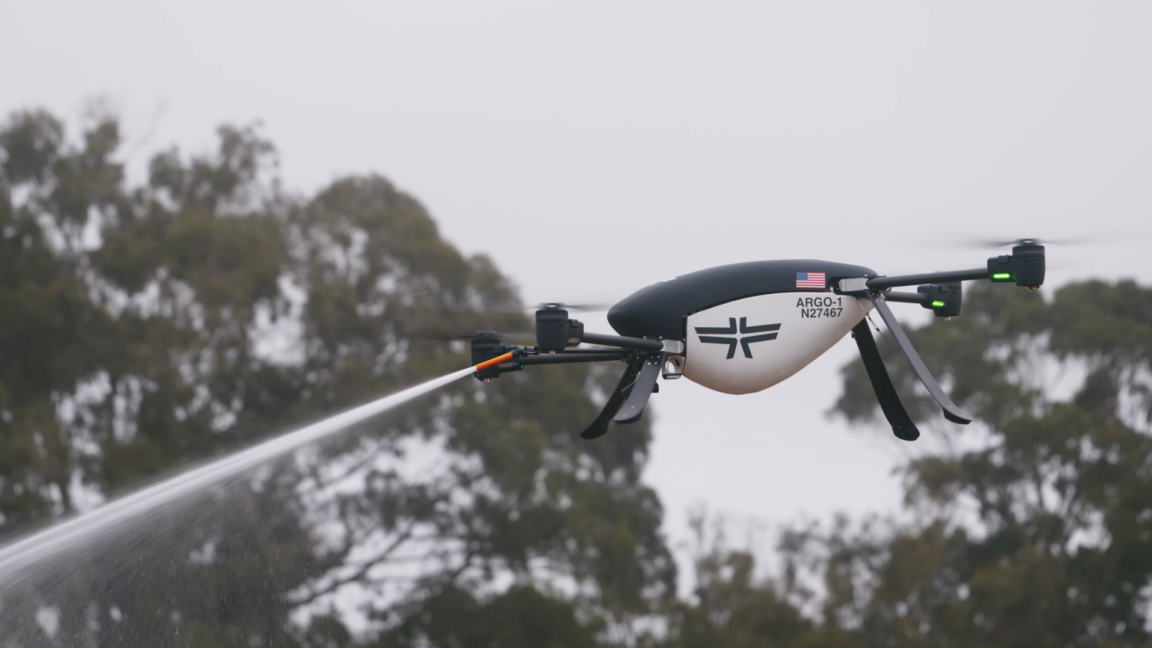
As climate change intensifies wildfire risks in the US, autonomous drones are being tested in California and Alaska to provide rapid-response firefighting capabilities.
As climate change continues to transform wildfire seasons into a nearly year-round threat across much of the United States, a new technological ally is emerging in the skies. During this summer, advanced drones capable of deploying water and fire retardants have been undergoing rigorous testing in California and Alaska. The primary objective is to demonstrate a rapid-response tool that can intercept small fires before they escalate into uncontrollable infernos.
While these drones are significantly smaller than traditional crewed aircraft and possess shorter flight ranges, they are not intended to replace massive airtankers. Instead, they serve a specialized niche. Companies and fire agencies, supported by the $11 million XPRIZE competition, are exploring whether these autonomous systems can provide the speed necessary to extinguish small ignitions immediately. CAL FIRE (California Department of Forestry and Fire Protection) recently conducted a successful field test involving five autonomous drones that collectively deployed between 500 and 1,000 gallons of fire-suppressing foam.
Why This Matters (इसके मायने क्या हैं)
BozokMedia analysis shows that the integration of autonomous drone technology represents a paradigm shift in emergency management. As wildfire seasons become longer and more unpredictable, the ability to deploy 'first-strike' aerial assets without the high cost and logistical lag of large aircraft is crucial. This technology bridges the gap between detection and heavy suppression.
From an economic perspective, the cost of wildfire damage to infrastructure, timber, and human life is astronomical. By investing in drone technology that can suppress fires in their infancy, governments can significantly reduce the long-term financial burden caused by large-scale disasters. This is not just about firefighting; it is about building resilient communities in a warming world.
Drones are not meant to replace the heavy lifters of firefighting, but to act as the critical first responders that prevent small sparks from becoming mega-fires.
Historical Background
Historically, wildfire suppression has relied heavily on human-piloted aircraft and ground crews. However, the increasing frequency and intensity of fires due to prolonged droughts and rising global temperatures have pushed traditional methods to their limits. The shift toward unmanned aerial vehicles (UAVs) is a direct response to the need for higher frequency, lower-cost, and safer intervention methods in increasingly hazardous environments.
| Feature | Traditional Airtankers | Firefighting Drones |
|---|---|---|
| Payload Capacity | Massive volume of water/retardant | Limited (500-1000 gallons in groups) |
| Response Speed | Slower deployment and mobilization | Rapid, near-instant deployment |
| Operational Cost | Extremely high per flight hour | Significantly lower and scalable |
| Primary Role | Large-scale suppression | Early-stage containment |
Frequently Asked Questions (अक्सर पूछे जाने वाले प्रश्न)
Question 1: Can drones replace large firefighting planes?
Answer: No, they are designed to complement them by handling small, early-stage fires more efficiently.
Question 2: When will this technology be available for widespread use?
Answer: Companies like Seneca aim to make these drones commercially available starting in 2026.