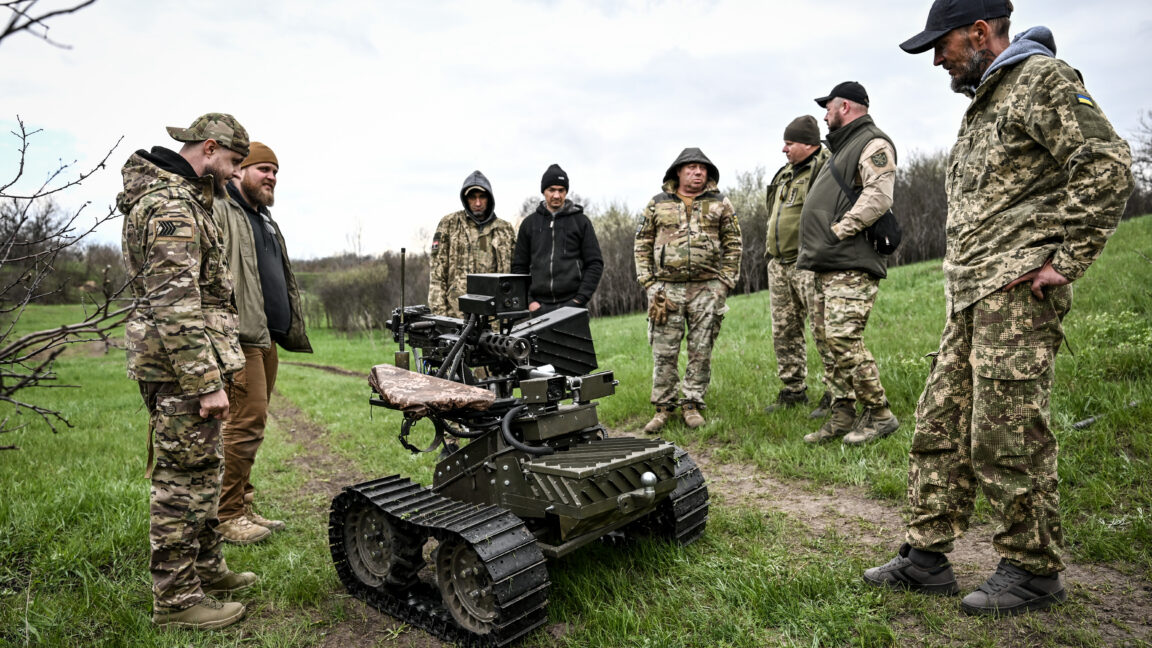
Ukraine has begun using both aerial drone carriers and drone boats to deliver weapon‑laden ground robots directly into combat. The tactic aims to bypass Russian defenses while protecting Ukrainian soldiers from high‑risk assaults.
Key Takeaways
- Drone carriers air‑drop ground robots onto battlefields
- Drone boats launch amphibious robot assaults from the sea
- Robotic attacks challenge Russian defensive positions
In a fresh twist on battlefield innovation, Ukraine has employed both flying drone carriers and autonomous drone boats to insert armed or explosive‑laden ground robots into combat zones. By using drone‑assisted delivery, slower wheeled robots can skirt difficult terrain and Russian fortifications, delivering a rare amphibious robotic assault on contested positions and sparing Ukrainian troops from perilous direct attacks.
On July 19, a Russian military Telegram channel posted a video showing a Ukrainian hexacopter drone suspending a four‑wheeled ARK‑1 robot beneath it via cable. According to the state‑run United24 platform, the heavy‑payload drone released the robot equipped with anti‑tank mines, which then moved toward Russian positions, sparking a wave of outraged comments on pro‑Kremlin social media.
Historical Background
While drone‑assisted warfare has been experimented with in several conflicts, Ukraine’s simultaneous use of aerial and maritime drone platforms to deploy robots marks a first in modern combat. Since the early 2000s, unmanned aerial systems have primarily been used for reconnaissance and strike missions, but the integration of ground robots expands the battlefield reach. The ARK‑1 platform, originally designed for logistics, was retrofitted in 2023 with explosive payloads, reflecting a rapid adaptation to the Russian manpower advantage.
Comparison Table
| Drone Type | Delivery Mode | Robot Model | Primary Advantage |
|---|---|---|---|
| Hexacopter (Air) | Air‑Drop | Four‑wheel ARK‑1 | Speed, precision targeting |
| Drone Boat (Sea) | Beach Assault | Amphibious Robot Platform | Bypasses land obstacles, sea‑based surprise |
Why This Matters (इसके मायने क्या हैं)
According to BozokMedia analysis, this innovative deployment reduces the manpower gap Ukraine faces, allowing it to strike Russian positions without exposing its own soldiers to frontline danger. For ordinary citizens, the technology promises a future where combat incurs fewer human casualties, shifting the focus toward protecting civilian life.
Economically, the push for drone‑robot integration could stimulate Ukraine’s high‑tech sector, creating export‑ready products and attracting foreign investment. Politically, the move showcases Ukraine’s self‑reliance, potentially decreasing reliance on external military aid while signaling to allies a commitment to cutting‑edge defense solutions.
"The convergence of drones and ground robots will redefine the balance of power on any modern battlefield," noted defense analyst Dr. Ivan Kozlov.
Frequently Asked Questions (अक्सर पूछे जाने वाले प्रश्न)
Q1: Are these robots fully autonomous?
A: Currently, they operate under human supervision, though autonomous capabilities are gradually increasing.
Q2: What is the main risk associated with drone‑robot deployments?
A: Technical failures or electronic jamming could prevent the robot from reaching its target, rendering the mission ineffective.