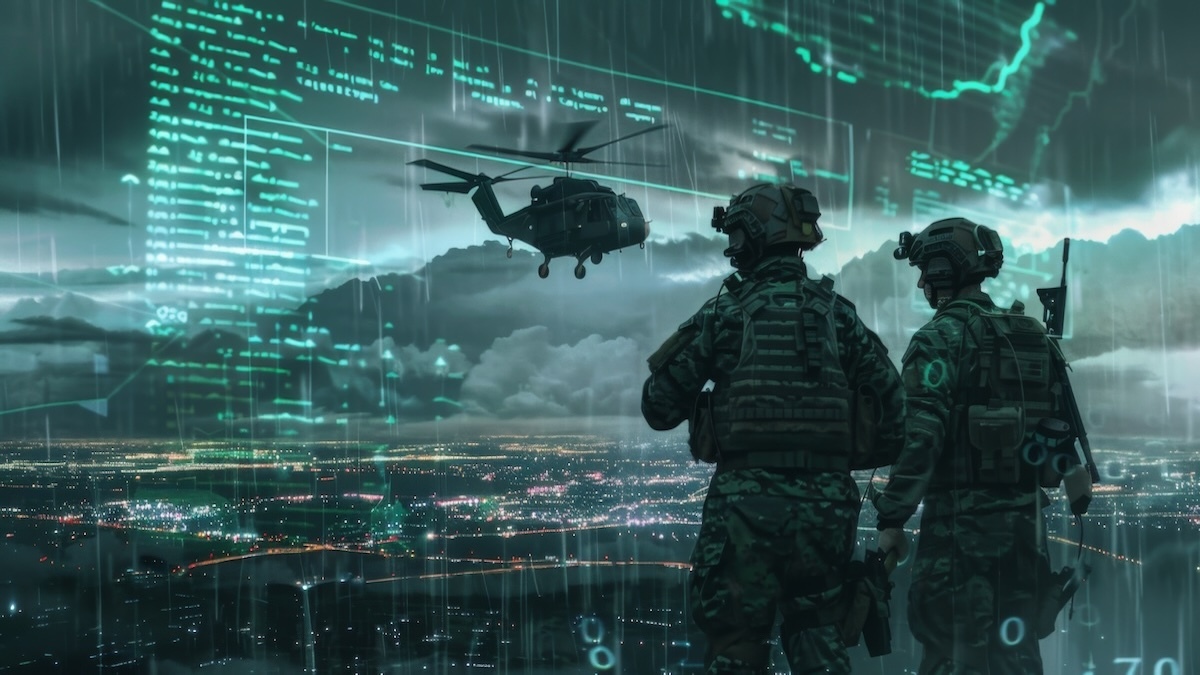
CrowdStrike co-founder Dmitri Alperovitch explains how cyberspace has emerged as the fourth domain of warfare, reshaping modern geopolitics and military strategy.
Key Takeaways
- Cyberspace has officially become the fourth domain of military conflict alongside land, air, and sea.
- Nation-state cyber operations are characterized by a 'low and slow' approach, prioritizing stealth over speed.
- Cyber espionage now targets both military secrets and private sector intellectual property.
- The geopolitical divide is increasingly manifesting as a digital struggle between the West and 'CRINK' nations.
The landscape of global conflict is undergoing a fundamental shift. While traditional geopolitics has long been defined by geography and history, the emergence of cyberspace as a fourth battlefield has added a volatile new dimension. Geopolitical disagreements, once settled solely through diplomacy or kinetic force, are now increasingly preceded by sophisticated digital operations.
The Modern Taxonomy of Warfare
To understand the current state of global tension, one must distinguish between three types of warfare: Kinetic War (traditional physical combat), Cyberwar (aggressive digital operations), and Cyber-Kinetic War (cyber operations designed to cause physical destruction). These conflicts are primarily driven by espionage, regime change, and territorial disputes.
Why This Matters
BozokMedia analysis shows that the line between digital espionage and actual warfare is blurring. Unlike criminal hackers who seek quick monetary gains through noisy attacks, nation-state actors employ a 'low and slow' strategy. Their goal is long-term persistence within critical infrastructure and government networks.
"If you detect nation state actors on your network, chances are they have already been there for weeks or months," says Dmitri Alperovitch.
The strategic divide is clearly visible between the West (led by the Five Eyes alliance) and the 'CRINK' bloc (China, Russia, Iran, and North Korea). While Western intelligence focuses on national security, nations like China are increasingly using cyber tools to exfiltrate intellectual property from private enterprises to fuel their own industries.
Cyber Espionage: From Ancient to Digital
Espionage is as old as civilization itself, dating back to ancient Mesopotamia. However, the digital age has scaled this practice to unprecedented levels. Today, the battle for supremacy in emerging technologies like Artificial Intelligence (AI) is being fought in the shadows of cyberspace, where stealing code is as impactful as seizing territory.
Frequently Asked Questions
1. What is the difference between cybercriminals and nation-states?
Criminals seek fast money and are often 'noisy,' while nation-states seek long-term intelligence and operate with extreme stealth.
2. What does 'CRINK' stand for?
It is a shorthand term used to describe China, Russia, Iran, and North Korea.