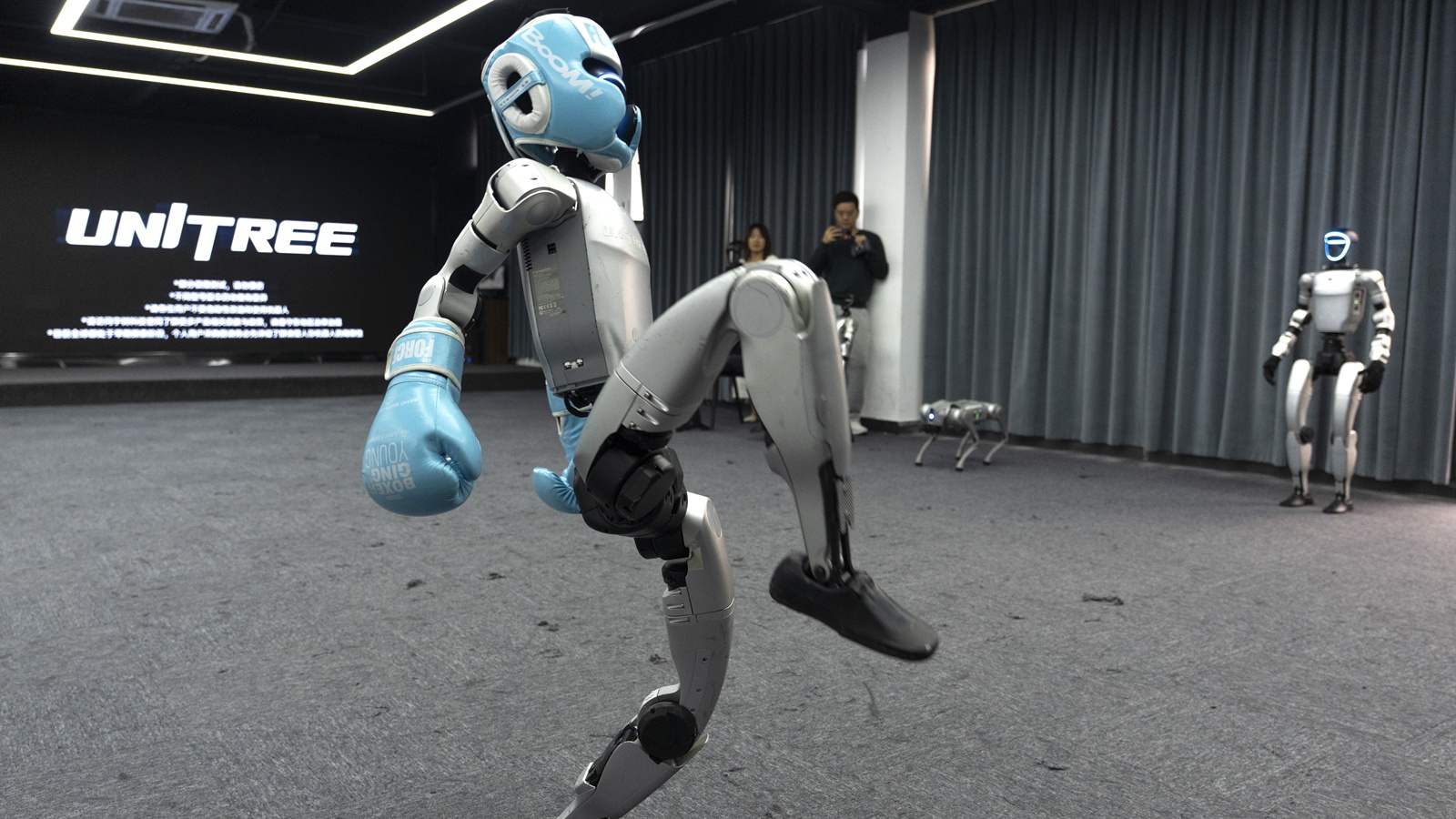
At the World Robot Conference in Beijing, Chinese manufacturers demonstrated a strategic shift, moving humanoid robots from mere spectacles to functional tools in logistics, manufacturing, and homes.
- Chinese robotics firms are pivoting from crowd-pleasing demonstrations to practical commercial applications.
- Unitree's massive IPO success signals intense investor confidence in the humanoid sector.
- Robots are already being deployed in logistics, mobile phone assembly, and warehouse management.
The World Robot Conference in Beijing has marked a pivotal moment for the global robotics industry. Moving beyond the initial 'wow factor' of dancing humanoids, Chinese manufacturers are now showcasing robots capable of performing complex, high-precision tasks. With over 300 companies participating and 150 new products launched, the message is clear: the era of functional humanoid deployment has arrived.
The Economic Engine of Robotics
The Chinese government views robotics as a critical driver for future economic growth. This sentiment is reflected in the markets; Unitree, a leading humanoid robot maker, saw its shares soar nearly sixfold during its Shanghai trading debut. The massive investor interest is not limited to Unitree, as startups like Lumos Robotics and the robotics division of Chery Automobile are also eyeing public listings.
In the manufacturing sector, companies like DexForce are proving the utility of these machines. Their humanoid robots are currently being used on assembly lines at Lens Technology—a key supplier for Apple and Huawei—to pack mobile phones with millimeter-level accuracy. This addresses a critical labor issue: the reluctance of human workers to perform repetitive, monotonous tasks.
Why This Matters
BozokMedia analysis shows that this surge in robotics is occurring amidst intense geopolitical competition. Despite U.S. restrictions on advanced AI chips, the presence of high-level executives like Madison Huang from Nvidia at the conference highlights the deep integration of global technology players within the Chinese ecosystem. China is rapidly building a self-sustaining cycle of hardware and AI software to dominate the humanoid market.
The transition from demonstration to deployment is the ultimate litmus test for any emerging technology.
Logistics is another sector seeing immediate impact. Robotera has already deployed over 100 parcel-sorting robots across 15 warehouses for China Post. Meanwhile, the development cycle in China is remarkably aggressive; unlike traditional industries that take years to iterate, robotics product cycles here are shrinking to just six to eight months.
Frequently Asked Questions
Question 1: Which industries are seeing the most immediate use of humanoid robots?
Answer: Logistics (parcel sorting), manufacturing (mobile phone assembly), and increasingly, household service trials.
Question 2: How does the US-China tension affect this sector?
Answer: While export restrictions on advanced AI chips create hurdles, they are also driving China to accelerate its domestic development of AI and robotics software.
